
Why the India-New Zealand FTA provides fresh optimism amidst West Asia war
Exporters, domestic industry upbeat about opportunities; pact provides policy certainty and assured market access, say experts.
- Apr 27, 2026,
- Updated Apr 27, 2026 2:30 PM IST
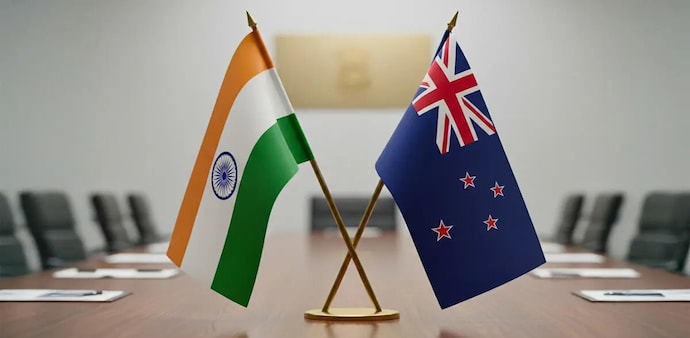
At a time when Indian exports are sailing through troubled waters as the Strait of Hormuz remains closed, the signing of the free trade agreement (FTA) with New Zealand is proving to be a confidence booster for exporters and domestic industry.
The deal, which aims to double bilateral trade to over $5 billion by 2030, also has a commitment from New Zealand to increase FDI by $20 billion into India over a 15-year period, and is expected to open up fresh markets for Indian exports and professionals.
As part of the FTA, New Zealand has given zero duty market access on 100% of India’s exports, while India will provide tariff liberalisation on 70% of lines covering 95% of bilateral trade. India has also ensured that sensitive sectors like dairy have been kept out of the FTA to protect farmers and domestic industry.
Must read | India-New Zealand sign landmark trade agreement. Here's what both sides get
Dairy products including milk, cream, whey, yoghurt, cheese and animal products (other than sheep meat), vegetable products like onions, chana, peas, corn, almonds, sugar, artificial honey, animal, vegetable or microbial fats and oils have been excluded by India for duty benefits.
Bilateral trade low
For now, trade between the two countries remains low and merchandise trade between the two was $1.29 billion in FY25 with merchandise exports at $711.1 million from India in the year and imports at $587 million. India’s top exports to New Zealand include pharma, apparel, vehicles and nuclear reactors.
According to New Zealand data, the country exports a variety of goods to India, including wool, iron and steel, aluminum, fruits and nuts, and wood pulp and recovered paper. It imports a range of goods from India including pharmaceuticals, machinery, precious metals and stones, textiles, vehicles, and apparel. However, travel is the largest services export between the two countries and other key services exports from New Zealand to India include education and government services.
Don't miss | India-New Zealand FTA opens 5,000 work visas for Indian professionals across IT, healthcare
For Indian consumers, steep tariffs of 150% on New Zealand wine would be reduced by 66-83% over 10 years from entry into force (to a 25% or 50% final duty), levelling the playing field with existing FTA partners. New Zealand specialities like apples and Kiwifruit will also become cheaper up to a certain quota and the 66% tariff on mānuka honey will drop by three quarters to 16.5% over five years.
New export opportunities
Agneshwar Sen, Trade Policy leader, EY India, said the FTA represents a significant win for India — both for our exporters as well as the broader economy. New Zealand’s offer to eliminate duties on 100% of its tariff lines on entry means Indian goods in textiles, apparel, leather, pharmaceuticals, machinery, and auto components sectors enter the country duty-free, erasing an average applied tariff of 2.2%, he said.
It may be noted that the average includes a 10% tariff on some of our labour-intensive exports like clothing and leather products, which also now get the tariff free treatment. “With merchandise exports to New Zealand already on an upward trend, this FTA provides the policy certainty and assured market access to sustain that momentum,” he said.
The Confederation of Indian Textile Industry (CITI) expects the FTA to strengthen the ongoing efforts of India’s textile and apparel exporters to reduce dependence on select markets, move up the value chain and lend added momentum to India’s 2030 aspiration of a $350 billion textile and apparel industry.
“Amid the ongoing geopolitical tension in West Asia, the signing of the FTA between India and New Zealand comes as a breath of fresh air for India’s textile and apparel exporters,” CITI Chairman Ashwin Chandran said.
Technical collaboration, mobility
Gulzar Didwania, Partner at Deloitte India, noted that as part of the FTA both countries have agreed to collaborate on productivity action plans for apples, kiwifruit and honey to focus on yield enhancement and farm-level competitiveness.
Must read | India-New Zealand FTA: Agra meet ahead of signing highlights $50 bn leather export ambition
“From India’s perspective, the investment commitment of about $20 billion creates investment opportunities in agri technology, food processing, logistics and services through a structured investment facilitation framework. Importantly, it reflects a shift away from tariff-led liberalisation toward productivity, capability building and long-term cooperation,” he said.
Importantly, the FTA also provides mobility opportunities for Indian professionals in sectors like IT, healthcare, engineering, and education with simplified entry arrangements for Indian service providers and professionals for short periods of stay. This includes an equivalent of 1,667 temporary employment entry (TEE) visas per year for specified occupations. It also includes a Working Holiday Scheme, with up to 1,000 places for young Indians (18 to 30 years old) and the FTA codifies the right for Indian students to work for up to 20 hours a week (within current policy of up to 25 hours).
At a time when Indian exports are sailing through troubled waters as the Strait of Hormuz remains closed, the signing of the free trade agreement (FTA) with New Zealand is proving to be a confidence booster for exporters and domestic industry.
The deal, which aims to double bilateral trade to over $5 billion by 2030, also has a commitment from New Zealand to increase FDI by $20 billion into India over a 15-year period, and is expected to open up fresh markets for Indian exports and professionals.
As part of the FTA, New Zealand has given zero duty market access on 100% of India’s exports, while India will provide tariff liberalisation on 70% of lines covering 95% of bilateral trade. India has also ensured that sensitive sectors like dairy have been kept out of the FTA to protect farmers and domestic industry.
Must read | India-New Zealand sign landmark trade agreement. Here's what both sides get
Dairy products including milk, cream, whey, yoghurt, cheese and animal products (other than sheep meat), vegetable products like onions, chana, peas, corn, almonds, sugar, artificial honey, animal, vegetable or microbial fats and oils have been excluded by India for duty benefits.
Bilateral trade low
For now, trade between the two countries remains low and merchandise trade between the two was $1.29 billion in FY25 with merchandise exports at $711.1 million from India in the year and imports at $587 million. India’s top exports to New Zealand include pharma, apparel, vehicles and nuclear reactors.
According to New Zealand data, the country exports a variety of goods to India, including wool, iron and steel, aluminum, fruits and nuts, and wood pulp and recovered paper. It imports a range of goods from India including pharmaceuticals, machinery, precious metals and stones, textiles, vehicles, and apparel. However, travel is the largest services export between the two countries and other key services exports from New Zealand to India include education and government services.
Don't miss | India-New Zealand FTA opens 5,000 work visas for Indian professionals across IT, healthcare
For Indian consumers, steep tariffs of 150% on New Zealand wine would be reduced by 66-83% over 10 years from entry into force (to a 25% or 50% final duty), levelling the playing field with existing FTA partners. New Zealand specialities like apples and Kiwifruit will also become cheaper up to a certain quota and the 66% tariff on mānuka honey will drop by three quarters to 16.5% over five years.
New export opportunities
Agneshwar Sen, Trade Policy leader, EY India, said the FTA represents a significant win for India — both for our exporters as well as the broader economy. New Zealand’s offer to eliminate duties on 100% of its tariff lines on entry means Indian goods in textiles, apparel, leather, pharmaceuticals, machinery, and auto components sectors enter the country duty-free, erasing an average applied tariff of 2.2%, he said.
It may be noted that the average includes a 10% tariff on some of our labour-intensive exports like clothing and leather products, which also now get the tariff free treatment. “With merchandise exports to New Zealand already on an upward trend, this FTA provides the policy certainty and assured market access to sustain that momentum,” he said.
The Confederation of Indian Textile Industry (CITI) expects the FTA to strengthen the ongoing efforts of India’s textile and apparel exporters to reduce dependence on select markets, move up the value chain and lend added momentum to India’s 2030 aspiration of a $350 billion textile and apparel industry.
“Amid the ongoing geopolitical tension in West Asia, the signing of the FTA between India and New Zealand comes as a breath of fresh air for India’s textile and apparel exporters,” CITI Chairman Ashwin Chandran said.
Technical collaboration, mobility
Gulzar Didwania, Partner at Deloitte India, noted that as part of the FTA both countries have agreed to collaborate on productivity action plans for apples, kiwifruit and honey to focus on yield enhancement and farm-level competitiveness.
Must read | India-New Zealand FTA: Agra meet ahead of signing highlights $50 bn leather export ambition
“From India’s perspective, the investment commitment of about $20 billion creates investment opportunities in agri technology, food processing, logistics and services through a structured investment facilitation framework. Importantly, it reflects a shift away from tariff-led liberalisation toward productivity, capability building and long-term cooperation,” he said.
Importantly, the FTA also provides mobility opportunities for Indian professionals in sectors like IT, healthcare, engineering, and education with simplified entry arrangements for Indian service providers and professionals for short periods of stay. This includes an equivalent of 1,667 temporary employment entry (TEE) visas per year for specified occupations. It also includes a Working Holiday Scheme, with up to 1,000 places for young Indians (18 to 30 years old) and the FTA codifies the right for Indian students to work for up to 20 hours a week (within current policy of up to 25 hours).