
'AI is a profound civilisational shift': N Chandrasekaran says software companies won't be left behind
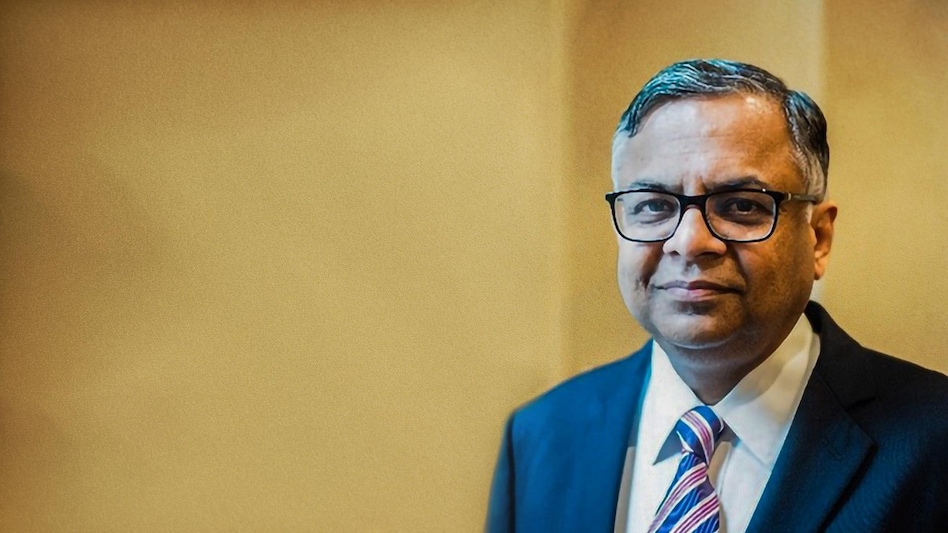
Tata Sons’ Chairman, N Chandrasekaran, in his letter to shareholders said that opportunities offered by AI cannot be captured by simply giving organisations access to that technology.
- Jul 28, 2026,
- Updated Jul 28, 2026 7:55 AM IST
Tata Sons’ Chairman, N Chandrasekaran, in his letter to shareholders as a part of the FY26 annual report, has reiterated that AI is a profound, civilisational shift and “we are all working to understand how to build the infrastructure for intelligence that can be accessed by all.” The uncertainties and fears around language models, he stated, have created the impression that software companies will be left behind, “but that has not been our experience, and it is not what I believe.”
The conglomerate’s largest company by way of revenue and market capitalisation is Tata Consultancy Services (TCS), a behemoth in the spheres of information technology and consulting. “The opportunities offered by AI cannot be captured by simply giving organisations access to AI technology. Enterprises need to organise their data and integrate it into IT systems that have evolved over decades. TCS has spent years with customers, developing and maintaining software, managing change and have a very deep understanding of their context,” said Chandrasekaran.
MUST READ | TCS could soon have as many AI agents as employees, says N Chandrasekaran
The IT industry globally is in the midst of a massive transformation driven by AI. Over the last few quarters, there has been significant pressure on margins and the sustained need to invest large sums of money on AI. His letter outlined how India’s technology industry built its global position by doing something many thought it couldn’t: taking powerful new technologies and making them work, reliably and accountably, inside the world’s most demanding institutions.
“That’s why AI is the most significant opportunity yet for enterprise IT,” he stated.
Specifically on TCS, considered the bellwether company of India’s IT sector, he pointed out that it has already reached annualised AI revenue of $2.6 billion in Q1 FY27, “and announced 1 GW HyperVault AI data centre platform, alongside partnerships with OpenAI, Microsoft, AWS and Anthropic. Meanwhile, the company’s operating margins continue to outperform: its operating margin of 25.0% is 404 bps higher than the next best in the industry. Over the next three years, TCS will have as many AI agents as human employees,” he emphasised.
The bigger challenge is that of costs and Chandrasekaran viewed that as an opportunity. “Enterprise IT is one layer of AI. The wider opportunity for India is to bring down the cost of intelligence itself. Across the Group, we are working towards enabling the full stack that does this: the silicon that computes it; the data centres that host it; the enterprise systems that apply it; and the physical platforms, in energy, mobility and defence, where it meets the real world,” he said.
Tata Sons’ Chairman, N Chandrasekaran, in his letter to shareholders as a part of the FY26 annual report, has reiterated that AI is a profound, civilisational shift and “we are all working to understand how to build the infrastructure for intelligence that can be accessed by all.” The uncertainties and fears around language models, he stated, have created the impression that software companies will be left behind, “but that has not been our experience, and it is not what I believe.”
The conglomerate’s largest company by way of revenue and market capitalisation is Tata Consultancy Services (TCS), a behemoth in the spheres of information technology and consulting. “The opportunities offered by AI cannot be captured by simply giving organisations access to AI technology. Enterprises need to organise their data and integrate it into IT systems that have evolved over decades. TCS has spent years with customers, developing and maintaining software, managing change and have a very deep understanding of their context,” said Chandrasekaran.
MUST READ | TCS could soon have as many AI agents as employees, says N Chandrasekaran
The IT industry globally is in the midst of a massive transformation driven by AI. Over the last few quarters, there has been significant pressure on margins and the sustained need to invest large sums of money on AI. His letter outlined how India’s technology industry built its global position by doing something many thought it couldn’t: taking powerful new technologies and making them work, reliably and accountably, inside the world’s most demanding institutions.
“That’s why AI is the most significant opportunity yet for enterprise IT,” he stated.
Specifically on TCS, considered the bellwether company of India’s IT sector, he pointed out that it has already reached annualised AI revenue of $2.6 billion in Q1 FY27, “and announced 1 GW HyperVault AI data centre platform, alongside partnerships with OpenAI, Microsoft, AWS and Anthropic. Meanwhile, the company’s operating margins continue to outperform: its operating margin of 25.0% is 404 bps higher than the next best in the industry. Over the next three years, TCS will have as many AI agents as human employees,” he emphasised.
The bigger challenge is that of costs and Chandrasekaran viewed that as an opportunity. “Enterprise IT is one layer of AI. The wider opportunity for India is to bring down the cost of intelligence itself. Across the Group, we are working towards enabling the full stack that does this: the silicon that computes it; the data centres that host it; the enterprise systems that apply it; and the physical platforms, in energy, mobility and defence, where it meets the real world,” he said.