


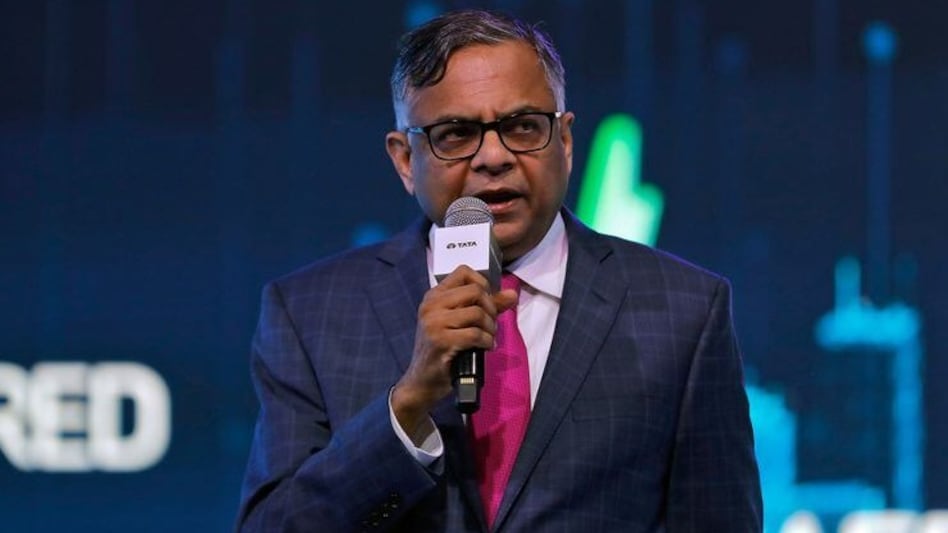
 In his message in the Tata Sons Annual Report for 2025-26, Chandrasekaran acknowledged that Air India endured one of its toughest years yet.
 Nearly four years after the Tata Group reclaimed Air India, the airline's revival remains one of India's most ambitious corporate turnarounds. But Tata Sons Chairman N Chandrasekaran believes the transformation should not be judged quarter by quarter — or even year by year.
Instead, he says rebuilding India's flag carrier is a five- to ten-year journey, requiring not just new aircraft but a complete overhaul of systems, culture, technology and talent.

 RIL group to become India's largest conglomerate by m-cap after Jio IPO: Uday Kotak
 IDBI Bank sale to Fairfax faces union resistance, black-badge protest on October 16
 Supreme Court overturns Yes Bank’s ₹8,400 crore bond write-off, raising liability risks: Report
 India's trade with West Asia returns to near-normal levels
 India-US trade deal nearing finish line, but tariff clarity remains key
 Weekend OTT Releases: The Diplomat 4, Aasha, Sacrifice And More
 How Jio Transformed India From Data Scarce to Data Abundant! | Akash Ambani | Jio Platforms IPO
 Akash Ambani Decodes Jio's Financial Muscle | Reveals The 5 Key Business Drivers | Jio Platforms IPO
 From Dhirubhai’s 1977 IPO to Jio's Mega Launch | Uday Kotak Calls Jio IPO a ‘Moment in History’
 Where To Invest To Benefit From The RBI’s Rate Hike | Personal Finance | Money Today
 RIL group to become India's largest conglomerate by m-cap after Jio IPO: Uday Kotak
 Gold eyes sharp recovery; can MCX prices hit Rs 1.5 lakh? Vandana Bharti explains
 Tech Mahindra Q2 results: PAT rises 33% YoY to Rs 1,586 crore; recommends 1:1 bonus issue
 Jio Platforms IPO: How HFCL promoter Mahendra Nahata's investment could rise over 110 times
 South Indian Bank shares hit 52-week high on Q2 earnings, close higher
  From space to underwater warfare: Defence Ministry signs Rs 4,106 crore deals for IAF, Navy
 Election Commission announces voter list revision in 17 states, SIR schedule to follow
 Jeep, Citroën maker Stellantis shifts into high gear with 7 new models in ₹4,000-crore India push
 Jio IPO: ₹27,500 crore debt repayment, rising ARPU and 5G growth in focus
 'We are very close': US envoy Sergio Gor says India-US trade deal will happen












