
Airline industry losses to nearly triple in FY27 due to West Asia conflict, ATF prices: ICRA
India's aviation industry is expected to face a much deeper financial downturn in FY27, with ICRA nearly tripling its loss estimate to as much as ₹38,000 crore. The ratings agency cited the West Asia conflict, elevated ATF prices, rupee depreciation and rising lease costs as key factors hurting airline profitability.
- Jun 27, 2026,
- Updated Jun 27, 2026 5:11 PM IST
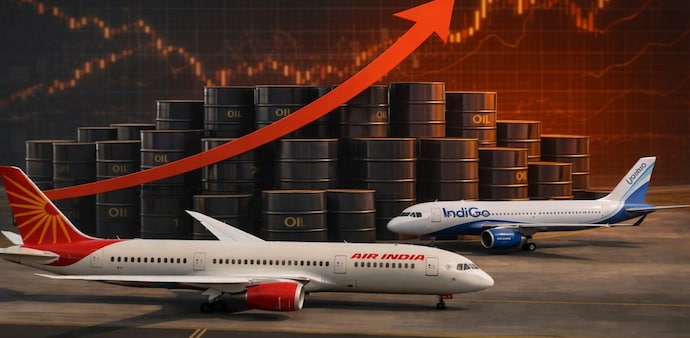
India's airline industry is expected to face a much steeper financial setback in FY27, with losses projected to nearly triple as the ongoing West Asia conflict, elevated aviation turbine fuel (ATF) prices, a weaker rupee and higher aircraft lease rentals weigh heavily on carrier finances.
According to ICRA's latest aviation outlook report released on Friday, the domestic aviation industry is now expected to post net losses of ₹36,000-38,000 crore in FY27, a sharp increase from its earlier estimate of ₹11,000-12,000 crore. The ratings agency also revised its FY26 loss forecast upwards to ₹32,000-34,000 crore from ₹17,000-18,000 crore, reflecting the prolonged impact of geopolitical tensions and rising operating costs.
The report said the escalation of the West Asia conflict since late February has significantly worsened the industry's earnings outlook by driving up fuel costs, disrupting airspace and increasing operating expenses for airlines.
MUST READ: Big connectivity boost for Assam: Air India to launch direct Guwahati-Dubai, Abu Dhabi flights
Reflecting the challenging environment, ICRA also lowered its passenger traffic forecasts for FY27. Domestic passenger traffic is now expected to grow 3-6%, down from the earlier estimate of 6-8%, while international passenger traffic for Indian carriers is projected to rise only 0-3%, compared with the previous forecast of 8-10%.
MUST READ: After Delhi, Mumbai, Kolkata is getting another airport — How it will change the way you fly
The agency attributed the downward revision to higher airfares resulting from increased airline costs, continued airspace disruptions, flight cancellations and an anticipated moderation in discretionary travel demand.
Even as profitability weakens, passenger traffic remained resilient during May. Domestic airlines carried 15.64 million passengers, up 11.3% from 14.05 million in May 2025 and 13.2% higher than the 13.81 million passengers recorded in April.
However, ICRA said the strong year-on-year growth was partly driven by a favourable base effect, as passenger traffic had weakened in May 2025 following the Pahalgam terror attack and the subsequent military conflict between India and Pakistan. During April-May FY27, domestic passenger traffic stood at 29.46 million, an increase of 3.8% over the corresponding period last year.
MUST READ: Flying from Bengaluru? Your air ticket could get cheaper under new proposal
Airline operations also expanded during the month. Domestic carriers operated around 103,515 departures in May, up 5.1% year-on-year and 6.6% sequentially. Passenger load factor (PLF) remained strong at an estimated 88.8%, compared with 83.9% a year ago and 82% in April, indicating airlines continued to fill a high proportion of available seats despite rising fares.
Despite healthy demand, ICRA retained its negative outlook on the aviation sector, saying airlines are unlikely to fully pass on higher costs to passengers through fare increases.
Fuel continues to be one of the industry's biggest cost challenges. Domestic ATF prices in June remained unchanged from April and May following pricing interventions by oil marketing companies but were still 26.9% higher than a year earlier. International ATF prices declined about 27% sequentially but remained nearly 45% above year-ago levels.
ICRA noted that fuel accounts for 30-40% of airline operating costs, while 35-50% of total expenses—including fuel, aircraft lease rentals and maintenance—are denominated in US dollars, leaving airlines vulnerable to rupee depreciation.
MUST READ: BT Explainer: DXN or VIND — decoding Noida International Airport's two official codes
The report also highlighted measures announced by the government to support the sector, including a 25% reduction in landing and parking charges, the ₹5,000-crore Emergency Credit Line Guarantee Scheme (ECLGS 5.0) and the newly approved ₹10,000-crore ATF Price Stabilisation Fund, which is expected to reduce fuel price volatility and improve cost visibility for airlines.
ICRA added that supply-chain disruptions and Pratt & Whitney engine issues continue to constrain capacity. Around 99 aircraft remained grounded as of March 2026, accounting for 11-13% of the industry's fleet, although this is an improvement from 20-22% in September 2023.
MUST READ: Flying IndiGo Stretch? Your bags will arrive first, and the onboard meal is changing
India's airline industry is expected to face a much steeper financial setback in FY27, with losses projected to nearly triple as the ongoing West Asia conflict, elevated aviation turbine fuel (ATF) prices, a weaker rupee and higher aircraft lease rentals weigh heavily on carrier finances.
According to ICRA's latest aviation outlook report released on Friday, the domestic aviation industry is now expected to post net losses of ₹36,000-38,000 crore in FY27, a sharp increase from its earlier estimate of ₹11,000-12,000 crore. The ratings agency also revised its FY26 loss forecast upwards to ₹32,000-34,000 crore from ₹17,000-18,000 crore, reflecting the prolonged impact of geopolitical tensions and rising operating costs.
The report said the escalation of the West Asia conflict since late February has significantly worsened the industry's earnings outlook by driving up fuel costs, disrupting airspace and increasing operating expenses for airlines.
MUST READ: Big connectivity boost for Assam: Air India to launch direct Guwahati-Dubai, Abu Dhabi flights
Reflecting the challenging environment, ICRA also lowered its passenger traffic forecasts for FY27. Domestic passenger traffic is now expected to grow 3-6%, down from the earlier estimate of 6-8%, while international passenger traffic for Indian carriers is projected to rise only 0-3%, compared with the previous forecast of 8-10%.
MUST READ: After Delhi, Mumbai, Kolkata is getting another airport — How it will change the way you fly
The agency attributed the downward revision to higher airfares resulting from increased airline costs, continued airspace disruptions, flight cancellations and an anticipated moderation in discretionary travel demand.
Even as profitability weakens, passenger traffic remained resilient during May. Domestic airlines carried 15.64 million passengers, up 11.3% from 14.05 million in May 2025 and 13.2% higher than the 13.81 million passengers recorded in April.
However, ICRA said the strong year-on-year growth was partly driven by a favourable base effect, as passenger traffic had weakened in May 2025 following the Pahalgam terror attack and the subsequent military conflict between India and Pakistan. During April-May FY27, domestic passenger traffic stood at 29.46 million, an increase of 3.8% over the corresponding period last year.
MUST READ: Flying from Bengaluru? Your air ticket could get cheaper under new proposal
Airline operations also expanded during the month. Domestic carriers operated around 103,515 departures in May, up 5.1% year-on-year and 6.6% sequentially. Passenger load factor (PLF) remained strong at an estimated 88.8%, compared with 83.9% a year ago and 82% in April, indicating airlines continued to fill a high proportion of available seats despite rising fares.
Despite healthy demand, ICRA retained its negative outlook on the aviation sector, saying airlines are unlikely to fully pass on higher costs to passengers through fare increases.
Fuel continues to be one of the industry's biggest cost challenges. Domestic ATF prices in June remained unchanged from April and May following pricing interventions by oil marketing companies but were still 26.9% higher than a year earlier. International ATF prices declined about 27% sequentially but remained nearly 45% above year-ago levels.
ICRA noted that fuel accounts for 30-40% of airline operating costs, while 35-50% of total expenses—including fuel, aircraft lease rentals and maintenance—are denominated in US dollars, leaving airlines vulnerable to rupee depreciation.
MUST READ: BT Explainer: DXN or VIND — decoding Noida International Airport's two official codes
The report also highlighted measures announced by the government to support the sector, including a 25% reduction in landing and parking charges, the ₹5,000-crore Emergency Credit Line Guarantee Scheme (ECLGS 5.0) and the newly approved ₹10,000-crore ATF Price Stabilisation Fund, which is expected to reduce fuel price volatility and improve cost visibility for airlines.
ICRA added that supply-chain disruptions and Pratt & Whitney engine issues continue to constrain capacity. Around 99 aircraft remained grounded as of March 2026, accounting for 11-13% of the industry's fleet, although this is an improvement from 20-22% in September 2023.
MUST READ: Flying IndiGo Stretch? Your bags will arrive first, and the onboard meal is changing