
Blinkit targets 5,000 stores by March 2028: Can smaller cities drive quick-commerce growth?
According to the Q2 result document, the company expects to cross 3,500 stores by March 2027, up from 2,751 at the end of the second quarter of FY27.
- Oct 21, 2026,
- Updated Oct 21, 2026 5:59 PM IST
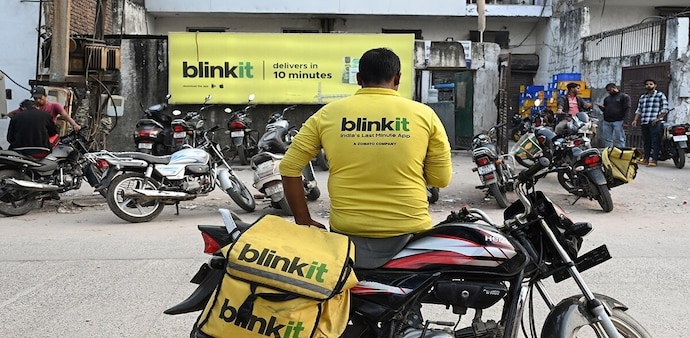
Blinkit is accelerating its expansion beyond India's major metropolitan markets, targeting around 5,000 stores by March 2028 as it bets that smaller cities can deliver demand and store economics comparable to those in larger urban centres. The move signals a new phase in India's quick-commerce expansion, where growth will depend not only on adding outlets but also on building supply chains that can serve smaller markets profitably.
According to the Q2 result document of Eternal, the company expects to cross 3,500 stores by March 2027, up from 2,751 at the end of the second quarter of FY27. Its revised target represents a faster expansion trajectory, with smaller cities and stores focused on newer product categories expected to account for a substantial share of the additions.
The strategy rests on Blinkit's assessment that demand in smaller cities has been underestimated and that organised retail has not fully addressed consumers' need for wider product selection, competitive prices and faster delivery.
Smaller cities show metro-like demand patterns
Addressing concerns about the viability of quick commerce beyond metros, Blinkit CEO Albinder Dhindsa said the company's operating data challenged the assumptions that smaller cities have significantly weaker basket sizes and insufficient customer density.
MUST READ: After Temple, Deepinder Goyal teases Dark.ai: A bet beyond food delivery services
According to Dhindsa, new stores in these markets reach around 1,000 orders per day in a timeframe similar to new stores in metros, and sometimes faster. Net average order values (NAOVs) in smaller cities are also at 85-90% of metro levels, while customer retention is comparable.
The baskets include categories that might not traditionally be associated with smaller markets, including premium beverages, branded diapers and gaming consoles, Dhindsa said.
The company believes quick commerce can unlock demand that has remained underserved because consumers have had limited access to organised retail assortments locally or have had to wait days for products ordered through conventional e-commerce platforms.
However, the opportunity is unlikely to be uniform across all smaller cities. Blinkit has acknowledged that some markets will remain too small to support the business at scale and said it would remain disciplined about expansion decisions.
Supply-chain infrastructure will be critical
While consumer demand appears promising, replicating metro-level economics in smaller cities will require substantial operational investment.
Dhindsa said building the supply chain for these markets was the more difficult task and could become a competitive advantage. In several cases, Blinkit has had to develop first-mile capabilities, sourcing products directly from brand warehouses and moving them into mother warehouses that supply smaller cities.
This infrastructure is essential to maintaining product availability, controlling costs and replenishing local stores efficiently. Lower population density and potentially smaller order volumes can make logistics more challenging, even when consumer demand is strong.
The economics of individual stores will also matter as the network expands. New outlets typically put pressure on margins during their initial months, but Blinkit's management expects improvements in mature stores and cities to offset this impact.
The company said its mature cities were already operating at adjusted EBITDA margins of more than 5%. It also reported that cities contributing around 96% of net order value were contribution-positive, while those contributing around 70% were adjusted EBITDA-positive.
These figures suggest that profitability is becoming more geographically broad-based, although they do not establish that every new store or smaller-city market will achieve similar returns.
DO READ: Flipkart tests ‘Eat-in by Minutes’ food-delivery service, takes on Zomato and Swiggy
Assortment expansion could strengthen the model
Blinkit's expansion strategy also involves increasing the range of products available through its stores. In Delhi-NCR, its assortment grew from around 80,000 stock-keeping units (SKUs) in the fourth quarter of FY26 to approximately 100,000, according to Dhindsa.
The company is expanding both within existing categories, by adding brands, sizes and price points, and into new categories. A wider assortment could encourage more frequent purchases and increase the share of household spending captured by the platform.
However, categories such as large appliances and fragile or high-value goods require different storage, handling, security and returns processes, making expansion more complex.
For the wider quick-commerce industry, Blinkit's plans illustrate the next competitive frontier: extending beyond dense metropolitan markets without sacrificing fulfilment efficiency or profitability. The 5,000-store target reflects confidence in the opportunity, but the decisive test will be whether smaller-city demand can support sustainable store-level returns as the network scales.