
Deadliest Hong Kong fire in decades kills 44, scaffolding and foam blamed for chaos
A firefighter was among the dead, and 45 people remain in critical condition. Authorities have confirmed 279 people are still unaccounted for. Around 900 residents have taken shelter in temporary accommodations.
- Nov 27, 2025,
- Updated Nov 27, 2025 7:55 AM IST
At least 44 people are dead and nearly 300 missing after a fire tore through a Hong Kong high-rise complex on Wednesday, in what has become the city’s deadliest blaze since World War II. Authorities say unsafe scaffolding and flammable foam used during maintenance work may have helped the inferno spread.
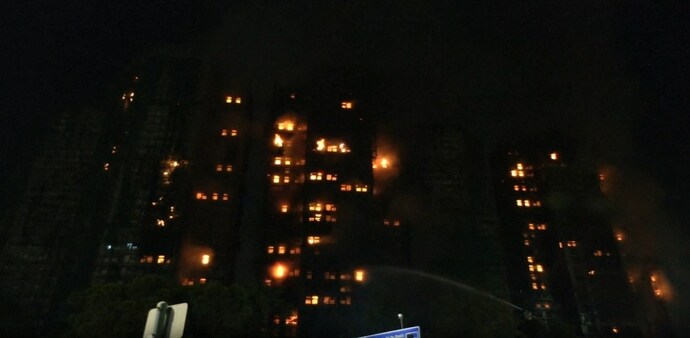
The blaze, which erupted in the 32-storey Wang Fuk Court complex in Tai Po, raged through four buildings and was still burning more than 15 hours later. With thick smoke and intense heat hampering rescue efforts, firefighters worked overnight to reach those feared trapped on upper floors.
Police arrested three construction company officials—two directors and an engineering consultant—on suspicion of manslaughter. Investigators say the buildings were wrapped in plastic mesh and bamboo scaffolding that may not have met fire codes. Windows on at least one tower were also found sealed with foam insulation.
“We believe gross negligence by the company contributed to the uncontrollable spread of this fire,” said Police Superintendent Eileen Chung.
The tragedy recalls the 2017 Grenfell Tower fire in London, where flammable cladding and regulatory failures led to 72 deaths. Wang Fuk Court’s fire has now surpassed Hong Kong’s previous deadliest blaze, a 1996 Kowloon inferno that killed 41.
A firefighter was among the dead, and 45 people remain in critical condition. Authorities have confirmed 279 people are still unaccounted for. Around 900 residents have taken shelter in temporary accommodations.
Hong Kong Chief Executive John Lee promised a full investigation. “The priority is rescue, then recovery, then accountability,” he said.
The Wang Fuk Court, home to 2,000 apartments under the city’s subsidised ownership scheme, had been undergoing HK$330 million in renovations. The traditional bamboo scaffolding, still widely used in Hong Kong, is being phased out amid safety concerns—but not fast enough, some critics argue.v
At least 44 people are dead and nearly 300 missing after a fire tore through a Hong Kong high-rise complex on Wednesday, in what has become the city’s deadliest blaze since World War II. Authorities say unsafe scaffolding and flammable foam used during maintenance work may have helped the inferno spread.
The blaze, which erupted in the 32-storey Wang Fuk Court complex in Tai Po, raged through four buildings and was still burning more than 15 hours later. With thick smoke and intense heat hampering rescue efforts, firefighters worked overnight to reach those feared trapped on upper floors.
Police arrested three construction company officials—two directors and an engineering consultant—on suspicion of manslaughter. Investigators say the buildings were wrapped in plastic mesh and bamboo scaffolding that may not have met fire codes. Windows on at least one tower were also found sealed with foam insulation.
“We believe gross negligence by the company contributed to the uncontrollable spread of this fire,” said Police Superintendent Eileen Chung.
The tragedy recalls the 2017 Grenfell Tower fire in London, where flammable cladding and regulatory failures led to 72 deaths. Wang Fuk Court’s fire has now surpassed Hong Kong’s previous deadliest blaze, a 1996 Kowloon inferno that killed 41.
A firefighter was among the dead, and 45 people remain in critical condition. Authorities have confirmed 279 people are still unaccounted for. Around 900 residents have taken shelter in temporary accommodations.
Hong Kong Chief Executive John Lee promised a full investigation. “The priority is rescue, then recovery, then accountability,” he said.
The Wang Fuk Court, home to 2,000 apartments under the city’s subsidised ownership scheme, had been undergoing HK$330 million in renovations. The traditional bamboo scaffolding, still widely used in Hong Kong, is being phased out amid safety concerns—but not fast enough, some critics argue.v