
‘Gig work exposed inequality’: Deepinder Goyal says the real discomfort isn’t pay, but guilt
According to Goyal, this face-to-face interaction between the working class and the consuming class — repeated transaction after transaction — is unprecedented in scale and deeply unsettling because it makes inequality impossible to ignore.
- Jan 2, 2026,
- Updated Jan 2, 2026 5:08 PM IST
As the debate over gig workers’ pay, conditions and social security intensifies online, Zomato and Blinkit founder Deepinder Goyal has entered the conversation with a long, reflective post that reframes the issue beyond wages and regulation, placing class, visibility and moral discomfort at the centre of the discussion.
In a post on X (formally twitter), Goyal argued that for centuries, economic inequality was sustained by distance and invisibility. Factory workers, farmers and domestic help remained out of sight, allowing the consuming class to enjoy the benefits of labour without confronting the people behind it. The gig economy, he said, has fundamentally altered that equation.
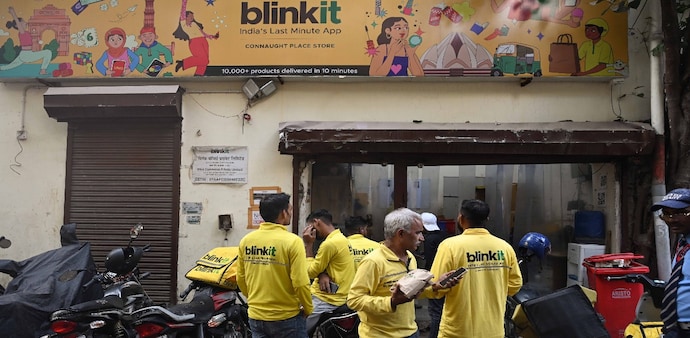
Delivery partners are now visible at the doorstep, riding through heat, rain and traffic to deliver food, groceries and quick-commerce essentials. According to Goyal, this face-to-face interaction between the working class and the consuming class — repeated transaction after transaction — is unprecedented in scale and deeply unsettling because it makes inequality impossible to ignore.
Guilt & discomfort
Goyal suggested that much of the outrage and unease around gig work is emotional rather than purely economic. When a single ₹800-₹1,000 order can equal a delivery partner’s entire day’s earnings after fuel costs, bike rentals and platform cuts, inequality becomes personal. Awkward tipping, avoidance of eye contact and polarised online debates, he argued, are expressions of guilt rather than policy clarity.
According to him, this is why discussions around the gig economy quickly escalate — not just into arguments about fair pay or exploitation, but into broader confrontations with systemic inequality that consumers can no longer distance themselves from.
Risk of returning to invisibility
Warning against blanket bans or excessive regulation, Goyal argued that dismantling the gig economy would not automatically convert these jobs into formal, protected employment. Instead, he said, livelihoods would disappear or be pushed back into the informal economy, where protections are weaker and accountability is minimal.
He also suggested that some proposed “solutions” are less about dignity for workers and more about restoring the old comfort of invisibility for consumers — convenience without faces and moral reckoning. “Visibility is the price of progress,” Goyal wrote, arguing that society must choose whether to use this discomfort to improve systems and livelihoods or to regulate and ban gig work in a way that allows inequality to retreat back into the shadows.
As the debate over gig workers’ pay, conditions and social security intensifies online, Zomato and Blinkit founder Deepinder Goyal has entered the conversation with a long, reflective post that reframes the issue beyond wages and regulation, placing class, visibility and moral discomfort at the centre of the discussion.
In a post on X (formally twitter), Goyal argued that for centuries, economic inequality was sustained by distance and invisibility. Factory workers, farmers and domestic help remained out of sight, allowing the consuming class to enjoy the benefits of labour without confronting the people behind it. The gig economy, he said, has fundamentally altered that equation.
Delivery partners are now visible at the doorstep, riding through heat, rain and traffic to deliver food, groceries and quick-commerce essentials. According to Goyal, this face-to-face interaction between the working class and the consuming class — repeated transaction after transaction — is unprecedented in scale and deeply unsettling because it makes inequality impossible to ignore.
Guilt & discomfort
Goyal suggested that much of the outrage and unease around gig work is emotional rather than purely economic. When a single ₹800-₹1,000 order can equal a delivery partner’s entire day’s earnings after fuel costs, bike rentals and platform cuts, inequality becomes personal. Awkward tipping, avoidance of eye contact and polarised online debates, he argued, are expressions of guilt rather than policy clarity.
According to him, this is why discussions around the gig economy quickly escalate — not just into arguments about fair pay or exploitation, but into broader confrontations with systemic inequality that consumers can no longer distance themselves from.
Risk of returning to invisibility
Warning against blanket bans or excessive regulation, Goyal argued that dismantling the gig economy would not automatically convert these jobs into formal, protected employment. Instead, he said, livelihoods would disappear or be pushed back into the informal economy, where protections are weaker and accountability is minimal.
He also suggested that some proposed “solutions” are less about dignity for workers and more about restoring the old comfort of invisibility for consumers — convenience without faces and moral reckoning. “Visibility is the price of progress,” Goyal wrote, arguing that society must choose whether to use this discomfort to improve systems and livelihoods or to regulate and ban gig work in a way that allows inequality to retreat back into the shadows.