
'I was rejected by nearly 100 banks': Razorpay's Harshil Mathur on building $7.5 bn fintech giant
Unlike traditional payment companies that focused on banks and large enterprises, Razorpay was designed with startups and merchants in mind
- Jul 17, 2026,
- Updated Jul 17, 2026 8:45 AM IST
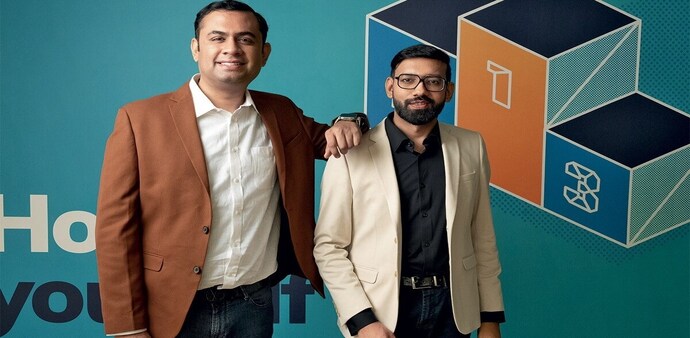
What began as a frustrating search for a payment gateway eventually led to the creation of one of India's biggest fintech success stories. Razorpay co-founder Harshil Mathur recently shared how he and co-founder Shashank Kumar overcame nearly 100 bank rejections before building Razorpay, now valued at around $7.5 billion. Their journey is a testament to persistence, learning from failure, and solving a problem that thousands of startups faced.
READ THIS: ₹759 crore flashed in an 82-year-old's account: Why pensioners shouldn't ignore such glitches
Job to passion
Mathur's entrepreneurial path wasn't always clear. After graduating as a mechanical engineer, he landed one of the most sought-after campus placements at Schlumberger in Abu Dhabi, a role that came with a six-figure salary, luxury accommodation, and generous benefits. But within months, he realised the career wasn't for him.
"I was very clear this is not for me. I am a guy who wants to sit and code. I don't want to step on the field," Mathur recalled, explaining why he quit the high-paying job despite its financial security.
Side project to a billion-dollar idea
While working offshore, Mathur spent his free time building side projects with his college friend Shashank Kumar. During the development of a crowdfunding platform, the duo discovered that integrating online payments was surprisingly difficult. "We thought payments should be the easiest part. It turned out to be the hardest part of building it," he said.
After speaking to startup founders across Bengaluru and Pune, they realised almost everyone faced the same challenge. Many even suggested accepting cash because digital payments were harder to set up. That frustration convinced the duo that there was a massive opportunity waiting to be solved.
DON'T MISS: 'Jetlagged but...': After 18 years in the US, Meta leader came back to India for his parents
Rejected by 100 banks
Determined to build their own payment gateway, Mathur and Kumar began approaching banks across the country. They visited branches, reached out to executives through LinkedIn, and pitched their idea repeatedly. Most conversations ended in rejection.
"I would have met and mostly been rejected by almost 100 bankers in that three-to-six-month period," Mathur revealed. Instead of giving up, they turned every rejection into a lesson.
"Every time we spoke to them, they gave us something more. They told us what we were missing and what we didn't understand," he said, adding that each conversation helped them better understand the complexities of the payments ecosystem.
Merchant-first mindset
Unlike traditional payment companies that focused on banks and large enterprises, Razorpay was designed with startups and merchants in mind. Since the founders didn't have banking experience, they focused on creating the product customers actually wanted. "We built our product from the merchant's perspective, not the bank's," Mathur said.
The founders worked closely with startups in co-working spaces, constantly refining the platform based on real feedback. Their biggest goal was improving payment success rates and reducing friction for businesses.
ALSO READ: Fintech Unicorn Razorpay files confidential DRHP to launch its IPO; check details
The breakthrough
Razorpay's fortunes changed after the startup was accepted into Y Combinator, even before securing bank approvals. The prestigious accelerator exposed the founders to global product-building standards and connected them with investors who believed in their vision.
Today, Razorpay has grown into one of India's most valuable fintech companies. Mathur's journey proves that rejection is not the end of the road. With resilience, continuous learning, and an unwavering focus on solving real customer problems, nearly 100 "no's" eventually paved the way for a multi-billion-dollar success story.
What began as a frustrating search for a payment gateway eventually led to the creation of one of India's biggest fintech success stories. Razorpay co-founder Harshil Mathur recently shared how he and co-founder Shashank Kumar overcame nearly 100 bank rejections before building Razorpay, now valued at around $7.5 billion. Their journey is a testament to persistence, learning from failure, and solving a problem that thousands of startups faced.
READ THIS: ₹759 crore flashed in an 82-year-old's account: Why pensioners shouldn't ignore such glitches
Job to passion
Mathur's entrepreneurial path wasn't always clear. After graduating as a mechanical engineer, he landed one of the most sought-after campus placements at Schlumberger in Abu Dhabi, a role that came with a six-figure salary, luxury accommodation, and generous benefits. But within months, he realised the career wasn't for him.
"I was very clear this is not for me. I am a guy who wants to sit and code. I don't want to step on the field," Mathur recalled, explaining why he quit the high-paying job despite its financial security.
Side project to a billion-dollar idea
While working offshore, Mathur spent his free time building side projects with his college friend Shashank Kumar. During the development of a crowdfunding platform, the duo discovered that integrating online payments was surprisingly difficult. "We thought payments should be the easiest part. It turned out to be the hardest part of building it," he said.
After speaking to startup founders across Bengaluru and Pune, they realised almost everyone faced the same challenge. Many even suggested accepting cash because digital payments were harder to set up. That frustration convinced the duo that there was a massive opportunity waiting to be solved.
DON'T MISS: 'Jetlagged but...': After 18 years in the US, Meta leader came back to India for his parents
Rejected by 100 banks
Determined to build their own payment gateway, Mathur and Kumar began approaching banks across the country. They visited branches, reached out to executives through LinkedIn, and pitched their idea repeatedly. Most conversations ended in rejection.
"I would have met and mostly been rejected by almost 100 bankers in that three-to-six-month period," Mathur revealed. Instead of giving up, they turned every rejection into a lesson.
"Every time we spoke to them, they gave us something more. They told us what we were missing and what we didn't understand," he said, adding that each conversation helped them better understand the complexities of the payments ecosystem.
Merchant-first mindset
Unlike traditional payment companies that focused on banks and large enterprises, Razorpay was designed with startups and merchants in mind. Since the founders didn't have banking experience, they focused on creating the product customers actually wanted. "We built our product from the merchant's perspective, not the bank's," Mathur said.
The founders worked closely with startups in co-working spaces, constantly refining the platform based on real feedback. Their biggest goal was improving payment success rates and reducing friction for businesses.
ALSO READ: Fintech Unicorn Razorpay files confidential DRHP to launch its IPO; check details
The breakthrough
Razorpay's fortunes changed after the startup was accepted into Y Combinator, even before securing bank approvals. The prestigious accelerator exposed the founders to global product-building standards and connected them with investors who believed in their vision.
Today, Razorpay has grown into one of India's most valuable fintech companies. Mathur's journey proves that rejection is not the end of the road. With resilience, continuous learning, and an unwavering focus on solving real customer problems, nearly 100 "no's" eventually paved the way for a multi-billion-dollar success story.