
IGL profit plunges 93.5% despite record gas sales: Why rising input costs are squeezing India's city gas distributors
IGL's net profit declined to ₹24.38 crore in Q2 FY27 from ₹372.51 crore in the corresponding quarter last year. The decline came despite an 8% increase in sales volumes and a 26% jump in gross sales turnover, which rose to ₹5,999.13 crore from ₹4,431.63 crore.
- Oct 31, 2026,
- Updated Oct 31, 2026 3:07 PM IST
Indraprastha Gas Ltd (IGL), India's largest city gas distributor, has reported a sharp decline in profitability despite achieving record sales volumes in the September quarter of FY27. The company's standalone net profit fell 93.5% year-on-year, highlighting how rising gas procurement costs can erode margins even when demand and revenues are growing.
IGL's net profit declined to ₹24.38 crore in Q2 FY27 from ₹372.51 crore in the corresponding quarter last year. The decline came despite an 8% increase in sales volumes and a 26% jump in gross sales turnover, which rose to ₹5,999.13 crore from ₹4,431.63 crore.
The divergence between revenue growth and profitability underscores the mounting cost pressures facing city gas distribution (CGD) companies, which supply compressed natural gas (CNG) to vehicles and piped natural gas (PNG) to households and businesses.
Record gas sales fail to protect margins
IGL's average daily gas sales crossed the 10 million standard cubic metres per day (mmscmd) mark for the first time during the July-September quarter, reaching 10.06 mmscmd compared with 9.31 mmscmd a year earlier.
Both major business segments recorded growth. CNG sales volumes increased 9% year-on-year, while PNG volumes rose 8%, indicating continued demand from the transportation and household segments.
However, higher volumes did not translate into stronger earnings. A substantial increase in input gas costs weighed on profitability, offsetting the benefits of higher sales.
For city gas distributors, procurement costs are a critical determinant of operating margins. These companies source natural gas through domestic allocations and imported supplies, including liquefied natural gas (LNG). When procurement prices rise, distributors face pressure to either absorb the additional costs or pass them on to consumers through higher retail prices.
The ability to pass on higher costs is not unlimited. Significant increases in CNG and PNG prices can affect affordability and competitiveness against alternative fuels, making pricing decisions particularly important for distributors.
Why rising gas costs matter for the CGD sector
The pressure on IGL reflects a broader challenge for India's city gas distribution industry. While demand for natural gas has expanded across transportation, households and industrial consumption, the sector remains exposed to volatility in international energy markets and domestic gas availability.
ALSO READ: CNG price hike impact: Adani Total Gas shares off day's low amid 'calibrated' price revision
Geopolitical tensions and disruptions to important energy supply routes can increase uncertainty around LNG availability and prices. Distributors dependent on higher-cost imported gas may face margin compression, particularly when retail prices do not adjust immediately or fully.
IGL has continued to expand its distribution infrastructure despite these challenges. During FY26, it added 70 CNG stations, taking its total network to 1,024 stations. It also added more than 3.7 lakh PNG connections during the year.
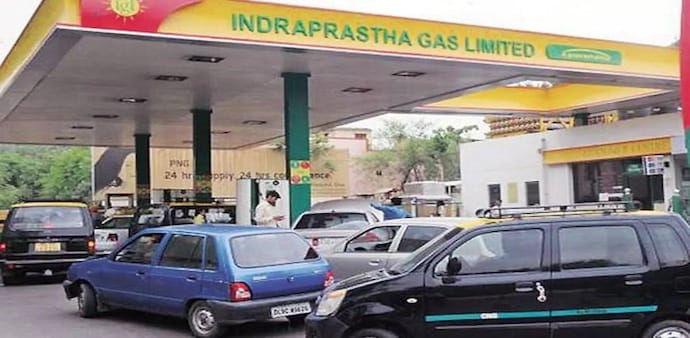
The company operates across 34 districts in 11 geographical areas spanning Delhi, Uttar Pradesh, Haryana and Rajasthan. Its network includes more than 30,000 km of pipelines and over 1,000 CNG stations, serving more than 2.5 million CNG vehicles and over 3.5 million households.
The latest results underline a key concern for the sector: expanding demand and infrastructure do not necessarily guarantee higher earnings. For IGL and other city gas distributors, the trajectory of procurement costs, domestic gas availability and the ability to pass on price increases will remain crucial to protecting margins in the coming quarters.
ALSO READ: Hyundai Bayon CNG coming in January! Its biggest surprise could be hidden underneath