
India growing faster than global average for Philips; CEO flags healthcare data as key to AI push
India is Philips’ fastest-growing market and largest informatics hub, but stronger domestic healthcare datasets and infrastructure are critical to scale AI deployment, CEO Roy Jakobs said.
- Feb 20, 2026,
- Updated Feb 20, 2026 3:10 PM IST
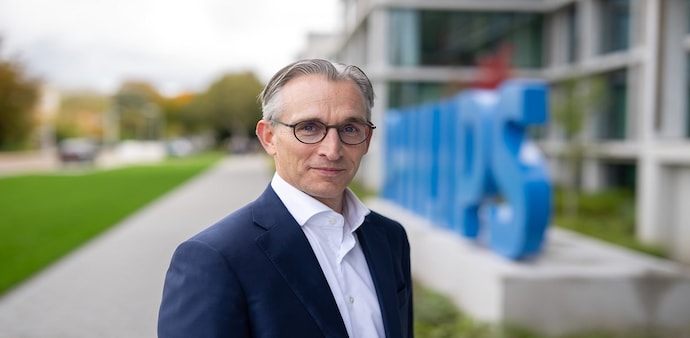
Fresh from the AI Impact Summit in New Delhi, Roy Jakobs, CEO of Philips, says India is emerging as one of the company’s fastest-growing markets globally, but unlocking the full potential of AI in healthcare will depend on building stronger domestic data infrastructure.
Calling the summit “impactful,” Jakobs speaking to Business Today in Bengaluru said India is well positioned to become a global leader in AI, given its long-standing strength in software and informatics. However, he cautioned that the opportunity will hinge on building the right foundations.
“There was strong seriousness from both government and industry on building the required infrastructure. AI requires access to data, and for healthcare specifically, strong datasets are critical for training algorithms,” he said.
For Philips, healthcare is now the primary growth driver in India as both public and private investments in the sector rise. “India is becoming a strong growth market, and it is growing faster than our global average,” Jakobs noted, even as competition in the market intensifies.
At the summit, the company discussed ways to strengthen local healthcare datasets and accelerate real-world deployment of AI solutions. Philips also engaged with the Health Ministry on the use of AI to support community health centres and explored initiatives such as the Health Platform Data Management (HPDM) framework.
India’s strategic importance for Philips goes beyond market growth. The company, which has been present in the country for 97 years, runs its largest global informatics hub here. The deep talent pool makes India central to its digital and AI roadmap.
“India is critical for us because of its strong talent base. Many professionals trained here support our global operations across Europe, the US and other markets. It also serves as a talent springboard,” Jakobs said.
The company is also closely aligned with India’s startup ecosystem through its venture arm and ongoing market scouting, particularly in specialised areas such as interventional healthcare. Innovations developed for India’s scale and cost sensitivities, especially AI-led solutions, have the potential to be integrated into Philips’ global portfolio.
On the policy front, Jakobs welcomed recent trade agreements involving India, saying they would ease business operations. However, he made a broader case for reducing barriers in the healthcare sector globally.
“In healthcare, every trade barrier ultimately affects the patient — either by increasing costs or slowing access to innovation. Our long-term aspiration would be a world with minimal barriers,” he said.
Fresh from the AI Impact Summit in New Delhi, Roy Jakobs, CEO of Philips, says India is emerging as one of the company’s fastest-growing markets globally, but unlocking the full potential of AI in healthcare will depend on building stronger domestic data infrastructure.
Calling the summit “impactful,” Jakobs speaking to Business Today in Bengaluru said India is well positioned to become a global leader in AI, given its long-standing strength in software and informatics. However, he cautioned that the opportunity will hinge on building the right foundations.
“There was strong seriousness from both government and industry on building the required infrastructure. AI requires access to data, and for healthcare specifically, strong datasets are critical for training algorithms,” he said.
For Philips, healthcare is now the primary growth driver in India as both public and private investments in the sector rise. “India is becoming a strong growth market, and it is growing faster than our global average,” Jakobs noted, even as competition in the market intensifies.
At the summit, the company discussed ways to strengthen local healthcare datasets and accelerate real-world deployment of AI solutions. Philips also engaged with the Health Ministry on the use of AI to support community health centres and explored initiatives such as the Health Platform Data Management (HPDM) framework.
India’s strategic importance for Philips goes beyond market growth. The company, which has been present in the country for 97 years, runs its largest global informatics hub here. The deep talent pool makes India central to its digital and AI roadmap.
“India is critical for us because of its strong talent base. Many professionals trained here support our global operations across Europe, the US and other markets. It also serves as a talent springboard,” Jakobs said.
The company is also closely aligned with India’s startup ecosystem through its venture arm and ongoing market scouting, particularly in specialised areas such as interventional healthcare. Innovations developed for India’s scale and cost sensitivities, especially AI-led solutions, have the potential to be integrated into Philips’ global portfolio.
On the policy front, Jakobs welcomed recent trade agreements involving India, saying they would ease business operations. However, he made a broader case for reducing barriers in the healthcare sector globally.
“In healthcare, every trade barrier ultimately affects the patient — either by increasing costs or slowing access to innovation. Our long-term aspiration would be a world with minimal barriers,” he said.