
IndiGo crisis deepens: CCI probes antitrust issues during mass cancellation of flights
A senior official said CCI is internally assessing whether IndiGo’s dominant position in the market, or on specific routes, played any role in the way the crisis unfolded.
- Dec 12, 2025,
- Updated Dec 12, 2025 2:03 PM IST
Competition watchdog Competition Commission of India is examining whether IndiGo, the country’s largest airline, has breached antitrust rules, even as the carrier battles heavy regulatory and public heat over a wave of flight cancellations and delays this month.
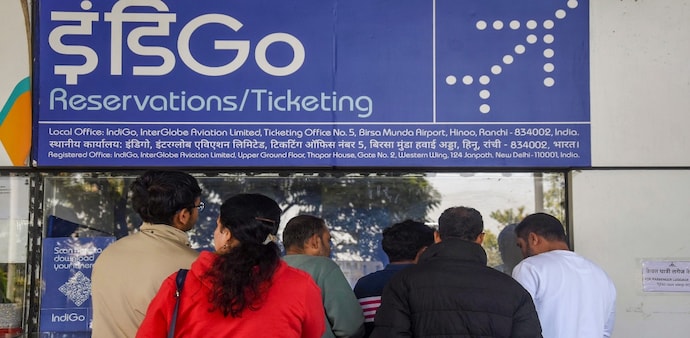
IndiGo, which commands more than 60–65 per cent of India’s domestic aviation market, has cancelled hundreds of flights since December 2, stranding thousands of passengers across key metros and smaller cities. While operations are now slowly stabilising, the scale and duration of the disruption have triggered intense scrutiny from multiple regulators.
A senior official told PTI that the Competition Commission of India (CCI) is internally assessing whether IndiGo’s dominant position in the market, or on specific routes, played any role in the way the crisis unfolded. The watchdog is looking at questions of overall dominance, route-wise dominance, and any potential abuse of that dominance.
So far, no formal complaint has been filed against IndiGo. Instead, the CCI has initiated a suo motu examination to determine whether there is any prima facie evidence of a violation of competition law. Under Section 4 of the Competition Act, abuse of dominance can be either exploitative – such as excessive pricing or unfair conditions – or exclusionary, including actions that deny market access to competitors.
Being a dominant player is not, by itself, illegal. The CCI first undertakes a detailed assessment of available information and, only if it finds prima facie signs of abuse, does it order a full-fledged investigation. If wrongdoing is eventually established, the regulator can impose penalties and issue cease-and-desist orders to curb anti-competitive conduct.
IndiGo operational crisis
The immediate trigger for IndiGo’s operational crisis is widely linked to the implementation of revised Flight Duty Time Limitations (FDTL) that came into effect on November 1. The new rules expand mandatory rest hours, cap night duties more strictly, and require 48 hours of weekly rest for pilots. Industry observers and officials have flagged inadequate planning and rostering by IndiGo in adapting to these norms, compounded by other operational factors.
InterGlobe Aviation-run IndiGo has cancelled roughly 2,000 flights in just five days, according to Reuters, and over a thousand flights in the past 10 days overall. The airline scrapped more than 50 flights from Bengaluru alone on Friday. Its market capitalisation has now fallen below the ₹2 lakh crore mark as investor concerns mount over the impact of mass cancellations, refunds and recovery costs.
Civil Aviation Minister Ram Mohan Naidu has stressed that the FDTL rules were finalised after stakeholder consultations and warned that “no airline, no matter how big, will be allowed to cause hardship to passengers.” The Directorate General of Civil Aviation (DGCA) has ordered IndiGo to cut 10 per cent of its approved domestic winter schedule for 2025 across all sectors. IndiGo CEO Pieter Elbers has been summoned to appear before a DGCA Committee of Officers on December 12.
IndiGo refund, compensation, travel vouchers
To placate affected customers, IndiGo has announced ₹10,000 travel vouchers for severely impacted flyers, usable on any IndiGo flight over the next 12 months. This is over and above government-mandated compensation of ₹5,000 to ₹10,000 for flights cancelled within 24 hours of departure. The full financial fallout for the airline, however, remains uncertain.
The crisis has also reached the courts. A public interest litigation has been filed in the Delhi High Court by petitioners Akhil Rana and Utkarsh Sharma against IndiGo, the Ministry of Civil Aviation and the DGCA. The matter was heard on December 10 and adjourned after initial submissions, with further hearings expected.
As IndiGo works to stabilise schedules and restore confidence, it now faces parallel scrutiny from the DGCA on safety and operational compliance, the CCI on possible abuse of dominance, and the judiciary via the PIL—turning its December disruption into a major test case for India’s aviation and competition framework.
Competition watchdog Competition Commission of India is examining whether IndiGo, the country’s largest airline, has breached antitrust rules, even as the carrier battles heavy regulatory and public heat over a wave of flight cancellations and delays this month.
IndiGo, which commands more than 60–65 per cent of India’s domestic aviation market, has cancelled hundreds of flights since December 2, stranding thousands of passengers across key metros and smaller cities. While operations are now slowly stabilising, the scale and duration of the disruption have triggered intense scrutiny from multiple regulators.
A senior official told PTI that the Competition Commission of India (CCI) is internally assessing whether IndiGo’s dominant position in the market, or on specific routes, played any role in the way the crisis unfolded. The watchdog is looking at questions of overall dominance, route-wise dominance, and any potential abuse of that dominance.
So far, no formal complaint has been filed against IndiGo. Instead, the CCI has initiated a suo motu examination to determine whether there is any prima facie evidence of a violation of competition law. Under Section 4 of the Competition Act, abuse of dominance can be either exploitative – such as excessive pricing or unfair conditions – or exclusionary, including actions that deny market access to competitors.
Being a dominant player is not, by itself, illegal. The CCI first undertakes a detailed assessment of available information and, only if it finds prima facie signs of abuse, does it order a full-fledged investigation. If wrongdoing is eventually established, the regulator can impose penalties and issue cease-and-desist orders to curb anti-competitive conduct.
IndiGo operational crisis
The immediate trigger for IndiGo’s operational crisis is widely linked to the implementation of revised Flight Duty Time Limitations (FDTL) that came into effect on November 1. The new rules expand mandatory rest hours, cap night duties more strictly, and require 48 hours of weekly rest for pilots. Industry observers and officials have flagged inadequate planning and rostering by IndiGo in adapting to these norms, compounded by other operational factors.
InterGlobe Aviation-run IndiGo has cancelled roughly 2,000 flights in just five days, according to Reuters, and over a thousand flights in the past 10 days overall. The airline scrapped more than 50 flights from Bengaluru alone on Friday. Its market capitalisation has now fallen below the ₹2 lakh crore mark as investor concerns mount over the impact of mass cancellations, refunds and recovery costs.
Civil Aviation Minister Ram Mohan Naidu has stressed that the FDTL rules were finalised after stakeholder consultations and warned that “no airline, no matter how big, will be allowed to cause hardship to passengers.” The Directorate General of Civil Aviation (DGCA) has ordered IndiGo to cut 10 per cent of its approved domestic winter schedule for 2025 across all sectors. IndiGo CEO Pieter Elbers has been summoned to appear before a DGCA Committee of Officers on December 12.
IndiGo refund, compensation, travel vouchers
To placate affected customers, IndiGo has announced ₹10,000 travel vouchers for severely impacted flyers, usable on any IndiGo flight over the next 12 months. This is over and above government-mandated compensation of ₹5,000 to ₹10,000 for flights cancelled within 24 hours of departure. The full financial fallout for the airline, however, remains uncertain.
The crisis has also reached the courts. A public interest litigation has been filed in the Delhi High Court by petitioners Akhil Rana and Utkarsh Sharma against IndiGo, the Ministry of Civil Aviation and the DGCA. The matter was heard on December 10 and adjourned after initial submissions, with further hearings expected.
As IndiGo works to stabilise schedules and restore confidence, it now faces parallel scrutiny from the DGCA on safety and operational compliance, the CCI on possible abuse of dominance, and the judiciary via the PIL—turning its December disruption into a major test case for India’s aviation and competition framework.