
Jio IPO: Can Akash Ambani turn Reliance’s telecom giant into a technology powerhouse?
Jio Platforms’ ₹30,213 crore IPO puts Akash Ambani’s vision of turning the telecom giant into a technology powerhouse in focus. Can AI, cloud services and digital applications reduce Jio’s dependence on telecom and drive its next phase of growth?
- Oct 22, 2026,
- Updated Oct 22, 2026 6:52 PM IST
As Jio Platforms prepares for its stock market debut with a ₹30,213 crore initial public offering (IPO), managing director Akash Ambani is positioning the business as more than a telecom operator. His ambition is to transform Jio into a technology platform spanning connectivity, artificial intelligence (AI), digital services and enterprise solutions. For investors, the key question is whether these ambitions can translate into new revenue streams and sustain Jio’s growth beyond telecom.
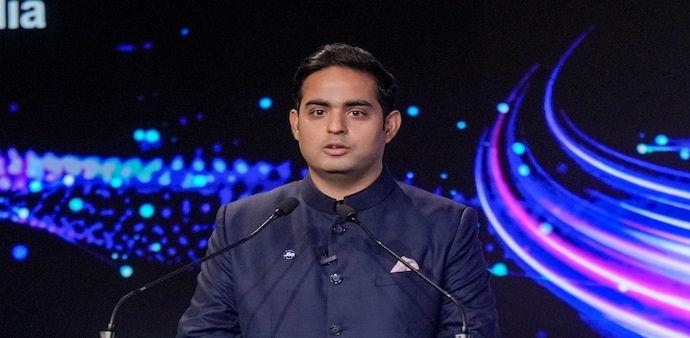
Akash, 34, took centre stage at Jio Platforms’ recent IPO event, outlining the company’s scale and strategic priorities. His growing public role also signals a generational shift at Reliance Industries, where Mukesh Ambani continues to lead the broader conglomerate. Akash has been leading Jio’s long-term roadmap, with a focus on moving from 4G to 5G and expanding into AI-enabled services.
From telecom disruption to a technology platform
Since its launch in 2016, Jio has transformed India’s telecom industry by offering low-cost voice and data services, accelerating mobile internet adoption. The company had 533.3 million customers as of June 2026, giving it a substantial distribution network for new digital offerings.
But Jio’s financial profile shows the challenge ahead. For FY26, it reported revenue of ₹1,46,885 crore, EBITDA of ₹76,255 crore and profit after tax of ₹30,049 crore, with an EBITDA margin of 51.91%. Telecom continues to account for nearly 90% of its $15.45 billion revenue and around 94% of its profit, according to the reported figures.
MUST READ: Jio Platforms IPO: Retail portion fully booked; issue subscribed 3.5x on Day 2
That concentration makes diversification central to Akash’s technology-platform strategy. Jio is targeting opportunities in managed digital solutions, cloud and connectivity services, cybersecurity and AI-powered applications. The company has also highlighted AI-powered call summaries and transcription in 12 Indian languages, seeking to use its understanding of customers and its extensive network to build services beyond conventional connectivity.
The potential advantage lies in scale: Jio can introduce digital products to a vast existing customer base. However, converting that reach into meaningful incremental revenue will depend on customer adoption, pricing and the ability to develop services that customers are willing to pay for.
Can AI and digital services become new growth engines?
Jio’s technology ambitions could create opportunities in consumer applications and enterprise services, while tariff increases and higher average revenue per user (ARPU) could strengthen its core telecom business.
The distinction matters for investors. Higher tariffs can improve revenue from existing connectivity services, but a successful technology-platform strategy would require Jio to build additional sources of earnings. Cloud services, cybersecurity and AI-enabled applications could help broaden its business mix, although their contribution will need to be assessed against the scale of its telecom operations.
Jio also faces execution challenges. Network and spectrum investments require substantial capital, subscriber growth could become harder as the market matures, and competition may limit pricing flexibility. AI and digital services will need to demonstrate commercial traction rather than remain strategic ambitions.
ALSO READ: Jio IPO: Meta's ₹43,573-crore bet could yield ₹56,272 crore on paper, but what about dollar returns?
What the IPO means for investors
Jio Platforms’ ₹30,213 crore IPO is India’s largest public offering, highlighting investor interest in the country’s digital economy. The company’s price band is ₹1,065–₹1,119 per share, valuing it at approximately ₹10.3 lakh crore at the upper end.
The issue is a milestone for Reliance, whose public-market journey began with a much smaller offering by Reliance Textile Industries in 1977. Dhirubhai Ambani built a broad shareholder base around the company’s expansion across industries. Akash now faces a different challenge: demonstrating that Jio can evolve from a telecom success story into a diversified technology business.
The IPO’s strong subscription reflects demand, but does not guarantee long-term returns. Ultimately, Jio’s ability to monetise its customer base, scale digital services and generate earnings beyond connectivity will determine whether its technology ambitions justify investor expectations.
(With Reuters inputs)
DO READ: Jio Platforms IPO: How early investors made 116% paper gains and what retail investors can learn