
Mukesh Ambani, Sunil Mittal’s businesses gear up to take on Elon Musk’s Starlink challenge
Reliance Industries, led by Ambani, is reportedly exploring manufacturing partnerships for a planned 1,600-satellite low Earth orbit (LEO) constellation.
- Nov 18, 2026,
- Updated Nov 18, 2026 9:11 AM IST
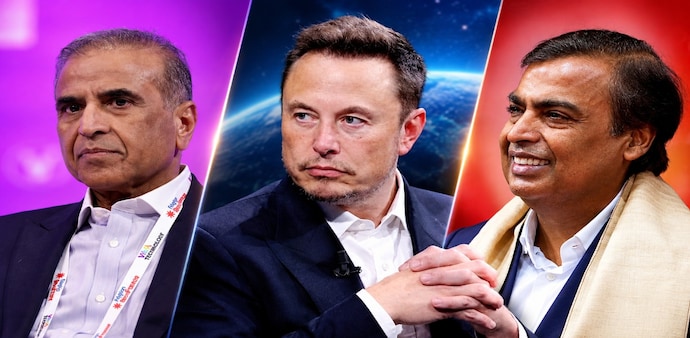
Billionaires Mukesh Ambani and Sunil Bharti Mittal are positioning their satellite-internet businesses to challenge Elon Musk’s Starlink, as India and other countries seek greater control over critical communication infrastructure and alternatives to foreign-owned networks.
According to a report in Bloomberg, Reliance Industries, led by Ambani, is exploring manufacturing partnerships for a planned 1,600-satellite low Earth orbit (LEO) constellation, designed primarily to meet India’s connectivity and strategic requirements. The network, targeted for completion by 2035, would offer a domestic alternative to Starlink, which operates more than 10,000 satellites, it said.
Reliance is in talks with Indian satellite manufacturers, technology startups and larger industrial groups, offering to fund the infrastructure required to scale up production, people familiar with the plans told the news site. India currently produces fewer than 15 satellites annually, while the proposed constellation would require output of around 200 a year.
MUST READ | Starlink's India entry: Govt sources reveal what delayed its application
The company plans to combine domestic manufacturing with imports, including at least 400 satellites from the US. It is discussing procurement with two US companies and evaluating suppliers in Europe, while ruling out China as a source. Reliance is targeting a test mission in September 2027, with wider deployment beginning in early 2028. Manufacturing and launch constraints have pushed the completion target back from 2030 to 2035.
Meanwhile, Mittal is backing Eutelsat Communications’ OneWeb, which is seeking to build a global satellite-internet network independent of both the US and China. OneWeb has around 650 satellites, far fewer than Starlink, while Amazon is also developing a network involving thousands of satellites.
“Countries can’t rely on another country,” Mittal said in an interview with Bloomberg TV, arguing that Europe and India need their own alternatives.
Bharti Airtel, India’s second-largest telecom operator, was an early investor in OneWeb in 2015 and increased its commitment in 2020, joining the UK government in a $1 billion rescue package. Bharti subsequently invested another $500 million.
The commercial gap with Starlink remains substantial. The Musk-backed network serves at least 13.6 million customers worldwide and generated more than $5 billion in connectivity revenue in the three months ended September. Eutelsat’s LEO business, including OneWeb, generated 70.9 million euros ($81.5 million) during the same period.
For both Indian billionaires, however, the competition extends beyond broadband. Satellite networks are increasingly important for remote connectivity, communications and military operations, making control over space-based infrastructure a matter of strategic autonomy. Starlink’s planned India entry remains subject to regulatory and security scrutiny, further strengthening the case for domestically controlled alternatives.