
Shah Rukh Khan’s passion for Kolkata Knight Riders built real business value: Karan Johar on businesses, celebrities as co-founders
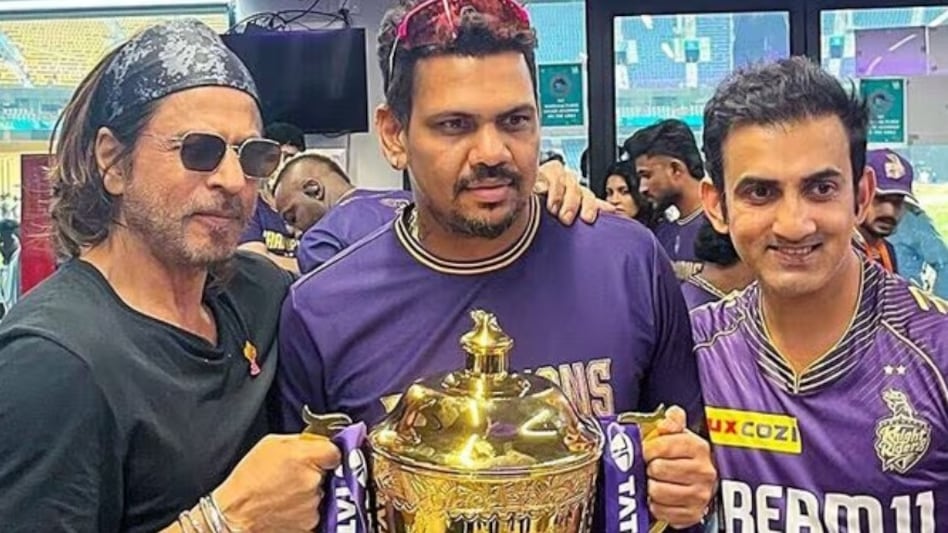
Shah Rukh Khan’s obsession with Kolkata Knight Riders created more business value than many film projects, says filmmaker Karan Johar. Pointing to Katrina Kaif’s Kay Beauty and Alia Bhatt’s Ed-a-Mamma, he argues celebrity ventures succeed only when founders are deeply involved. As brands increasingly offer equity to stars, Johar lays out what real co-founder commitment should look like.
- Feb 28, 2026,
- Updated Feb 28, 2026 12:18 PM IST
As consumer brands increasingly seek celebrities as co-founders rather than brand ambassadors, structuring the right deal has become critical. In a conversation with investment banker Sarthak Ahuja, filmmaker and entrepreneur Karan Johar offered rare insight into how celebrity equity partnerships should be designed — and why many fail.
Johar was candid about his own strengths and limitations. “The word business acumen is spoken of and associated with me… I’d like to say that I’ve always been a creatively driven artist,” he said, recalling moments during structured deals where complex terminology overwhelmed him. “My instinct is my superpower.”
That instinct, he suggested, is central to evaluating celebrity co-founder structures.
Equity must match engagement
Johar pointed to a powerful case study — Shah Rukh Khan’s partnership with Kolkata Knight Riders (KKR) — to explain what makes celebrity ownership work.
“Shah Rukh Khan also bought a cricket team when it started decades ago. Look at the valuation today. Why is it? It’s because Shah Rukh Khan is obsessed, passionate and sincerely active about his liaison with KKR. He’s not just adding presence in that stadium or giving his name to that partnership. He strategises, he engages, he obsesses, he gives hours of his time. That is why it is such a profitable venture for him.”
The takeaway for founders: meaningful equity must be tied to meaningful involvement. A celebrity who lends only visibility should not command co-founder-level equity. True ownership — often 10% to 30% in early-stage consumer ventures — should be structured with vesting tied to engagement and long-term contribution.
Authenticity over optics
Johar stressed that consumers immediately detect superficial partnerships.
“When you’re actually really passionate about what you’re selling… you’re not just saying, ‘Oh, I’m a movie star, so I should start a beauty brand,’” he said. “When you don’t give your whole and soul and time and energy… the consumer catches it.”
He cited Katrina Kaif and Alia Bhatt as examples of celebrities who go beyond optics.
“Katrina Kaif genuinely with Kay Beauty — she genuinely engages. I’m telling you the success stories. I know what Alia puts into Ed-a-Mamma,” Johar said. “My first thing is how engaged will you be? How active are you genuinely? Are you fake engaging? Are you just posting videos? Are you just doing live Instagram videos? Are you just adding your name? Are you just doing paid partnerships but not having equity deals with it? Are you genuinely genuinely engaged?”
The distinction, he implied, determines valuation outcomes. Brands where celebrities merely market the product often plateau. Those where they function as real equity partners — involved in product, positioning and strategic decisions — compound.
For founders, this reinforces the need to structure equity with accountability. Vesting schedules, milestone-linked equity grants and defined operational involvement protect both sides. Visibility alone cannot justify founder-level ownership; measurable engagement must.
Capital gains vs. cash payouts
Ahuja also raised a practical question: should celebrity co-founders receive annual payouts or primarily capital gains?
Johar’s own entrepreneurial journey offers insight. Speaking about his jewellery venture Tyaani, he explained why passion guided his choice.
“I wanted to pursue Tyaani because I knew that’s my passion hugely,” he said, recalling childhood memories tied to jewellery. “Jewellery was something that I really wanted to get because it’s my passion.”
He described Tyaani as “mass premium” — high-drama Polki jewellery positioned to look far more expensive than it is. “I’m a big believer in drama because that’s the cinema I sell. Polki is drama.”
The implication is clear: if a celebrity truly believes in the product, long-term capital appreciation should outweigh short-term endorsement payouts. Early-stage ventures, especially, should minimize heavy fixed compensation and focus on equity upside tied to business growth.
Define deliverables clearly
Celebrity co-founder agreements must specify:
Minimum content and campaign commitments
Participation in store launches and key events
Involvement in product curation and brand strategy
Time allocation per quarter
Capital participation, if any
Without structured expectations, founders risk paying for halo value without operational leverage.
Business meets instinct
Johar acknowledged that he does not approach ventures from a purely technical lens. “If anyone is expecting technicalities from me… my apologies,” he said. But his core principle remains consistent.
“To sell a product successfully, first you have to put your heart in it. Second, you have to have genuine interest in what you’re selling. And thirdly, you have to have awareness of your consumer.”
For entrepreneurs seeking celebrity co-founders, the formula is demanding but straightforward: equity must vest, incentives must align with exit value, and engagement must be real.
As the Shah Rukh Khan–KKR example shows — and as Katrina Kaif and Alia Bhatt’s ventures demonstrate — fame may open the door. But obsession, authenticity and ownership build enduring business value.
As consumer brands increasingly seek celebrities as co-founders rather than brand ambassadors, structuring the right deal has become critical. In a conversation with investment banker Sarthak Ahuja, filmmaker and entrepreneur Karan Johar offered rare insight into how celebrity equity partnerships should be designed — and why many fail.
Johar was candid about his own strengths and limitations. “The word business acumen is spoken of and associated with me… I’d like to say that I’ve always been a creatively driven artist,” he said, recalling moments during structured deals where complex terminology overwhelmed him. “My instinct is my superpower.”
That instinct, he suggested, is central to evaluating celebrity co-founder structures.
Equity must match engagement
Johar pointed to a powerful case study — Shah Rukh Khan’s partnership with Kolkata Knight Riders (KKR) — to explain what makes celebrity ownership work.
“Shah Rukh Khan also bought a cricket team when it started decades ago. Look at the valuation today. Why is it? It’s because Shah Rukh Khan is obsessed, passionate and sincerely active about his liaison with KKR. He’s not just adding presence in that stadium or giving his name to that partnership. He strategises, he engages, he obsesses, he gives hours of his time. That is why it is such a profitable venture for him.”
The takeaway for founders: meaningful equity must be tied to meaningful involvement. A celebrity who lends only visibility should not command co-founder-level equity. True ownership — often 10% to 30% in early-stage consumer ventures — should be structured with vesting tied to engagement and long-term contribution.
Authenticity over optics
Johar stressed that consumers immediately detect superficial partnerships.
“When you’re actually really passionate about what you’re selling… you’re not just saying, ‘Oh, I’m a movie star, so I should start a beauty brand,’” he said. “When you don’t give your whole and soul and time and energy… the consumer catches it.”
He cited Katrina Kaif and Alia Bhatt as examples of celebrities who go beyond optics.
“Katrina Kaif genuinely with Kay Beauty — she genuinely engages. I’m telling you the success stories. I know what Alia puts into Ed-a-Mamma,” Johar said. “My first thing is how engaged will you be? How active are you genuinely? Are you fake engaging? Are you just posting videos? Are you just doing live Instagram videos? Are you just adding your name? Are you just doing paid partnerships but not having equity deals with it? Are you genuinely genuinely engaged?”
The distinction, he implied, determines valuation outcomes. Brands where celebrities merely market the product often plateau. Those where they function as real equity partners — involved in product, positioning and strategic decisions — compound.
For founders, this reinforces the need to structure equity with accountability. Vesting schedules, milestone-linked equity grants and defined operational involvement protect both sides. Visibility alone cannot justify founder-level ownership; measurable engagement must.
Capital gains vs. cash payouts
Ahuja also raised a practical question: should celebrity co-founders receive annual payouts or primarily capital gains?
Johar’s own entrepreneurial journey offers insight. Speaking about his jewellery venture Tyaani, he explained why passion guided his choice.
“I wanted to pursue Tyaani because I knew that’s my passion hugely,” he said, recalling childhood memories tied to jewellery. “Jewellery was something that I really wanted to get because it’s my passion.”
He described Tyaani as “mass premium” — high-drama Polki jewellery positioned to look far more expensive than it is. “I’m a big believer in drama because that’s the cinema I sell. Polki is drama.”
The implication is clear: if a celebrity truly believes in the product, long-term capital appreciation should outweigh short-term endorsement payouts. Early-stage ventures, especially, should minimize heavy fixed compensation and focus on equity upside tied to business growth.
Define deliverables clearly
Celebrity co-founder agreements must specify:
Minimum content and campaign commitments
Participation in store launches and key events
Involvement in product curation and brand strategy
Time allocation per quarter
Capital participation, if any
Without structured expectations, founders risk paying for halo value without operational leverage.
Business meets instinct
Johar acknowledged that he does not approach ventures from a purely technical lens. “If anyone is expecting technicalities from me… my apologies,” he said. But his core principle remains consistent.
“To sell a product successfully, first you have to put your heart in it. Second, you have to have genuine interest in what you’re selling. And thirdly, you have to have awareness of your consumer.”
For entrepreneurs seeking celebrity co-founders, the formula is demanding but straightforward: equity must vest, incentives must align with exit value, and engagement must be real.
As the Shah Rukh Khan–KKR example shows — and as Katrina Kaif and Alia Bhatt’s ventures demonstrate — fame may open the door. But obsession, authenticity and ownership build enduring business value.