
Trump’s intervention in Huang’s reinstatement raises questions over Nvidia board’s independence: ‘Being run from the White House’
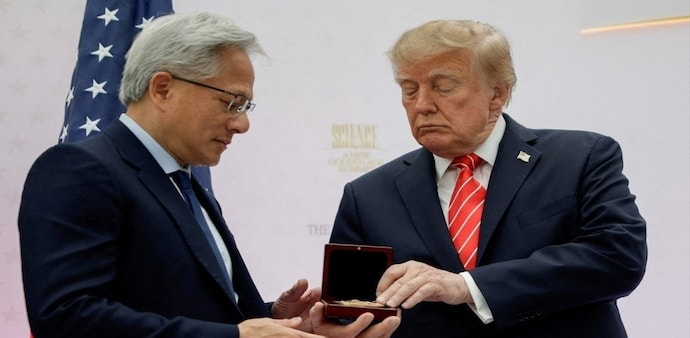
Trump told CNBC on Monday that he had spoken to Nvidia’s board directly and indirectly and believed his intervention was “very important” in bringing Huang back.
- Nov 24, 2026,
- Updated Nov 24, 2026 2:31 PM IST
US President Donald Trump’s intervention in Nvidia’s decision to reinstate chief executive Jensen Huang has drawn criticism from corporate governance experts, who say the episode has exposed the board’s weakened independence and raised concerns about political interference in corporate management.
Trump told CNBC on Monday that he had spoken to Nvidia’s board directly and indirectly and believed his intervention was “very important” in bringing Huang back. According to a Semafor report, citing unidentified people familiar with the matter, Trump even dialled into a board meeting to argue for the CEO’s reinstatement.
The president subsequently hailed the decision in a Truth Social post, calling it “the correct and proper decision”. Nvidia’s board said it had received input from senior levels of the US government before deciding to reinstate Huang, just 11 days after his resignation.
MUST READ | Jensen Huang disclosed additional affairs before he was reinstated as Nvidia CEO: Report
The move has prompted questions about whether directors were able to act independently. According to a report in Bloomberg, John Coffee, a Columbia Law School professor specialising in corporate governance, said it appeared the board was being run from the White House rather than by its own directors. Harvard Law School professor Lucian Bebchuk told the news site that pressure to reinstate Huang came from the sharp decline in Nvidia’s share price and Trump’s support for the CEO.
Ann Lipton, a University of Colorado Boulder law professor, described the intervention as part of the administration’s tendency to directly influence corporate management decisions. Columbia professor Jeffrey Gordon called the approach “Presidentialism” and said the episode was a serious setback for US corporate governance, as per the report.
The board’s assertion that Huang’s return poses no security risk has also drawn scrutiny, particularly as an investigation into a possible Chinese foreign-intelligence campaign targeting him remains unresolved. New York University professor Alison Taylor questioned whether the company was taking the ethical issues seriously enough.
DON'T MISS | NVIDIA pips Microsoft, Google in market cap after Jensen Huang's return as CEO
Nvidia shares surged as much as 37% on Monday, their biggest intraday rise since December 2000, following news of Huang’s return. The stock had lost nearly half its value since its record high in early October.
The board has announced plans to appoint a new chief compliance officer and recently formed a committee to oversee national security and export controls. However, experts say these measures may not be enough to restore confidence in its oversight.
Gordon said the directors should resign, calling it “a terrible day for US corporate governance”.