
‘TwoWheelsOneGST’: Royal Enfield calls for uniform tax to protect India’s global motorbike edge
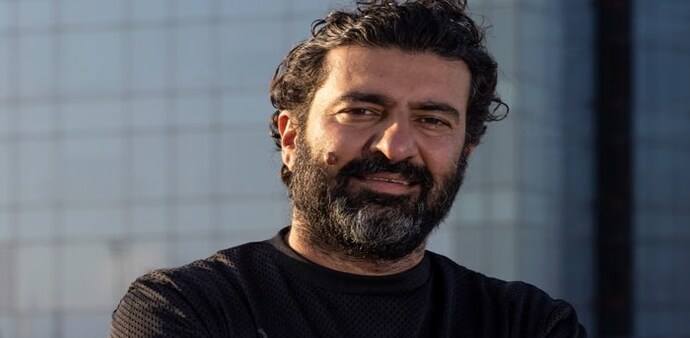
Siddhartha Lal, Executive Chairman of Eicher Motors and parent company of Royal Enfield, pointed out that Indian brands already dominate the small-capacity segment worldwide and are now making inroads into mid-capacity motorcycles.
- Aug 30, 2025,
- Updated Aug 30, 2025 9:53 PM IST
Siddhartha Lal, Executive Chairman of Eicher Motors and parent company of Royal Enfield, has made a strong appeal to the government to implement a uniform 18% GST rate on all two-wheelers.
In a post on LinkedIn, Lal wrote, “Hello Everyone, this is an urgent and heartfelt appeal to our respected policy makers and the public regarding the recent GST announcement. Please spare a few minutes time to go through this – the Indian motorcycling industry needs your support! #TwoWheelsOneGST #MakeInIndia”
Backed by a detailed statement released by Royal Enfield, Lal highlighted that India’s two-wheeler industry is the “clearest success story of the Make in India initiative”, and the only manufacturing sector where Indian brands lead globally. With government support and a vast domestic base, Indian manufacturers have set benchmarks in technology, cost-efficiency, and distribution, even attracting global competitors to manufacture in India.
He pointed out that Indian brands already dominate the small-capacity segment worldwide and are now making inroads into mid-capacity motorcycles. “By delivering exceptional value, we are drawing riders worldwide to shift from larger, higher-displacement machines to Indian-made mid-size motorcycles,” Lal noted.
To sustain this momentum, he stressed the need for a uniform GST of 18% across all two-wheelers. According to Lal, lowering GST on sub-350cc motorcycles will broaden access, but raising GST on above-350cc machines would severely damage a segment critical to India’s global leadership.
A split tax regime, he warned, would:
- Cripple investment and scale, by shrinking the domestic >350cc segment.
- Restrict global reach, undermining India’s ability to build strong dealer networks worldwide.
- Hand an opening to foreign competitors, allowing rivals to dominate the mid-size motorcycle market.
Importantly, Lal emphasised that motorcycles above 350cc constitute just around 1% of India’s two-wheeler market, meaning higher GST on them would add negligible revenue but contract the segment. “For Indian riders, these motorcycles are not luxury goods; they are efficient, affordable alternatives to cars, offering lower fuel use and maintenance – benefits that also help reduce India’s fuel imports,” he said.
Looking ahead, Lal argued that a uniform 18% GST will not only secure India’s current global standing but also position the country as a leader in the global electric two-wheeler market. “India already leads China, Japan, Europe, and the U.S. in two-wheelers. A uniform 18% GST will enable India to dominate the global electric two-wheeler market and establish itself as the world’s hub for next-generation mobility,” he stated.
This, he added, will anchor allied industries — from batteries to semiconductors and advanced electronics — creating a robust manufacturing ecosystem that can secure India’s global leadership “for decades to come.”
Siddhartha Lal, Executive Chairman of Eicher Motors and parent company of Royal Enfield, has made a strong appeal to the government to implement a uniform 18% GST rate on all two-wheelers.
In a post on LinkedIn, Lal wrote, “Hello Everyone, this is an urgent and heartfelt appeal to our respected policy makers and the public regarding the recent GST announcement. Please spare a few minutes time to go through this – the Indian motorcycling industry needs your support! #TwoWheelsOneGST #MakeInIndia”
Backed by a detailed statement released by Royal Enfield, Lal highlighted that India’s two-wheeler industry is the “clearest success story of the Make in India initiative”, and the only manufacturing sector where Indian brands lead globally. With government support and a vast domestic base, Indian manufacturers have set benchmarks in technology, cost-efficiency, and distribution, even attracting global competitors to manufacture in India.
He pointed out that Indian brands already dominate the small-capacity segment worldwide and are now making inroads into mid-capacity motorcycles. “By delivering exceptional value, we are drawing riders worldwide to shift from larger, higher-displacement machines to Indian-made mid-size motorcycles,” Lal noted.
To sustain this momentum, he stressed the need for a uniform GST of 18% across all two-wheelers. According to Lal, lowering GST on sub-350cc motorcycles will broaden access, but raising GST on above-350cc machines would severely damage a segment critical to India’s global leadership.
A split tax regime, he warned, would:
- Cripple investment and scale, by shrinking the domestic >350cc segment.
- Restrict global reach, undermining India’s ability to build strong dealer networks worldwide.
- Hand an opening to foreign competitors, allowing rivals to dominate the mid-size motorcycle market.
Importantly, Lal emphasised that motorcycles above 350cc constitute just around 1% of India’s two-wheeler market, meaning higher GST on them would add negligible revenue but contract the segment. “For Indian riders, these motorcycles are not luxury goods; they are efficient, affordable alternatives to cars, offering lower fuel use and maintenance – benefits that also help reduce India’s fuel imports,” he said.
Looking ahead, Lal argued that a uniform 18% GST will not only secure India’s current global standing but also position the country as a leader in the global electric two-wheeler market. “India already leads China, Japan, Europe, and the U.S. in two-wheelers. A uniform 18% GST will enable India to dominate the global electric two-wheeler market and establish itself as the world’s hub for next-generation mobility,” he stated.
This, he added, will anchor allied industries — from batteries to semiconductors and advanced electronics — creating a robust manufacturing ecosystem that can secure India’s global leadership “for decades to come.”