
Why young Indians need a ‘today plan’ instead of a 10-year plan: LinkedIn's top executive's advice
While concerns around AI often dominate the conversation, Raman argued that broader economic factors, including high interest rates and business uncertainty, are also weighing on hiring.
- Jun 17, 2026,
- Updated Jun 17, 2026 3:02 PM IST
As artificial intelligence (AI) reshapes workplaces and hiring practices, young Indian professionals should stop obsessing over long-term career roadmaps and instead focus on learning, adapting and building every day, according to LinkedIn's Chief Economic Opportunity Officer, Aneesh Raman.
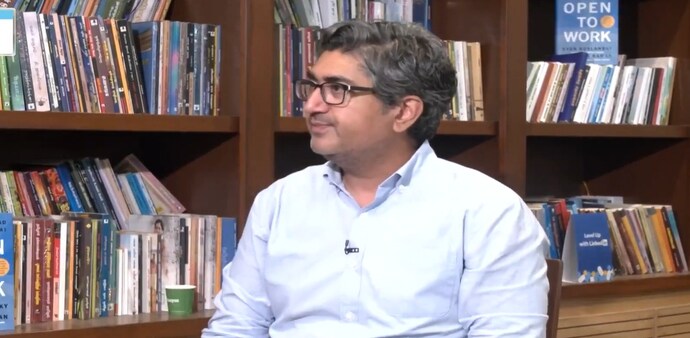
Speaking to Business Today TV during a visit to Bengaluru for the launch of his co-authored book, 'Open to Work', Raman said the AI revolution is making it both harder to get hired and harder to hire, particularly for fresh graduates entering the workforce.
"AI tools have made it easier for people to apply to jobs, leading to a surge in applications. Recruiters are struggling to sift through the volume, while candidates are finding it tougher to stand out," he said.
The challenge is particularly relevant for India, home to one of the world's largest youth populations and a growing pool of educated job seekers facing persistent white-collar unemployment.
While concerns around AI often dominate the conversation, Raman argued that broader economic factors, including high interest rates and business uncertainty, are also weighing on hiring. However, he believes India remains at the forefront of the shift toward skills-based hiring.
According to Raman, traditional credentials and degrees will continue to matter, but employers are increasingly looking beyond resumes. Demonstrable skills, project portfolios and the ability to showcase real work are becoming critical differentiators in an AI-driven economy.
"The work product is going to be what really punches through," he said.
Raman also pointed to a growing entrepreneurial mindset among young Indians. LinkedIn data shows that the number of founders on the platform has more than doubled year-on-year, while content creator has emerged as one of the top career aspirations among new graduates. Seven in ten Indian professionals, he noted, aspire to work for themselves at some point in their careers.
That shift reflects a broader reality: young professionals can no longer rely on a single employer or a linear career path.
DON'T MISS | WFH is a bigger threat to entry-level jobs than AI, study suggests
"Your career is a climbing wall, not a ladder," Raman said, arguing that resilience, adaptability, curiosity and entrepreneurial thinking will become increasingly valuable as AI transforms industries.
Recruiters, meanwhile, are beginning to prioritise human capabilities that technology cannot easily replicate. Skills remain important, but employers are also looking for candidates who can demonstrate adaptability, communicate their strengths and navigate uncertainty.
For Gen Z workers seeking better work-life balance and purpose-driven careers, Raman believes AI may actually expand opportunities. New tools are lowering the barriers to building businesses, launching side projects and pursuing meaningful work beyond traditional corporate structures.
His strongest advice to young job seekers was simple: stop planning a decade ahead.
"Rip up your five-year and ten-year plans," Raman said. "All you need is a today plan. Learn something new, try something new, and push yourself forward every day."
Watch the conversation here:
As artificial intelligence (AI) reshapes workplaces and hiring practices, young Indian professionals should stop obsessing over long-term career roadmaps and instead focus on learning, adapting and building every day, according to LinkedIn's Chief Economic Opportunity Officer, Aneesh Raman.
Speaking to Business Today TV during a visit to Bengaluru for the launch of his co-authored book, 'Open to Work', Raman said the AI revolution is making it both harder to get hired and harder to hire, particularly for fresh graduates entering the workforce.
"AI tools have made it easier for people to apply to jobs, leading to a surge in applications. Recruiters are struggling to sift through the volume, while candidates are finding it tougher to stand out," he said.
The challenge is particularly relevant for India, home to one of the world's largest youth populations and a growing pool of educated job seekers facing persistent white-collar unemployment.
While concerns around AI often dominate the conversation, Raman argued that broader economic factors, including high interest rates and business uncertainty, are also weighing on hiring. However, he believes India remains at the forefront of the shift toward skills-based hiring.
According to Raman, traditional credentials and degrees will continue to matter, but employers are increasingly looking beyond resumes. Demonstrable skills, project portfolios and the ability to showcase real work are becoming critical differentiators in an AI-driven economy.
"The work product is going to be what really punches through," he said.
Raman also pointed to a growing entrepreneurial mindset among young Indians. LinkedIn data shows that the number of founders on the platform has more than doubled year-on-year, while content creator has emerged as one of the top career aspirations among new graduates. Seven in ten Indian professionals, he noted, aspire to work for themselves at some point in their careers.
That shift reflects a broader reality: young professionals can no longer rely on a single employer or a linear career path.
DON'T MISS | WFH is a bigger threat to entry-level jobs than AI, study suggests
"Your career is a climbing wall, not a ladder," Raman said, arguing that resilience, adaptability, curiosity and entrepreneurial thinking will become increasingly valuable as AI transforms industries.
Recruiters, meanwhile, are beginning to prioritise human capabilities that technology cannot easily replicate. Skills remain important, but employers are also looking for candidates who can demonstrate adaptability, communicate their strengths and navigate uncertainty.
For Gen Z workers seeking better work-life balance and purpose-driven careers, Raman believes AI may actually expand opportunities. New tools are lowering the barriers to building businesses, launching side projects and pursuing meaningful work beyond traditional corporate structures.
His strongest advice to young job seekers was simple: stop planning a decade ahead.
"Rip up your five-year and ten-year plans," Raman said. "All you need is a today plan. Learn something new, try something new, and push yourself forward every day."
Watch the conversation here: