
35 years of liberalisation: How a Budget speech on this day in 1991 changed India’s economic trajectory
Much done, more needed: India has become the world’s fastest-growing major economy but slowing growth and the West Asia conflict underscore the need for the next generation of reforms.
- Jul 24, 2026,
- Updated Jul 24, 2026 12:59 PM IST
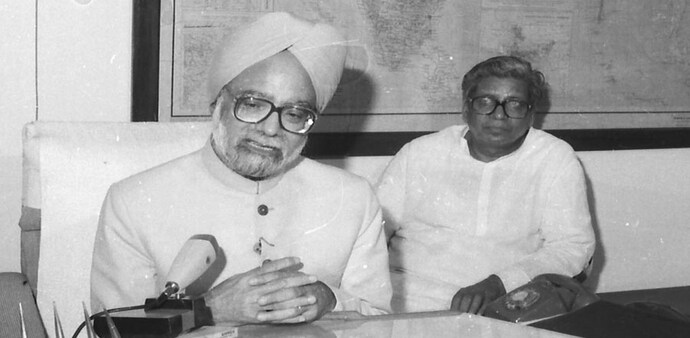
On this day 35 years ago, on July 24, 1991, then Finance Minister Manmohan Singh began his historic Budget speech with the words: “There is no time to lose. Neither the Government nor the economy can live beyond its means year after year. The room for manoeuvre, to live on borrowed money or time, does not exist anymore”. With those words, Singh, who would later become India’s Prime Minister, set in motion a sweeping programme of economic reforms that transformed India’s economic trajectory and ushered in the era of liberalisation.
Much of the Budget focused on liberalisation and opening up the Indian economy, enabling the private sector to operate more freely and bringing in much-needed foreign capital.
Key reforms announced in the 1991 Budget included permitting FDI of up to 51% in specified high-priority industries with prompt approval, banking-sector reforms through the setting up of the Narasimham Committee, a fiscal adjustment and expenditure-management plan to improve government finances, a review of corporate tax policy, and the establishment of market regulator SEBI.
Over the past 35 years, successive governments have tried to build on this reform agenda through measures such as the removal of product reservations for small-scale industry, tax-policy reforms, enabling greater foreign investment—including 100% FDI in the contentious insurance sector—large-scale disinvestment and privatisation, as well as more recent reforms in labour and deregulation.
The results are clear. Over the years, India has emerged as the fastest-growing major economy in the world.
This was also highlighted in a recent paper by the Economic Advisory Council to the Prime Minister, which tracked the world in purchasing power parity terms since 1992. India is now the third-largest economy in PPP terms, with a share of 8.5% of the world economy, and the IMF expects its share to rise to 9.7% by 2030. India’s per capita income rose to 45% of the world average in 2025 and is projected to continue rising through 2030. India’s share in world savings surpassed that of the US to become a distant second, at 10.3%, while its share in world investment rose from 2.2% to 10.8% during the same period, placing it third.
But compared with China, India remains much smaller in scale. Countries such as Vietnam, Bangladesh and Sri Lanka are also competing with India and rank much better on several parameters, leading to renewed calls and expectations for more reforms. At the same time, the conflict in West Asia has thrown the spotlight on India’s import vulnerabilities and the need to strengthen domestic manufacturing capabilities and internal reserves.
The Centre for Strategic and International Studies, which tracks reforms undertaken by India, shows that several reforms have not yet started. These include further FDI liberalisation, including reducing restrictions on foreign investment in multi-brand retail; offering business owners central government permits in 10 days or less; and bringing electricity, real estate and alcohol within the ambit of the goods and services tax.
On this day 35 years ago, on July 24, 1991, then Finance Minister Manmohan Singh began his historic Budget speech with the words: “There is no time to lose. Neither the Government nor the economy can live beyond its means year after year. The room for manoeuvre, to live on borrowed money or time, does not exist anymore”. With those words, Singh, who would later become India’s Prime Minister, set in motion a sweeping programme of economic reforms that transformed India’s economic trajectory and ushered in the era of liberalisation.
Much of the Budget focused on liberalisation and opening up the Indian economy, enabling the private sector to operate more freely and bringing in much-needed foreign capital.
Key reforms announced in the 1991 Budget included permitting FDI of up to 51% in specified high-priority industries with prompt approval, banking-sector reforms through the setting up of the Narasimham Committee, a fiscal adjustment and expenditure-management plan to improve government finances, a review of corporate tax policy, and the establishment of market regulator SEBI.
Over the past 35 years, successive governments have tried to build on this reform agenda through measures such as the removal of product reservations for small-scale industry, tax-policy reforms, enabling greater foreign investment—including 100% FDI in the contentious insurance sector—large-scale disinvestment and privatisation, as well as more recent reforms in labour and deregulation.
The results are clear. Over the years, India has emerged as the fastest-growing major economy in the world.
This was also highlighted in a recent paper by the Economic Advisory Council to the Prime Minister, which tracked the world in purchasing power parity terms since 1992. India is now the third-largest economy in PPP terms, with a share of 8.5% of the world economy, and the IMF expects its share to rise to 9.7% by 2030. India’s per capita income rose to 45% of the world average in 2025 and is projected to continue rising through 2030. India’s share in world savings surpassed that of the US to become a distant second, at 10.3%, while its share in world investment rose from 2.2% to 10.8% during the same period, placing it third.
But compared with China, India remains much smaller in scale. Countries such as Vietnam, Bangladesh and Sri Lanka are also competing with India and rank much better on several parameters, leading to renewed calls and expectations for more reforms. At the same time, the conflict in West Asia has thrown the spotlight on India’s import vulnerabilities and the need to strengthen domestic manufacturing capabilities and internal reserves.
The Centre for Strategic and International Studies, which tracks reforms undertaken by India, shows that several reforms have not yet started. These include further FDI liberalisation, including reducing restrictions on foreign investment in multi-brand retail; offering business owners central government permits in 10 days or less; and bringing electricity, real estate and alcohol within the ambit of the goods and services tax.