
BT Best Banks @30: Nitin Gadkari honours winners, ICICI Bank named Bank of the Year as sector discusses AI, structural shifts
The Business Today’s 30th edition of Best Banks saw 18 awards across banking, NBFC and fintech categories, with policymakers and industry leaders discussing AI, capital market expansion and the road to Viksit Bharat.
- Feb 28, 2026,
- Updated Feb 28, 2026 9:09 PM IST
The 30th edition of Business Today’s Best Banks event concluded today at Mumbai with Union Minister Nitin Gadkari presenting awards to top-performing institutions across India’s financial sector, marking three decades of the flagship platform.
In a conversation with Group Editor Siddharth Zarabi, Gadkari said India has moved from fourth to third place, surpassing Japan to become the world’s third-largest economy, adding during conversation that rapid technological upgradation is underway across areas.
A total of 18 awards were presented across banks, non-banking financial companies (NBFCs), fintech and a Lifetime Achievement category. The honours were divided into Jury and Non-Jury segments.
The jury was chaired by Dinesh Kumar Khara, former Chairman of State Bank of India and a past recipient of the BT Best Banks Award. The panel included G. N. Bajpai, former Chairman of the Securities and Exchange Board of India and Life Insurance Corporation of India; Gunit Chadha, former CEO of Deutsche Bank India; Zarin Daruwala, former CEO of Standard Chartered Bank India and South Asia; Ashima Goyal, Professor Emeritus at IGIDR; Ashish Chauhan, MD & CEO of the National Stock Exchange of India; and Surojit Shome, former MD and CEO of DBS Bank India.
Among the Jury Awards, ICICI Bank was named Bank of the Year, while HSBC India was recognised for Innovation among foreign banks. HDFC Bank received the award for Human Capital Excellence, and DBS Bank India was honoured for Emerging Technology and AI.
The Lifetime Achievement Award was conferred on Shaktikanta Das, former Governor of the Reserve Bank of India.
During a keynote address, Das said India is emerging as a global growth driver. “The world is coming to us because India is one of the largest and most exciting markets, backed by democratic strength, technological momentum, a vibrant startup, IT and AI ecosystem, a stable macroeconomic framework and rising competitiveness,” he said. He added that the coming decade would be one in which India not only participates in global growth but helps shape it.
In the NBFC category, L&T Finance won awards for both Innovation and Human Capital Excellence. In fintech, Perfios was recognised for Best Value-Added Services.
Individual Excellence honours went to Rajneesh Karnatak, MD & CEO of Bank of India, as Business Transformation Leader of the Year (PSB), and Sanjay Agarwal, MD & CEO of AU Small Finance Bank, in the private and small finance bank category.
The quantitative Non-Jury awards recognised ICICI Bank as Best Large Indian Bank, Bank of Maharashtra as Best Mid-Sized Bank, and Karur Vysya Bank as Best Small Bank. HSBC India was named Best Foreign Bank, while Jana Small Finance Bank won Best Small Finance Bank. Bajaj Finance was recognised as Best Large NBFC and Bajaj Housing Finance as Best Housing Finance Company. Indian Bank received the Best Social Impact Bank award.
Alongside the awards, the half-day programme brought together policymakers, bankers, fintech leaders and market experts for discussions on the evolving financial landscape. Key themes included the future of capital markets, the role of NBFCs in building a Viksit Bharat, and the reimagining of banking in the age of artificial intelligence.
In the inaugural session, Chauhan highlighted the rapid expansion of India’s financial markets, noting that the country has emerged as the world’s fourth-largest economy. He pointed out that total market capitalisation has grown from ₹67 lakh crore when Prime Minister Narendra Modi assumed office to about ₹470 lakh crore today. The number of unique investors has also surged from 1.67 crore to 12.7 crore. He added that artificial intelligence is expected to play a defining role in the next phase of market development.
AI was a recurring theme across sessions, particularly in conversations around the future of banking. Industry experts from the fintech and consulting ecosystem emphasised that while AI is moving from pilot projects to core operations, its large-scale deployment will depend on ethical and explainable systems. Adoption at scale, they said, will accelerate only when banks and regulators gain confidence that AI-driven decisions are transparent, auditable and accountable.
In another discussion, Hitesh Sethia, Managing Director and CEO of Jio Financial Services, said the future of financial services will be anchored on three pillars — deep capital, deep technology and deep trust. He added that platform-led models could increasingly shape the sector by enabling institutions to collaborate and overcome individual balance sheet and risk constraints.
Economists at the event observed that the new GDP series points to a more broad-based growth trajectory for India, reflecting stronger momentum across sectors rather than a narrow, consumption-led expansion.
In a session on microfinance stress, Alok Misra, CEO and Director of the Microfinance Institutions Network, discussed whether the sector needs to gradually move beyond unsecured group lending toward asset-backed products such as gold loans and small-ticket mortgages to improve resilience.
The deliberations also covered the role of NBFCs in supporting the Viksit Bharat vision, alongside broader conversations on the next phase of transformation in India’s banking and financial services sector.
Marking three decades, this year’s edition highlighted both the achievements of India’s financial institutions and the structural shifts, from AI and platform models to risk discipline, that will define the industry’s future.
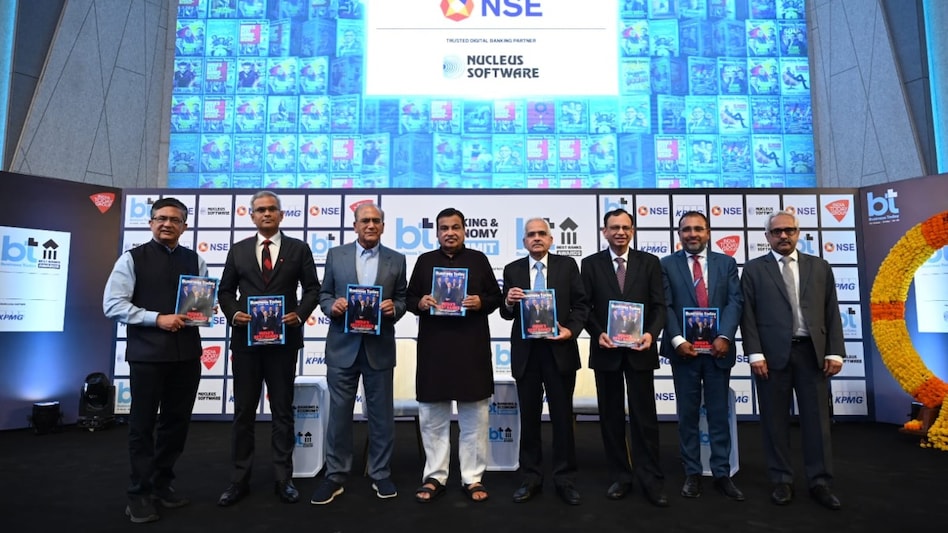
The special edition of the Business Today magazine was also unveiled at the event by Union Minister Nitin Gadkari and India Today Group Chairman and Editor-in-Chief Aroon Purie along with MD & CEO of NSE Ashish Chauhan, RBI Governor Shaktikanta Das, Group Editor Business Today Siddharth Zarabi, and COO of Business Today Alok Nair.
The 30th edition of Business Today’s Best Banks event concluded today at Mumbai with Union Minister Nitin Gadkari presenting awards to top-performing institutions across India’s financial sector, marking three decades of the flagship platform.
In a conversation with Group Editor Siddharth Zarabi, Gadkari said India has moved from fourth to third place, surpassing Japan to become the world’s third-largest economy, adding during conversation that rapid technological upgradation is underway across areas.
A total of 18 awards were presented across banks, non-banking financial companies (NBFCs), fintech and a Lifetime Achievement category. The honours were divided into Jury and Non-Jury segments.
The jury was chaired by Dinesh Kumar Khara, former Chairman of State Bank of India and a past recipient of the BT Best Banks Award. The panel included G. N. Bajpai, former Chairman of the Securities and Exchange Board of India and Life Insurance Corporation of India; Gunit Chadha, former CEO of Deutsche Bank India; Zarin Daruwala, former CEO of Standard Chartered Bank India and South Asia; Ashima Goyal, Professor Emeritus at IGIDR; Ashish Chauhan, MD & CEO of the National Stock Exchange of India; and Surojit Shome, former MD and CEO of DBS Bank India.
Among the Jury Awards, ICICI Bank was named Bank of the Year, while HSBC India was recognised for Innovation among foreign banks. HDFC Bank received the award for Human Capital Excellence, and DBS Bank India was honoured for Emerging Technology and AI.
The Lifetime Achievement Award was conferred on Shaktikanta Das, former Governor of the Reserve Bank of India.
During a keynote address, Das said India is emerging as a global growth driver. “The world is coming to us because India is one of the largest and most exciting markets, backed by democratic strength, technological momentum, a vibrant startup, IT and AI ecosystem, a stable macroeconomic framework and rising competitiveness,” he said. He added that the coming decade would be one in which India not only participates in global growth but helps shape it.
In the NBFC category, L&T Finance won awards for both Innovation and Human Capital Excellence. In fintech, Perfios was recognised for Best Value-Added Services.
Individual Excellence honours went to Rajneesh Karnatak, MD & CEO of Bank of India, as Business Transformation Leader of the Year (PSB), and Sanjay Agarwal, MD & CEO of AU Small Finance Bank, in the private and small finance bank category.
The quantitative Non-Jury awards recognised ICICI Bank as Best Large Indian Bank, Bank of Maharashtra as Best Mid-Sized Bank, and Karur Vysya Bank as Best Small Bank. HSBC India was named Best Foreign Bank, while Jana Small Finance Bank won Best Small Finance Bank. Bajaj Finance was recognised as Best Large NBFC and Bajaj Housing Finance as Best Housing Finance Company. Indian Bank received the Best Social Impact Bank award.
Alongside the awards, the half-day programme brought together policymakers, bankers, fintech leaders and market experts for discussions on the evolving financial landscape. Key themes included the future of capital markets, the role of NBFCs in building a Viksit Bharat, and the reimagining of banking in the age of artificial intelligence.
In the inaugural session, Chauhan highlighted the rapid expansion of India’s financial markets, noting that the country has emerged as the world’s fourth-largest economy. He pointed out that total market capitalisation has grown from ₹67 lakh crore when Prime Minister Narendra Modi assumed office to about ₹470 lakh crore today. The number of unique investors has also surged from 1.67 crore to 12.7 crore. He added that artificial intelligence is expected to play a defining role in the next phase of market development.
AI was a recurring theme across sessions, particularly in conversations around the future of banking. Industry experts from the fintech and consulting ecosystem emphasised that while AI is moving from pilot projects to core operations, its large-scale deployment will depend on ethical and explainable systems. Adoption at scale, they said, will accelerate only when banks and regulators gain confidence that AI-driven decisions are transparent, auditable and accountable.
In another discussion, Hitesh Sethia, Managing Director and CEO of Jio Financial Services, said the future of financial services will be anchored on three pillars — deep capital, deep technology and deep trust. He added that platform-led models could increasingly shape the sector by enabling institutions to collaborate and overcome individual balance sheet and risk constraints.
Economists at the event observed that the new GDP series points to a more broad-based growth trajectory for India, reflecting stronger momentum across sectors rather than a narrow, consumption-led expansion.
In a session on microfinance stress, Alok Misra, CEO and Director of the Microfinance Institutions Network, discussed whether the sector needs to gradually move beyond unsecured group lending toward asset-backed products such as gold loans and small-ticket mortgages to improve resilience.
The deliberations also covered the role of NBFCs in supporting the Viksit Bharat vision, alongside broader conversations on the next phase of transformation in India’s banking and financial services sector.
Marking three decades, this year’s edition highlighted both the achievements of India’s financial institutions and the structural shifts, from AI and platform models to risk discipline, that will define the industry’s future.
The special edition of the Business Today magazine was also unveiled at the event by Union Minister Nitin Gadkari and India Today Group Chairman and Editor-in-Chief Aroon Purie along with MD & CEO of NSE Ashish Chauhan, RBI Governor Shaktikanta Das, Group Editor Business Today Siddharth Zarabi, and COO of Business Today Alok Nair.