
BT Explainer: UPI is nearly free for consumers, but wallets can generate revenue - the economics of digital payments
BT Explainer: UPI is nearly free for consumers, but wallets can generate revenue - the economics of digital payments
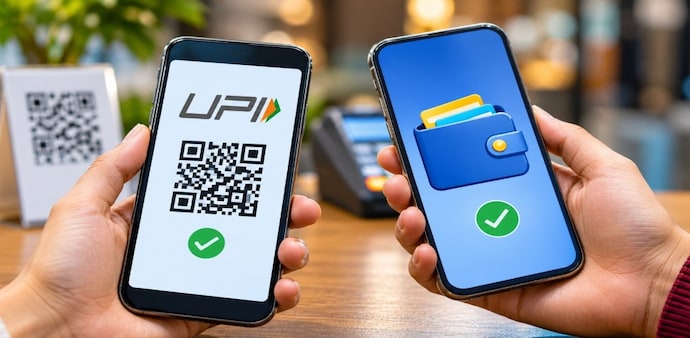
The RBI's in-principle approval for Paytm to restart its digital wallet business has brought renewed attention to the economics of India's payments industry. While UPI dominates digital transactions with a largely zero-MDR model, prepaid wallets could offer fintech companies an additional revenue stream.
Basudha Das
- Nov 17, 2026,
- Updated Nov 17, 2026 5:20 AM IST
The Reserve Bank of India's decision to grant in-principle approval to Paytm Payments Services Ltd (PPSL) to operate prepaid payment instruments, including digital wallets, has reopened a crucial debate: how can fintech companies make money from digital payments when UPI transactions are largely free?
The development comes as payment platforms seek sustainable revenue models beyond transaction volumes. According to a November 15 report by Jefferies, UPI accounts for approximately 92% of India's digital payment transaction value, while wallets represent just 1%. Yet wallets can generate gross take rates of 1.5%–2%, making them commercially attractive despite their smaller market share.
Advertisement
Why is UPI nearly free?
For consumers, standard UPI payments are generally free. Merchants accepting regular bank-account-linked UPI transactions also face zero merchant discount rate (MDR) under India's existing framework.
MDR is the fee charged to merchants for accepting certain digital payments. It helps compensate payment processors, banks and other participants involved in facilitating transactions.
With zero MDR on prescribed UPI transactions, payment companies cannot earn conventional merchant transaction fees from these payments.
However, processing transactions still requires investment in technology, cybersecurity, infrastructure, and customer support.
Consequently, fintech companies increasingly depend on merchant subscriptions, payment devices, lending distribution and other financial services to generate revenue.
MUST READ: Paytm arm gets RBI in-principle nod for prepaid payment instruments; stock reacts
Advertisement
How do digital wallets make money?
Unlike standard bank-account-linked UPI transactions, prepaid wallets allow customers to load money in advance and make payments using stored balances.
Certain wallet transactions can attract merchant fees under applicable commercial arrangements, creating opportunities for payment providers to earn transaction-based revenue.
Jefferies estimates wallet gross take rates of 1.5%–2%, with contribution levels of 30–50 basis points.
Consider a ₹1,000 wallet transaction. At a 1.5% gross take rate, the payment ecosystem could generate ₹15 in gross revenue.
However, that amount is not entirely profit. After processing expenses, incentives and other direct costs, the payment provider retains considerably less.
Advertisement
At a net retention rate of 25 basis points, ₹1,000 of transactions would generate ₹2.50 before remaining operating expenses.
These are illustrative calculations, not standard charges on every wallet transaction.
Why is Paytm returning to wallets?
The RBI's preliminary approval creates an opportunity for Paytm to rebuild a business affected by regulatory restrictions in January 2024.
Jefferies estimates that routing just 1% of Paytm's projected FY29 gross merchandise value through wallets could generate approximately ₹700 crore in gross revenue.
Assuming 25-basis-point net retention, the incremental contribution could reach around ₹120 crore, potentially increasing FY29 profit before tax by 3%.
However, final regulatory approval remains conditional on compliance with cybersecurity, systems audit and data-storage requirements.
Can wallets become a sustainable business?
Despite their revenue potential, wallets face significant challenges in an ecosystem dominated by UPI.
Payment companies must encourage customers to maintain prepaid balances, expand merchant acceptance and invest in technology and regulatory compliance.
Advertisement
UPI's strength lies in transaction scale and convenience, while wallets may offer higher revenue per eligible transaction.
For fintech companies, the challenge is therefore not simply processing more payments but finding commercially viable ways to monetise them without compromising affordability or convenience.
ALSO READ: MDR on UPI: Impact could be much wider, affecting even small street vendors, says ISB study
The Reserve Bank of India's decision to grant in-principle approval to Paytm Payments Services Ltd (PPSL) to operate prepaid payment instruments, including digital wallets, has reopened a crucial debate: how can fintech companies make money from digital payments when UPI transactions are largely free?
The development comes as payment platforms seek sustainable revenue models beyond transaction volumes. According to a November 15 report by Jefferies, UPI accounts for approximately 92% of India's digital payment transaction value, while wallets represent just 1%. Yet wallets can generate gross take rates of 1.5%–2%, making them commercially attractive despite their smaller market share.
Advertisement
Why is UPI nearly free?
For consumers, standard UPI payments are generally free. Merchants accepting regular bank-account-linked UPI transactions also face zero merchant discount rate (MDR) under India's existing framework.
MDR is the fee charged to merchants for accepting certain digital payments. It helps compensate payment processors, banks and other participants involved in facilitating transactions.
With zero MDR on prescribed UPI transactions, payment companies cannot earn conventional merchant transaction fees from these payments.
However, processing transactions still requires investment in technology, cybersecurity, infrastructure, and customer support.
Consequently, fintech companies increasingly depend on merchant subscriptions, payment devices, lending distribution and other financial services to generate revenue.
MUST READ: Paytm arm gets RBI in-principle nod for prepaid payment instruments; stock reacts
Advertisement
How do digital wallets make money?
Unlike standard bank-account-linked UPI transactions, prepaid wallets allow customers to load money in advance and make payments using stored balances.
Certain wallet transactions can attract merchant fees under applicable commercial arrangements, creating opportunities for payment providers to earn transaction-based revenue.
Jefferies estimates wallet gross take rates of 1.5%–2%, with contribution levels of 30–50 basis points.
Consider a ₹1,000 wallet transaction. At a 1.5% gross take rate, the payment ecosystem could generate ₹15 in gross revenue.
However, that amount is not entirely profit. After processing expenses, incentives and other direct costs, the payment provider retains considerably less.
Advertisement
At a net retention rate of 25 basis points, ₹1,000 of transactions would generate ₹2.50 before remaining operating expenses.
These are illustrative calculations, not standard charges on every wallet transaction.
Why is Paytm returning to wallets?
The RBI's preliminary approval creates an opportunity for Paytm to rebuild a business affected by regulatory restrictions in January 2024.
Jefferies estimates that routing just 1% of Paytm's projected FY29 gross merchandise value through wallets could generate approximately ₹700 crore in gross revenue.
Assuming 25-basis-point net retention, the incremental contribution could reach around ₹120 crore, potentially increasing FY29 profit before tax by 3%.
However, final regulatory approval remains conditional on compliance with cybersecurity, systems audit and data-storage requirements.
Can wallets become a sustainable business?
Despite their revenue potential, wallets face significant challenges in an ecosystem dominated by UPI.
Payment companies must encourage customers to maintain prepaid balances, expand merchant acceptance and invest in technology and regulatory compliance.
Advertisement
UPI's strength lies in transaction scale and convenience, while wallets may offer higher revenue per eligible transaction.
For fintech companies, the challenge is therefore not simply processing more payments but finding commercially viable ways to monetise them without compromising affordability or convenience.
ALSO READ: MDR on UPI: Impact could be much wider, affecting even small street vendors, says ISB study
Read more!