
Centre drafts National Water Metro Policy to expand urban water transport
While Water Metro systems are seen as cheaper than metro rail due to minimal land acquisition, the policy notes that upfront costs for vessels and charging infrastructure remain high and ridership may be relatively modest.
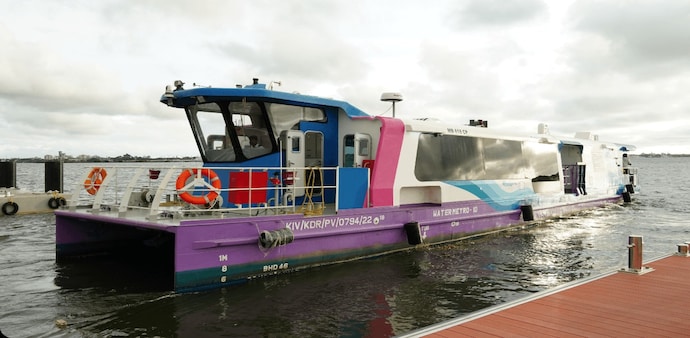
- Mar 17, 2026,
- Updated Mar 17, 2026 11:18 AM IST
India is set to bring waterways into its mainstream urban transport network, with the Centre proposing Water Metro systems as a new mass transit option to ease congestion, cut emissions and unlock infrastructure investment opportunities.
The policy seeks to integrate Water Metro systems passenger transport operating on rivers, lakes and coastal routes into the mass rapid transit ecosystem alongside metro rail and buses. It comes as cities face rising congestion, pollution and land constraints for expanding traditional infrastructure.
A key feature of the proposal is its emphasis on sustainability, with electric and low-emission vessels positioned as the default choice, while hybrid options may be used for longer or more demanding routes.
To drive adoption, the government has proposed multiple funding models, including PPP projects supported by Viability Gap Funding, joint Centre-State investment and, in some cases, full central funding for strategic projects. The framework is expected to open up opportunities across shipbuilding, terminal infrastructure and system operations.
While Water Metro systems are seen as cheaper than metro rail due to minimal land acquisition, the policy notes that upfront costs for vessels and charging infrastructure remain high and ridership may be relatively modest. It suggests affordable fares and additional revenue streams such as advertising and waterfront development to ensure viability, along with an indicative ridership benchmark of around 2,000 passengers per day.
The proposal also calls for integration with metro rail, buses and last-mile connectivity to improve adoption, and mandates that vessels be built domestically, in line with the government’s push for indigenous manufacturing.
India is set to bring waterways into its mainstream urban transport network, with the Centre proposing Water Metro systems as a new mass transit option to ease congestion, cut emissions and unlock infrastructure investment opportunities.
The policy seeks to integrate Water Metro systems passenger transport operating on rivers, lakes and coastal routes into the mass rapid transit ecosystem alongside metro rail and buses. It comes as cities face rising congestion, pollution and land constraints for expanding traditional infrastructure.
A key feature of the proposal is its emphasis on sustainability, with electric and low-emission vessels positioned as the default choice, while hybrid options may be used for longer or more demanding routes.
To drive adoption, the government has proposed multiple funding models, including PPP projects supported by Viability Gap Funding, joint Centre-State investment and, in some cases, full central funding for strategic projects. The framework is expected to open up opportunities across shipbuilding, terminal infrastructure and system operations.
While Water Metro systems are seen as cheaper than metro rail due to minimal land acquisition, the policy notes that upfront costs for vessels and charging infrastructure remain high and ridership may be relatively modest. It suggests affordable fares and additional revenue streams such as advertising and waterfront development to ensure viability, along with an indicative ridership benchmark of around 2,000 passengers per day.
The proposal also calls for integration with metro rail, buses and last-mile connectivity to improve adoption, and mandates that vessels be built domestically, in line with the government’s push for indigenous manufacturing.