
Economic liberalisation, jobs, banking reforms top agenda as PM Modi meets economists, senior officials
Sources said Prime Minister Modi keenly heard the inputs and emphasised that job creation and the expansion of small enterprises, especially MSMEs, will remain central to India’s economic strategy.
- Aug 19, 2025,
- Updated Aug 19, 2025 9:46 PM IST
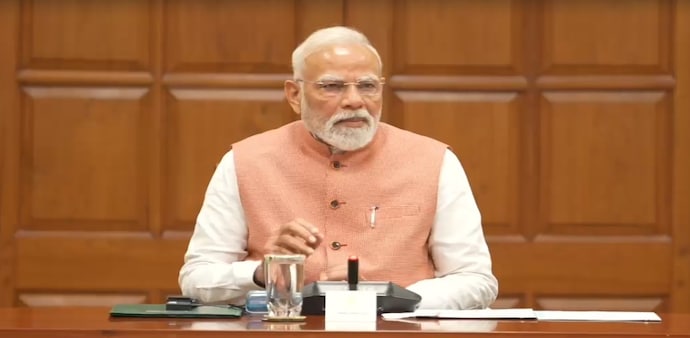
Prime Minister Narendra Modi held a high-level consultation with leading economists and senior secretaries on August 18, where the agenda revolved around boosting growth, creating jobs, and enabling small businesses to scale up, sources have told Business Today.
According to people familiar with the discussions, experts recommended a fresh wave of liberalisation to attract investment and drive competitiveness. They urged the government to simplify regulations, reduce red tape for credible businesses, and strengthen banking reforms to ensure smoother credit flow.
Suggestions also included rationalising fertiliser subsidies to free up fiscal space, ramping up government spending to spur demand, and creating policy incentives to crowd in private sector investment.
There was also a discussion on having a 100-day agenda, which the government is working on, the source said.
Sources further added that the Prime Minister keenly heard the inputs and emphasised that job creation and the expansion of small enterprises, especially MSMEs, will remain central to India’s economic strategy. Modi is learnt to have underlined the need for a supportive ecosystem where small businesses can grow into larger, globally competitive players.
“The clear message is that India must push the next wave of reforms, cut red tape, strengthen banks, and give small businesses the tools to scale up. The PM is very focused on jobs and MSMEs,” a senior government official told Business Today on condition of anonymity.
The meeting comes after PM Modi’s Independence Day address, where he announced “next-generation” Goods and Services Tax (GST) reforms for implementation by Diwali 2025. Pitched as the biggest revamp since the advent of GST in 2017, the moves aim to simplify slabs and ease costs on daily-use goods and small cars while keeping a higher rate for sin and luxury items. The Centre has circulated a draft to states and sought their cooperation, with final changes contingent on approval by the GST Council. Early outlines point to fewer core slabs—potentially two—with a 40% special rate.
Prime Minister Narendra Modi held a high-level consultation with leading economists and senior secretaries on August 18, where the agenda revolved around boosting growth, creating jobs, and enabling small businesses to scale up, sources have told Business Today.
According to people familiar with the discussions, experts recommended a fresh wave of liberalisation to attract investment and drive competitiveness. They urged the government to simplify regulations, reduce red tape for credible businesses, and strengthen banking reforms to ensure smoother credit flow.
Suggestions also included rationalising fertiliser subsidies to free up fiscal space, ramping up government spending to spur demand, and creating policy incentives to crowd in private sector investment.
There was also a discussion on having a 100-day agenda, which the government is working on, the source said.
Sources further added that the Prime Minister keenly heard the inputs and emphasised that job creation and the expansion of small enterprises, especially MSMEs, will remain central to India’s economic strategy. Modi is learnt to have underlined the need for a supportive ecosystem where small businesses can grow into larger, globally competitive players.
“The clear message is that India must push the next wave of reforms, cut red tape, strengthen banks, and give small businesses the tools to scale up. The PM is very focused on jobs and MSMEs,” a senior government official told Business Today on condition of anonymity.
The meeting comes after PM Modi’s Independence Day address, where he announced “next-generation” Goods and Services Tax (GST) reforms for implementation by Diwali 2025. Pitched as the biggest revamp since the advent of GST in 2017, the moves aim to simplify slabs and ease costs on daily-use goods and small cars while keeping a higher rate for sin and luxury items. The Centre has circulated a draft to states and sought their cooperation, with final changes contingent on approval by the GST Council. Early outlines point to fewer core slabs—potentially two—with a 40% special rate.