
India–EU FTA becomes climate platform linking trade, hydrogen and carbon markets, says Climate Trends
The India–EU Free Trade Agreement is increasingly being seen as a climate-linked trade pact rather than a conventional market-access deal. By tying clean energy cooperation, hydrogen ambitions and carbon rules into trade, the agreement signals a sharper climate push in global economic partnerships.
- Jan 27, 2026,
- Updated Jan 27, 2026 4:21 PM IST
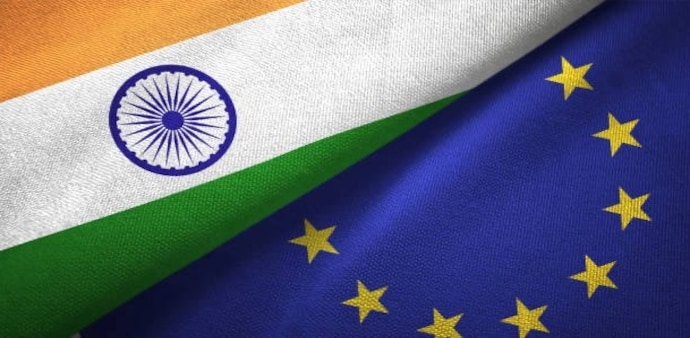
India-EU deal: The conclusion of the long-anticipated India–European Union Free Trade Agreement (FTA) is being increasingly viewed as more than a conventional trade pact, with climate policy and clean energy cooperation forming a critical underpinning of the deal. Climate Trends, a consulting and capacity-building initiative, said the agreement is emerging as a platform for climate–trade convergence, reflecting how climate considerations are now being stitched into global economic partnerships.
The climate dimension of the India–EU FTA, Climate Trends noted, is not incidental. It builds on a series of ongoing institutional frameworks between the two sides. "The Clean Energy and Climate Partnership (CECP), first signed in 2016, continues to coordinate joint efforts on renewable energy, energy efficiency and clean hydrogen. Green hydrogen, in particular, has become a growing pillar of cooperation, with both India and the EU identifying it as central to their long-term decarbonisation pathways," it noted.
The Climate Trends noted alongside CECP, the EU–India Trade and Technology Council (TTC) has been driving collaboration on clean energy technologies, including regulatory interoperability and green research and development. India’s prominent participation at the European Hydrogen Week in Rotterdam last year underscored its ambition to emerge as a hydrogen exporter to Europe.
This ambition is supported by a rapidly expanding domestic electrolyser manufacturing base, with India targeting $10 billion in foreign direct investment to build 10 GW of electrolyser capacity by 2030—an important component of the EU’s future hydrogen import needs. These strands, spanning hydrogen, clean grids and resilient infrastructure, are increasingly seen as complementary to the FTA, even if they are not yet fully codified in the treaty text.
Aarti Khosla, Founder-Director of Climate Trends, said the deal reflects strategic alignment at a moment of high geopolitical uncertainty, particularly around climate goals and green industry.
"The EU is already India’s largest trading partner, and the agreement has the potential to serve as the foundation for a more ambitious strategic partnership that goes beyond trade, providing a stable anchor to boost economic growth, build resilience, improve energy security and foster a future-ready, collaborative relationship. Both India and the EU face a common challenge in building clean energy industries without creating concentrated dependencies, but the complementarities are strong, the opportunity is significant and the timing is right. A deeper partnership anchored in clean technologies could strengthen resilience not only for both regions, but also for global clean energy supply chains," said Madhura Joshi, Programme Lead–Asia at E3G.
Carbon Border Adjustment Mechanism
Another layer of complexity linking climate and trade is the EU’s Carbon Border Adjustment Mechanism (CBAM), the world’s first carbon tariff on imports, which is currently in a transitional phase. While CBAM poses a tangible cost risk for Indian exporters—estimated at $2–4 billion annually once fully implemented in 2026—it has also become a catalyst for dialogue on aligning India’s emerging carbon market with EU standards. Under the FTA, India has secured a most-favoured-nation clause to ensure it is not treated less favourably than other countries under EU carbon rules. The agreement also includes cooperation on recognising India’s carbon pricing and verification systems, as well as financial and technical support to help Indian exporters reduce emissions and meet new climate-related trade requirements.
Mother of all deals
From a trade perspective, the FTA is expected to double bilateral trade, currently at about €124 billion ($136 billion), within five years. Dubbed the “mother of all deals” by Commerce Minister Piyush Goyal and European Commission President Ursula von der Leyen, the agreement grants preferential access for 99% of Indian exports to the EU, unlocks €4 billion in annual savings, and eliminates tariffs of up to 10% on goods worth $33 billion. For India, this acts as a partial offset to climate-related trade costs and offers strategic insulation against renewed protectionist risks, particularly from the United States.
The deal also signals deeper financial backing for the energy transition. The European Investment Bank has already committed €2 billion towards climate-resilient infrastructure in India through the Coalition for Disaster Resilient Infrastructure, indicating the EU’s willingness to support trade commitments with patient capital.
India-EU deal: The conclusion of the long-anticipated India–European Union Free Trade Agreement (FTA) is being increasingly viewed as more than a conventional trade pact, with climate policy and clean energy cooperation forming a critical underpinning of the deal. Climate Trends, a consulting and capacity-building initiative, said the agreement is emerging as a platform for climate–trade convergence, reflecting how climate considerations are now being stitched into global economic partnerships.
The climate dimension of the India–EU FTA, Climate Trends noted, is not incidental. It builds on a series of ongoing institutional frameworks between the two sides. "The Clean Energy and Climate Partnership (CECP), first signed in 2016, continues to coordinate joint efforts on renewable energy, energy efficiency and clean hydrogen. Green hydrogen, in particular, has become a growing pillar of cooperation, with both India and the EU identifying it as central to their long-term decarbonisation pathways," it noted.
The Climate Trends noted alongside CECP, the EU–India Trade and Technology Council (TTC) has been driving collaboration on clean energy technologies, including regulatory interoperability and green research and development. India’s prominent participation at the European Hydrogen Week in Rotterdam last year underscored its ambition to emerge as a hydrogen exporter to Europe.
This ambition is supported by a rapidly expanding domestic electrolyser manufacturing base, with India targeting $10 billion in foreign direct investment to build 10 GW of electrolyser capacity by 2030—an important component of the EU’s future hydrogen import needs. These strands, spanning hydrogen, clean grids and resilient infrastructure, are increasingly seen as complementary to the FTA, even if they are not yet fully codified in the treaty text.
Aarti Khosla, Founder-Director of Climate Trends, said the deal reflects strategic alignment at a moment of high geopolitical uncertainty, particularly around climate goals and green industry.
"The EU is already India’s largest trading partner, and the agreement has the potential to serve as the foundation for a more ambitious strategic partnership that goes beyond trade, providing a stable anchor to boost economic growth, build resilience, improve energy security and foster a future-ready, collaborative relationship. Both India and the EU face a common challenge in building clean energy industries without creating concentrated dependencies, but the complementarities are strong, the opportunity is significant and the timing is right. A deeper partnership anchored in clean technologies could strengthen resilience not only for both regions, but also for global clean energy supply chains," said Madhura Joshi, Programme Lead–Asia at E3G.
Carbon Border Adjustment Mechanism
Another layer of complexity linking climate and trade is the EU’s Carbon Border Adjustment Mechanism (CBAM), the world’s first carbon tariff on imports, which is currently in a transitional phase. While CBAM poses a tangible cost risk for Indian exporters—estimated at $2–4 billion annually once fully implemented in 2026—it has also become a catalyst for dialogue on aligning India’s emerging carbon market with EU standards. Under the FTA, India has secured a most-favoured-nation clause to ensure it is not treated less favourably than other countries under EU carbon rules. The agreement also includes cooperation on recognising India’s carbon pricing and verification systems, as well as financial and technical support to help Indian exporters reduce emissions and meet new climate-related trade requirements.
Mother of all deals
From a trade perspective, the FTA is expected to double bilateral trade, currently at about €124 billion ($136 billion), within five years. Dubbed the “mother of all deals” by Commerce Minister Piyush Goyal and European Commission President Ursula von der Leyen, the agreement grants preferential access for 99% of Indian exports to the EU, unlocks €4 billion in annual savings, and eliminates tariffs of up to 10% on goods worth $33 billion. For India, this acts as a partial offset to climate-related trade costs and offers strategic insulation against renewed protectionist risks, particularly from the United States.
The deal also signals deeper financial backing for the energy transition. The European Investment Bank has already committed €2 billion towards climate-resilient infrastructure in India through the Coalition for Disaster Resilient Infrastructure, indicating the EU’s willingness to support trade commitments with patient capital.