
India-US trade deal: ‘Trump, Modi should take this win; should celebrate’, says Asia expert but with a caveat
India-US trade deal: 18 per cent is “smooth landing” for India because it gives them a relative advantage over competitors, said expert Evan A Feigenbaum.
- Feb 3, 2026,
- Updated Feb 3, 2026 8:53 AM IST
Even though the India-US trade comes as good news and should be celebrated, everyone involved should take a deep breath and calm down, said advisor and expert on Asian governments and markets, Evan A Feigenbaum. He said the situation was “utterly unsustainable” and a trade deal had to happen. “I was surprised it didn’t happen sooner,” said Feigenbaum.
This comes after India and the US agreed to a trade deal under which Washington would bring down reciprocal tariffs on Indian goods to 18 per cent, and New Delhi agreed to stop buying Russian oil.
“If you care deeply about the US-India relations and are invested in it, then having the floor fall out, as it did, is bad news. This is good and we should celebrate it,” he said, additionally crediting newly appointed US Ambassador to India, Sergio Gor, for his role in resetting the tone between the nations and pushing the deal ahead.
Feigenbaum said that even though 18 per cent is better than 50 per cent – it should never have been 50 per cent in the first place, he said – India should be cautious. Trump has, in the past, used or threatened tariffs not only for trade disputes but for anything he doesn’t seem to like. “In short, tariff "deals" have foundered because he changes his mind or layers on new issues. Don't believe me? Go talk to some South Koreans. Then ask a few Canadians,” he said.
Nevertheless, 18 per cent is “smooth landing” for India because it gives them a relative advantage over competitors, with most ASEAN countries stuck at around 19-20 per cent. He also urged everyone to not sleep on the China factor. China does not have any realistic chance of bringing the tariffs to prior levels, but it really doesn’t have to, said Feigenbaum, adding that Beijing only needs to get close to the levels of ASEAN nations.
He also questioned how India, which had $41.5 billion good exports and $41.8 billion service imports from the US in 2024, is going to buy $500 billion of “anything from the United States anytime soon”? He said $500 billion from $83 billion seems like a stretch.
The expert added that it is also unlikely that the Indian government is “going to make any Russian oil-related commitment explicit”.
“Ninth, and most important: Those of us who care about the US-India relations, have worked hard on it, have struggled, and have spent years believing in it should be happier than we were a few months ago. But please, let's not talk as if the last six months never happened or somehow just went "poof" in a magical puff of fairy dust and smoke,” he said, adding that the depoliticised relationship has become politicised again. He said that after so much work to ensure that relations with third-countries that they objected to did not bleed into Washington and New Delhi’s relationship, the 25 per cent oil penalty was a ‘bad precedent’.
“I hope the politics get stronger on both sides. And I hope the ceiling of trust hasn't been lowered as much as I think it has,” said Feigenbaum, adding that the two nations are in a better place than they have been since last August.
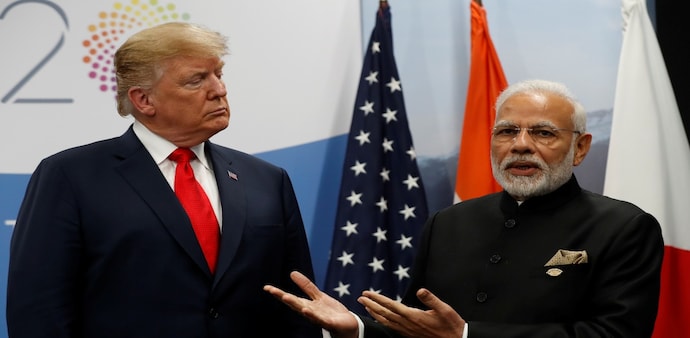
“Modi and Trump should take the win. Props to Gor and his counterparts. But I still think folks should take a big deep breath and see where we go from here,” he said.
Under the new arrangement, the United States will reduce reciprocal tariffs on Indian goods from 25 per cent to 18 per cent, while India will eliminate its tariffs and non-tariff barriers against American products.
Trump made the announcement on social media, stating, "Out of friendship and respect for Prime Minister Modi and, as per his request, effective immediately, we agreed to a trade deal between the United States and India, whereby the United States will charge a reduced reciprocal tariff, lowering it from 25 per cent to 18 per cent."
In response, Prime Minister Modi said that he was delighted that 'Made in India products will now have a reduced tariff of 18 per cent'. “Big thanks to President Trump on behalf of the 1.4 billion people of India for this wonderful announcement,” he said.
The agreement includes a commitment from India to "likewise move forward to reduce their tariffs and non tariff barriers against the United States, to zero," as President Trump stated.
Trump further indicated that India has committed to increasing purchases of American goods, including more than $500 billion of US energy, technology, agriculture, coal, and other products.
Even though the India-US trade comes as good news and should be celebrated, everyone involved should take a deep breath and calm down, said advisor and expert on Asian governments and markets, Evan A Feigenbaum. He said the situation was “utterly unsustainable” and a trade deal had to happen. “I was surprised it didn’t happen sooner,” said Feigenbaum.
This comes after India and the US agreed to a trade deal under which Washington would bring down reciprocal tariffs on Indian goods to 18 per cent, and New Delhi agreed to stop buying Russian oil.
“If you care deeply about the US-India relations and are invested in it, then having the floor fall out, as it did, is bad news. This is good and we should celebrate it,” he said, additionally crediting newly appointed US Ambassador to India, Sergio Gor, for his role in resetting the tone between the nations and pushing the deal ahead.
Feigenbaum said that even though 18 per cent is better than 50 per cent – it should never have been 50 per cent in the first place, he said – India should be cautious. Trump has, in the past, used or threatened tariffs not only for trade disputes but for anything he doesn’t seem to like. “In short, tariff "deals" have foundered because he changes his mind or layers on new issues. Don't believe me? Go talk to some South Koreans. Then ask a few Canadians,” he said.
Nevertheless, 18 per cent is “smooth landing” for India because it gives them a relative advantage over competitors, with most ASEAN countries stuck at around 19-20 per cent. He also urged everyone to not sleep on the China factor. China does not have any realistic chance of bringing the tariffs to prior levels, but it really doesn’t have to, said Feigenbaum, adding that Beijing only needs to get close to the levels of ASEAN nations.
He also questioned how India, which had $41.5 billion good exports and $41.8 billion service imports from the US in 2024, is going to buy $500 billion of “anything from the United States anytime soon”? He said $500 billion from $83 billion seems like a stretch.
The expert added that it is also unlikely that the Indian government is “going to make any Russian oil-related commitment explicit”.
“Ninth, and most important: Those of us who care about the US-India relations, have worked hard on it, have struggled, and have spent years believing in it should be happier than we were a few months ago. But please, let's not talk as if the last six months never happened or somehow just went "poof" in a magical puff of fairy dust and smoke,” he said, adding that the depoliticised relationship has become politicised again. He said that after so much work to ensure that relations with third-countries that they objected to did not bleed into Washington and New Delhi’s relationship, the 25 per cent oil penalty was a ‘bad precedent’.
“I hope the politics get stronger on both sides. And I hope the ceiling of trust hasn't been lowered as much as I think it has,” said Feigenbaum, adding that the two nations are in a better place than they have been since last August.
“Modi and Trump should take the win. Props to Gor and his counterparts. But I still think folks should take a big deep breath and see where we go from here,” he said.
Under the new arrangement, the United States will reduce reciprocal tariffs on Indian goods from 25 per cent to 18 per cent, while India will eliminate its tariffs and non-tariff barriers against American products.
Trump made the announcement on social media, stating, "Out of friendship and respect for Prime Minister Modi and, as per his request, effective immediately, we agreed to a trade deal between the United States and India, whereby the United States will charge a reduced reciprocal tariff, lowering it from 25 per cent to 18 per cent."
In response, Prime Minister Modi said that he was delighted that 'Made in India products will now have a reduced tariff of 18 per cent'. “Big thanks to President Trump on behalf of the 1.4 billion people of India for this wonderful announcement,” he said.
The agreement includes a commitment from India to "likewise move forward to reduce their tariffs and non tariff barriers against the United States, to zero," as President Trump stated.
Trump further indicated that India has committed to increasing purchases of American goods, including more than $500 billion of US energy, technology, agriculture, coal, and other products.