
Not just oil: Closing the Strait of Hormuz could trigger supply chain shock and global food inflation, says report
Not just oil: Closing the Strait of Hormuz could trigger supply chain shock and global food inflation, says report
A disruption in the Strait of Hormuz could do more than push up oil prices — it may trigger a global supply chain shock that raises fertilizer costs and food prices. A new report warns that the real risk lies in the cascade from energy to agriculture and food security.
Basudha Das
- Mar 26, 2026,
- Updated Mar 26, 2026 9:12 PM IST
The global risk from a possible closure of the Strait of Hormuz goes far beyond oil prices. A new policy brief by the Kiel Institute for the World Economy, titled The Cost of Closing the Strait of Hormuz: Energy Bottlenecks and Global Food Security, warns that blocking the narrow waterway could trigger a supply chain cascade that pushes up fertilizer costs, disrupts agriculture, and ultimately drives food prices higher across the world.
Advertisement
The report says the biggest threat from a Hormuz disruption is not energy alone, but the chain reaction it creates across chemicals, fertilizers, and food production — sectors that depend heavily on Gulf oil and natural gas exports.
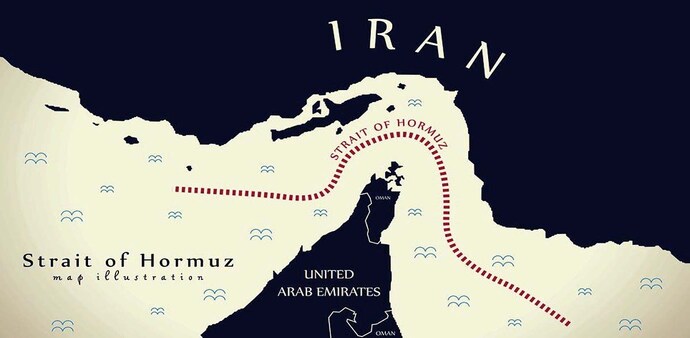
The Strait of Hormuz handles roughly one-fifth of global oil trade and about one-quarter of liquefied natural gas shipments. Any shutdown immediately tightens global energy supply, but the study notes that the real damage comes from what happens next in industrial supply chains.
From energy shock to food inflation
Natural gas from Gulf countries is a key raw material for producing ammonia and urea, the most widely used nitrogen fertilizers in the world. When gas supply is disrupted, fertilizer production becomes expensive or slows down, increasing costs for farmers.
Advertisement
Higher fertilizer prices then push up the cost of growing crops such as wheat, cereals, vegetables, and oilseeds. The report describes this as a bottleneck effect, where shortages in one critical input spread through the economy and magnify the final impact on consumers.
MUST READ: '$150 oil could trigger global recession': BlackRock's Larry Fink warns amid Iran war
Model simulations in the study show that a full closure of the strait could raise global energy prices by over 5% and food prices by nearly 3%, even without accounting for panic buying or financial speculation. In real markets, the impact could be larger because commodity prices often react sharply during geopolitical crises.
Fertilizer and chemicals are the hidden risk
Advertisement
The Gulf region is not only a major oil exporter but also a key supplier of petrochemicals, methanol, and fertilizer inputs used worldwide. Countries such as Qatar and Iran are among the largest exporters of urea, while Gulf petrochemical complexes produce feedstock used in plastics, pharmaceuticals, and agricultural chemicals.
Because these industries rely heavily on natural gas, a disruption in energy supply quickly spreads to manufacturing and agriculture. The report notes that many of these products cannot be replaced easily in the short term, making global supply chains highly vulnerable.
Developing countries face the biggest impact
The study finds that the economic damage would be uneven. Energy-importing developing countries in South Asia, Africa, and parts of the Middle East would face the steepest rise in food prices because they depend on imported fuel, imported fertilizer, and have limited domestic alternatives.
In the short-run scenario, countries such as India and Pakistan show much larger welfare losses than advanced economies, while the impact on the United States is relatively small.
Researchers say this makes a Hormuz disruption not just an energy crisis, but a food security crisis for poorer nations.
Iran's oil lifeline intact: Tehran earns hundreds of millions more as war lifts prices
Advertisement
Supply chains cannot adjust quickly
The report also highlights that supply chains take time to adapt. Refineries cannot quickly switch crude sources, fertilizer buyers often work on yearly contracts, and alternative shipping routes are limited.
As a result, the first few months after any closure would see the sharpest price spikes, especially in energy-intensive sectors such as chemicals and agriculture. Even if trade flows adjust later, the damage to food production could last for an entire crop season.
The study concludes that global dependence on Gulf energy and petrochemical supply has grown over decades, making the world more vulnerable to chokepoint disruptions. Without diversification of energy and fertilizer supply, a crisis in the Strait of Hormuz could quickly turn into a global inflation and food security shock.
Welfare loss
If the Strait of Hormuz is fully closed in the short run, the biggest economic impact falls on energy-importing developing countries, not rich economies. Zambia faces the highest loss at about -5.49%, followed by Sri Lanka (-3.47%), Syria (-2.86%), Congo (-2.38%), Taiwan (-2.31%), and Guinea (-2.18%). India is also significantly affected with a welfare decline of around -1.78%, while South Korea, Greece, and Turkey also see notable losses. The data suggests that countries dependent on imported fuel, fertilizers, and food face the sharpest economic damage if supply chains through Hormuz are disrupted.
The global risk from a possible closure of the Strait of Hormuz goes far beyond oil prices. A new policy brief by the Kiel Institute for the World Economy, titled The Cost of Closing the Strait of Hormuz: Energy Bottlenecks and Global Food Security, warns that blocking the narrow waterway could trigger a supply chain cascade that pushes up fertilizer costs, disrupts agriculture, and ultimately drives food prices higher across the world.
Advertisement
The report says the biggest threat from a Hormuz disruption is not energy alone, but the chain reaction it creates across chemicals, fertilizers, and food production — sectors that depend heavily on Gulf oil and natural gas exports.
The Strait of Hormuz handles roughly one-fifth of global oil trade and about one-quarter of liquefied natural gas shipments. Any shutdown immediately tightens global energy supply, but the study notes that the real damage comes from what happens next in industrial supply chains.
From energy shock to food inflation
Natural gas from Gulf countries is a key raw material for producing ammonia and urea, the most widely used nitrogen fertilizers in the world. When gas supply is disrupted, fertilizer production becomes expensive or slows down, increasing costs for farmers.
Advertisement
Higher fertilizer prices then push up the cost of growing crops such as wheat, cereals, vegetables, and oilseeds. The report describes this as a bottleneck effect, where shortages in one critical input spread through the economy and magnify the final impact on consumers.
MUST READ: '$150 oil could trigger global recession': BlackRock's Larry Fink warns amid Iran war
Model simulations in the study show that a full closure of the strait could raise global energy prices by over 5% and food prices by nearly 3%, even without accounting for panic buying or financial speculation. In real markets, the impact could be larger because commodity prices often react sharply during geopolitical crises.
Fertilizer and chemicals are the hidden risk
Advertisement
The Gulf region is not only a major oil exporter but also a key supplier of petrochemicals, methanol, and fertilizer inputs used worldwide. Countries such as Qatar and Iran are among the largest exporters of urea, while Gulf petrochemical complexes produce feedstock used in plastics, pharmaceuticals, and agricultural chemicals.
Because these industries rely heavily on natural gas, a disruption in energy supply quickly spreads to manufacturing and agriculture. The report notes that many of these products cannot be replaced easily in the short term, making global supply chains highly vulnerable.
Developing countries face the biggest impact
The study finds that the economic damage would be uneven. Energy-importing developing countries in South Asia, Africa, and parts of the Middle East would face the steepest rise in food prices because they depend on imported fuel, imported fertilizer, and have limited domestic alternatives.
In the short-run scenario, countries such as India and Pakistan show much larger welfare losses than advanced economies, while the impact on the United States is relatively small.
Researchers say this makes a Hormuz disruption not just an energy crisis, but a food security crisis for poorer nations.
Iran's oil lifeline intact: Tehran earns hundreds of millions more as war lifts prices
Advertisement
Supply chains cannot adjust quickly
The report also highlights that supply chains take time to adapt. Refineries cannot quickly switch crude sources, fertilizer buyers often work on yearly contracts, and alternative shipping routes are limited.
As a result, the first few months after any closure would see the sharpest price spikes, especially in energy-intensive sectors such as chemicals and agriculture. Even if trade flows adjust later, the damage to food production could last for an entire crop season.
The study concludes that global dependence on Gulf energy and petrochemical supply has grown over decades, making the world more vulnerable to chokepoint disruptions. Without diversification of energy and fertilizer supply, a crisis in the Strait of Hormuz could quickly turn into a global inflation and food security shock.
Welfare loss
If the Strait of Hormuz is fully closed in the short run, the biggest economic impact falls on energy-importing developing countries, not rich economies. Zambia faces the highest loss at about -5.49%, followed by Sri Lanka (-3.47%), Syria (-2.86%), Congo (-2.38%), Taiwan (-2.31%), and Guinea (-2.18%). India is also significantly affected with a welfare decline of around -1.78%, while South Korea, Greece, and Turkey also see notable losses. The data suggests that countries dependent on imported fuel, fertilizers, and food face the sharpest economic damage if supply chains through Hormuz are disrupted.
Read more!