
RBI likely to keep repo rate unchanged in August as inflation, global risks outweigh strong GDP growth: SBI Research
The Reserve Bank of India is likely to keep the repo rate unchanged at its August 3-5 Monetary Policy Committee (MPC) meeting despite stronger-than-expected economic growth, according to SBI Research. The report cites persistent inflation, global uncertainties and currency-related risks as key reasons for maintaining the status quo.
- Aug 1, 2026,
- Updated Aug 1, 2026 10:18 AM IST
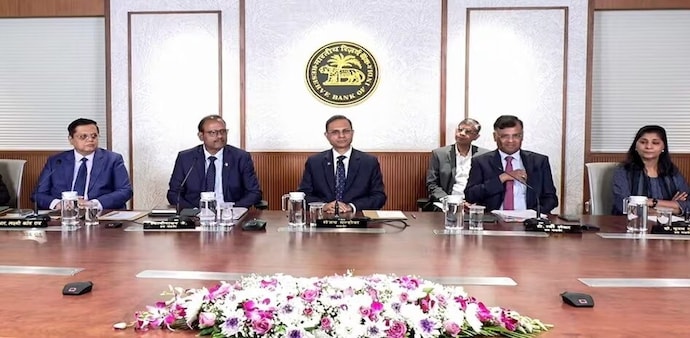
The Reserve Bank of India (RBI) is likely to leave the repo rate unchanged at its August 3-5 Monetary Policy Committee (MPC) meeting despite signs that India's economy grew faster than expected in the April-June quarter, according to a pre-policy report by SBI Research.
The report argues that while Q1 FY27 GDP growth is likely to exceed 7%, sticky inflation, external uncertainties and currency pressures make a pause the most likely outcome for the central bank.
Growth remains strong but inflation keeps RBI cautious
SBI Research expects the MPC to maintain the status quo against what it describes as a volatile global backdrop. It estimates that India's GDP growth for the April-June quarter could surpass 7%, outperforming expectations even as the global economy remains clouded by geopolitical tensions and slowing growth in the United States.
However, the report believes inflation remains a key constraint. It projects consumer price inflation (CPI) to remain above 5% over the next two quarters, with average inflation for FY27 likely to hover around 5%. Given these projections, the report says the RBI is unlikely to signal an explicitly dovish stance, as elevated oil prices, rupee pressures and volatile capital flows continue to pose risks.
MUST READ: RBI says interest rates on deposits must be uniform, but banks get more flexibility on bulk deposits
Capital inflows strengthen India's external position
The report also highlights an improving external sector. It estimates that capital inflows of around $35 billion by the end of July enabled the RBI to rebuild foreign exchange reserves by $12.5 billion through July 24 while simultaneously reducing outstanding short-term forward positions by about $13 billion. According to SBI Research, these measures have helped ease pressure on the rupee.
On the currency front, the report argues that the rupee has depreciated more than macroeconomic fundamentals justify. It notes that the central bank has actively altered the composition of its forward book to reduce pressure at the shorter end of the market and says the rupee should be allowed to appreciate, particularly after the postponement of India's inclusion in Bloomberg's global bond index.
MUST READ: Why Bloomberg isn't ready to add Indian bonds yet despite sweeping market reforms
Monsoon recovery supports domestic outlook
SBI Research also points to improving domestic conditions that could support growth. July's surplus monsoon rainfall has narrowed the nationwide rainfall deficit to 13%, reservoir levels have returned to normal and kharif sowing is only marginally lower than last year's levels, suggesting prospects for a better harvest.
Global risks remain elevated
Globally, the report remains cautious. It cites uncertainty arising from the West Asia crisis, supply-chain disruptions, elevated commodity prices and slowing US growth as factors that could keep global financial conditions tight. Rising US Treasury yields and persistent trade tensions are also seen as adding to market volatility.
Overall, SBI Research concludes that while India's growth outlook remains robust, the current mix of inflation risks, exchange-rate concerns and global uncertainty is likely to prompt the RBI to keep policy rates unchanged at the upcoming MPC meeting.
The Reserve Bank of India (RBI) is likely to leave the repo rate unchanged at its August 3-5 Monetary Policy Committee (MPC) meeting despite signs that India's economy grew faster than expected in the April-June quarter, according to a pre-policy report by SBI Research.
The report argues that while Q1 FY27 GDP growth is likely to exceed 7%, sticky inflation, external uncertainties and currency pressures make a pause the most likely outcome for the central bank.
Growth remains strong but inflation keeps RBI cautious
SBI Research expects the MPC to maintain the status quo against what it describes as a volatile global backdrop. It estimates that India's GDP growth for the April-June quarter could surpass 7%, outperforming expectations even as the global economy remains clouded by geopolitical tensions and slowing growth in the United States.
However, the report believes inflation remains a key constraint. It projects consumer price inflation (CPI) to remain above 5% over the next two quarters, with average inflation for FY27 likely to hover around 5%. Given these projections, the report says the RBI is unlikely to signal an explicitly dovish stance, as elevated oil prices, rupee pressures and volatile capital flows continue to pose risks.
MUST READ: RBI says interest rates on deposits must be uniform, but banks get more flexibility on bulk deposits
Capital inflows strengthen India's external position
The report also highlights an improving external sector. It estimates that capital inflows of around $35 billion by the end of July enabled the RBI to rebuild foreign exchange reserves by $12.5 billion through July 24 while simultaneously reducing outstanding short-term forward positions by about $13 billion. According to SBI Research, these measures have helped ease pressure on the rupee.
On the currency front, the report argues that the rupee has depreciated more than macroeconomic fundamentals justify. It notes that the central bank has actively altered the composition of its forward book to reduce pressure at the shorter end of the market and says the rupee should be allowed to appreciate, particularly after the postponement of India's inclusion in Bloomberg's global bond index.
MUST READ: Why Bloomberg isn't ready to add Indian bonds yet despite sweeping market reforms
Monsoon recovery supports domestic outlook
SBI Research also points to improving domestic conditions that could support growth. July's surplus monsoon rainfall has narrowed the nationwide rainfall deficit to 13%, reservoir levels have returned to normal and kharif sowing is only marginally lower than last year's levels, suggesting prospects for a better harvest.
Global risks remain elevated
Globally, the report remains cautious. It cites uncertainty arising from the West Asia crisis, supply-chain disruptions, elevated commodity prices and slowing US growth as factors that could keep global financial conditions tight. Rising US Treasury yields and persistent trade tensions are also seen as adding to market volatility.
Overall, SBI Research concludes that while India's growth outlook remains robust, the current mix of inflation risks, exchange-rate concerns and global uncertainty is likely to prompt the RBI to keep policy rates unchanged at the upcoming MPC meeting.