
Rising global tariffs pose risks, but India’s economy holds steady: Finance Ministry
According to the Finance Ministry’s Monthly Economic Review, global trade had already started to feel the effects of higher duties and policy unpredictability, which dampened business sentiment.
- Aug 27, 2025,
- Updated Aug 27, 2025 10:05 PM IST
India’s economy continued to demonstrate resilience in July 2025, sustaining momentum even as global trade faced uncertainties from tariff disputes and geopolitical tensions. According to the Finance Ministry’s Monthly Economic Review, strong domestic demand and robust macroeconomic fundamentals underpinned growth, though caution was warranted amid protectionist trends abroad that were beginning to influence India’s trade outlook.
The report highlighted that global trade had already started to feel the effects of higher duties and policy unpredictability, which dampened business sentiment. The World Trade Organization (WTO) revised its global merchandise trade growth forecast for 2025 down to 0.9% from an earlier 2.7%, noting that the full impact of tariff hikes would likely become clearer in the latter half of 2025 and into 2026. In line with this, the Trade Policy Uncertainty Index rose 17% in July, reflecting heightened concerns among firms and investors. With the United States being a key destination for Indian exports, any prolonged tariff pressures there could gradually affect shipments.
Despite these external headwinds, India’s external sector remained stable. Exports of goods and services rose 4.5% year-on-year in July to $68.3 billion. Merchandise exports expanded 7.3%, driven by a robust 12.7% increase in non-petroleum, non-gems and jewellery exports, while services exports grew modestly by 1.4%. Imports climbed 6.1% to $80 billion, led by a 6.9% rise in non-oil imports, reflecting strong domestic consumption. This pushed the trade deficit higher to $11.7 billion, up from $10.1 billion a year earlier.
To mitigate tariff-related challenges, the government pursued a calibrated trade policy. The India-UK Comprehensive Economic and Trade Agreement (CETA), effective from July, is expected to double bilateral trade by 2030 while safeguarding sensitive sectors. Additionally, the recently concluded India-EFTA agreement and ongoing negotiations with the EU, US, and other partners aim to diversify markets and strengthen supply chains, reflecting a broader strategic approach.
On the domestic front, high-frequency indicators pointed to sustained economic activity. E-way bill generation reached record levels, manufacturing PMI hit a 16-month high, and services PMI continued to signal expansion. Rural and urban consumption remained strong, supported by rising FMCG sales, robust UPI transactions, and steady automobile demand. A favourable monsoon further boosted rural spending power. Inflation eased significantly, with headline CPI falling to 1.6% in July due to softening food prices, remaining below the RBI’s lower tolerance band. The ministry noted that this provided additional flexibility for fiscal and monetary measures to support growth.
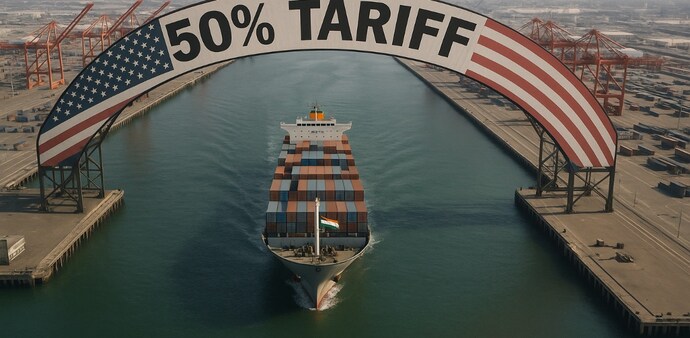
While the overall outlook remained positive, the review flagged risks from tariff developments. Although recent U.S. tariffs had a limited immediate effect, their broader impact on supply chains and investment could emerge over time. Nevertheless, India entered this period from a position of relative strength, aided by a sovereign rating upgrade by S&P to BBB, continued capital expenditure, and upcoming reforms—including GST adjustments and state-level deregulation—which are expected to attract investment, lower borrowing costs, and enhance competitiveness.
The ministry concluded that while global uncertainties and tariff pressures posed challenges, India’s resilient domestic demand, diversified trade strategy, and ongoing reforms provided a solid foundation to navigate these headwinds and sustain growth.
India’s economy continued to demonstrate resilience in July 2025, sustaining momentum even as global trade faced uncertainties from tariff disputes and geopolitical tensions. According to the Finance Ministry’s Monthly Economic Review, strong domestic demand and robust macroeconomic fundamentals underpinned growth, though caution was warranted amid protectionist trends abroad that were beginning to influence India’s trade outlook.
The report highlighted that global trade had already started to feel the effects of higher duties and policy unpredictability, which dampened business sentiment. The World Trade Organization (WTO) revised its global merchandise trade growth forecast for 2025 down to 0.9% from an earlier 2.7%, noting that the full impact of tariff hikes would likely become clearer in the latter half of 2025 and into 2026. In line with this, the Trade Policy Uncertainty Index rose 17% in July, reflecting heightened concerns among firms and investors. With the United States being a key destination for Indian exports, any prolonged tariff pressures there could gradually affect shipments.
Despite these external headwinds, India’s external sector remained stable. Exports of goods and services rose 4.5% year-on-year in July to $68.3 billion. Merchandise exports expanded 7.3%, driven by a robust 12.7% increase in non-petroleum, non-gems and jewellery exports, while services exports grew modestly by 1.4%. Imports climbed 6.1% to $80 billion, led by a 6.9% rise in non-oil imports, reflecting strong domestic consumption. This pushed the trade deficit higher to $11.7 billion, up from $10.1 billion a year earlier.
To mitigate tariff-related challenges, the government pursued a calibrated trade policy. The India-UK Comprehensive Economic and Trade Agreement (CETA), effective from July, is expected to double bilateral trade by 2030 while safeguarding sensitive sectors. Additionally, the recently concluded India-EFTA agreement and ongoing negotiations with the EU, US, and other partners aim to diversify markets and strengthen supply chains, reflecting a broader strategic approach.
On the domestic front, high-frequency indicators pointed to sustained economic activity. E-way bill generation reached record levels, manufacturing PMI hit a 16-month high, and services PMI continued to signal expansion. Rural and urban consumption remained strong, supported by rising FMCG sales, robust UPI transactions, and steady automobile demand. A favourable monsoon further boosted rural spending power. Inflation eased significantly, with headline CPI falling to 1.6% in July due to softening food prices, remaining below the RBI’s lower tolerance band. The ministry noted that this provided additional flexibility for fiscal and monetary measures to support growth.
While the overall outlook remained positive, the review flagged risks from tariff developments. Although recent U.S. tariffs had a limited immediate effect, their broader impact on supply chains and investment could emerge over time. Nevertheless, India entered this period from a position of relative strength, aided by a sovereign rating upgrade by S&P to BBB, continued capital expenditure, and upcoming reforms—including GST adjustments and state-level deregulation—which are expected to attract investment, lower borrowing costs, and enhance competitiveness.
The ministry concluded that while global uncertainties and tariff pressures posed challenges, India’s resilient domestic demand, diversified trade strategy, and ongoing reforms provided a solid foundation to navigate these headwinds and sustain growth.