
Congestion levels drop in major Indian cities: TomTom Report
TomTom, the geolocation technology specialist, today released the 11th edition of its annual TomTom Traffic Index.
- Feb 10, 2022,
- Updated Feb 10, 2022 11:42 AM IST
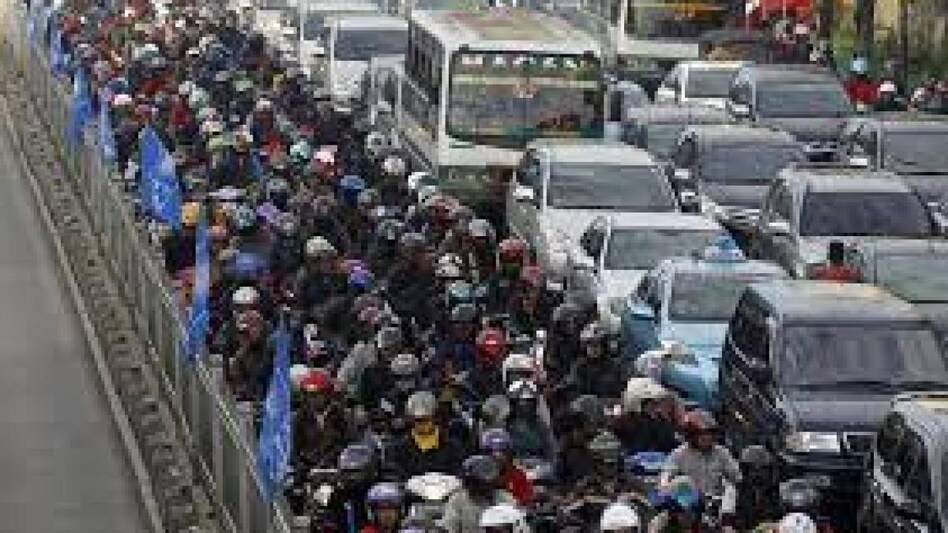
India's traffic congestion levels in cities including Mumbai, Bengaluru, New Delhi, and Pune were 23 per cent lower than the pre-COVID times, as per a report by TomTom Traffic Index.
Compared to 2019, Mumbai, New Delhi, and Pune saw an average decrease in congestion levels by 18 per cent, 14 per cent, and 29 per cent, respectively.
The number of most congested cities in India decreased from 13 to 6 in 2021, as per the report by TomTom (TOM2), a geolocation technology specialist. The report details traffic trends seen in 404 cities in 58 countries, throughout 2021.
The world’s most congested city in 2021 is Turkey's Istanbul, with a congestion level of 62 per cent.
During the pandemic, new mobility usages have gained popularity, e-scooter and bicycle use are increasing, supported by cycle lanes in many cities. However, while micro mobility can support inner-city mobility, most traffic pain points stem from the interurban movement. In the context of the pandemic, public transit lost much of its attractiveness as travellers favoured their private cars, seen as a safer way to maintain social distancing.
“At the heart of our location intelligence is the map. We work with big data and optimise our maps with artificial intelligence and machine learning. The real-time traffic information we collect to understand congestion patterns indicates that mobility options are rapidly changing as a part of the adaptable lifestyles resulting from the pandemic,” Sachin Tyagi, Strategic Automotive Business Development Manager, TomTom said.
He further said, “We believe that policymakers need to be cognisant of the positive change, and implement holistic norms aimed at bettering road infrastructure.”
“This will further takedown congestion levels and promote alternative sustainable transport modes, which could improve emission levels too. Adoption of better technology that utilises real-time data, bold investments, and fearless policy decisions are the key to the transformation.”
Making traffic information more readily available both to drivers and traffic authorities can help pinpoint traffic congestion bottlenecks in real-time and better manage congestion.
TomTom’s navigation software knows the traffic ahead and provides enhanced route calculations and accurate estimated times of arrival (ETA) - saving time and fuel for drivers, logistics providers, on-demand services (ride-hailing, food delivery).
India's traffic congestion levels in cities including Mumbai, Bengaluru, New Delhi, and Pune were 23 per cent lower than the pre-COVID times, as per a report by TomTom Traffic Index.
Compared to 2019, Mumbai, New Delhi, and Pune saw an average decrease in congestion levels by 18 per cent, 14 per cent, and 29 per cent, respectively.
The number of most congested cities in India decreased from 13 to 6 in 2021, as per the report by TomTom (TOM2), a geolocation technology specialist. The report details traffic trends seen in 404 cities in 58 countries, throughout 2021.
The world’s most congested city in 2021 is Turkey's Istanbul, with a congestion level of 62 per cent.
During the pandemic, new mobility usages have gained popularity, e-scooter and bicycle use are increasing, supported by cycle lanes in many cities. However, while micro mobility can support inner-city mobility, most traffic pain points stem from the interurban movement. In the context of the pandemic, public transit lost much of its attractiveness as travellers favoured their private cars, seen as a safer way to maintain social distancing.
“At the heart of our location intelligence is the map. We work with big data and optimise our maps with artificial intelligence and machine learning. The real-time traffic information we collect to understand congestion patterns indicates that mobility options are rapidly changing as a part of the adaptable lifestyles resulting from the pandemic,” Sachin Tyagi, Strategic Automotive Business Development Manager, TomTom said.
He further said, “We believe that policymakers need to be cognisant of the positive change, and implement holistic norms aimed at bettering road infrastructure.”
“This will further takedown congestion levels and promote alternative sustainable transport modes, which could improve emission levels too. Adoption of better technology that utilises real-time data, bold investments, and fearless policy decisions are the key to the transformation.”
Making traffic information more readily available both to drivers and traffic authorities can help pinpoint traffic congestion bottlenecks in real-time and better manage congestion.
TomTom’s navigation software knows the traffic ahead and provides enhanced route calculations and accurate estimated times of arrival (ETA) - saving time and fuel for drivers, logistics providers, on-demand services (ride-hailing, food delivery).