
From Stars to Storms: Space’s most striking images of 2025
From star nurseries to supernova remnants, the most stunning space images of 2025 reveal distant galaxies, dying stars, and cosmic forces captured by Webb and other telescopes.
- Dec 24, 2025,
- Updated Dec 24, 2025 3:14 PM IST
- 1/15
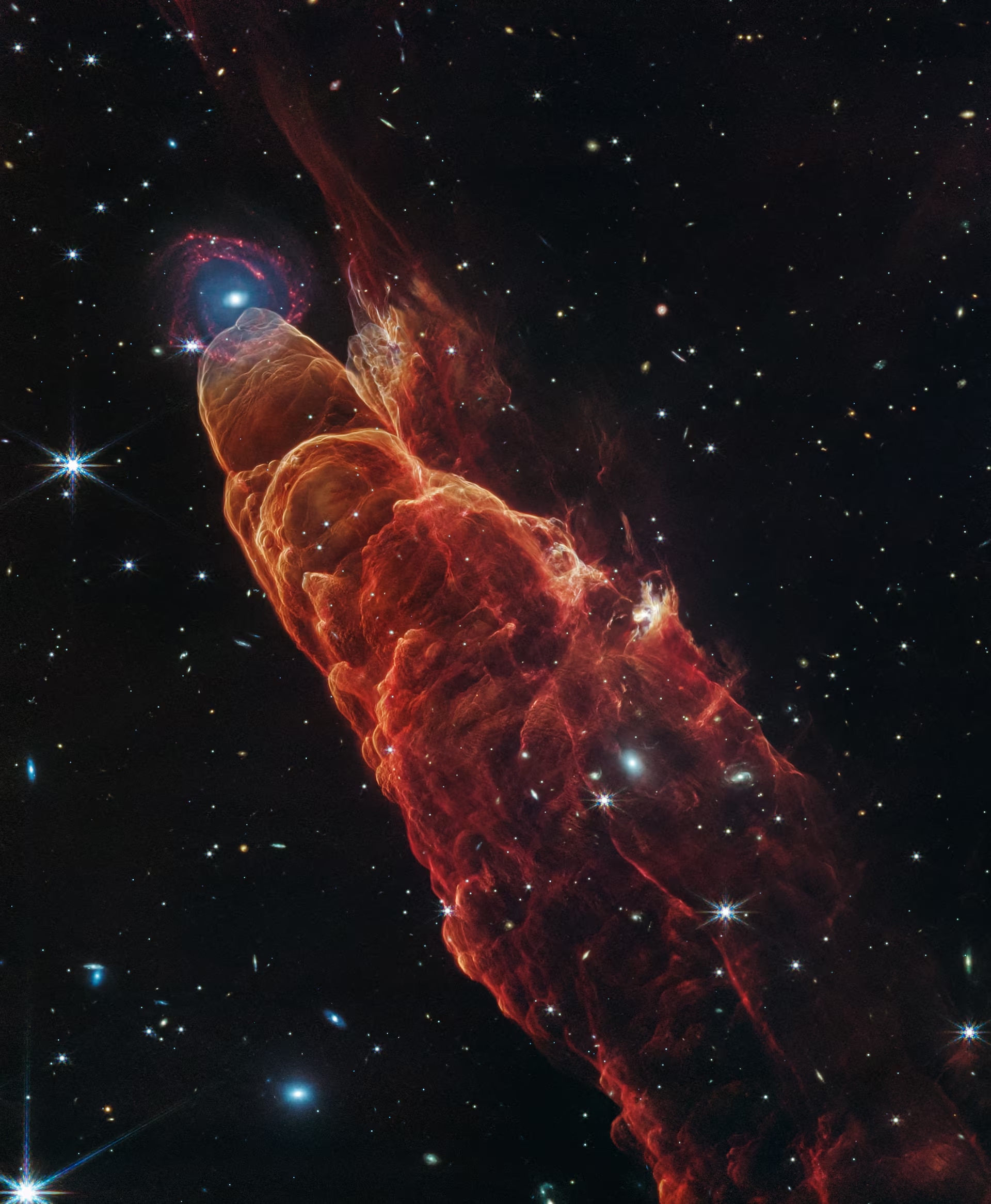
A newborn star’s violent outflow twists gas and dust into a swirling column nicknamed the “cosmic tornado.” Captured by the James Webb Space Telescope, the image reveals shock waves glowing as they cool—turning stellar chaos into breathtaking structure. (Credit: James Webb Telescope/NASA)
- 2/15
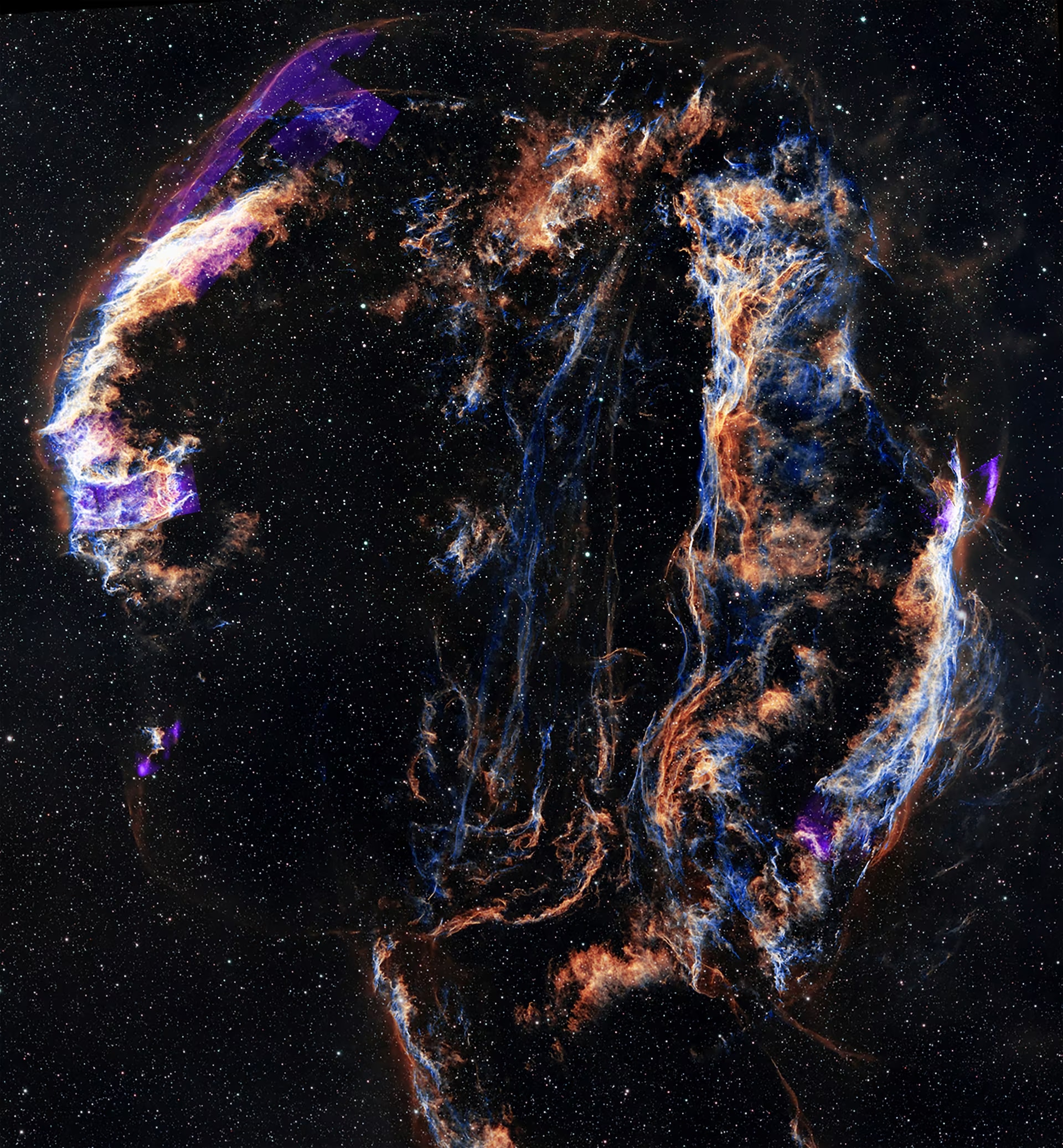
The Cygnus Loop looks serene, but it’s the scar of a stellar death. Seen in X-rays by Chandra X-ray Observatory, this supernova remnant shows how blast waves rip through interstellar clouds, reshaping space long after the star is gone. (Credit: NASA)
- 3/15
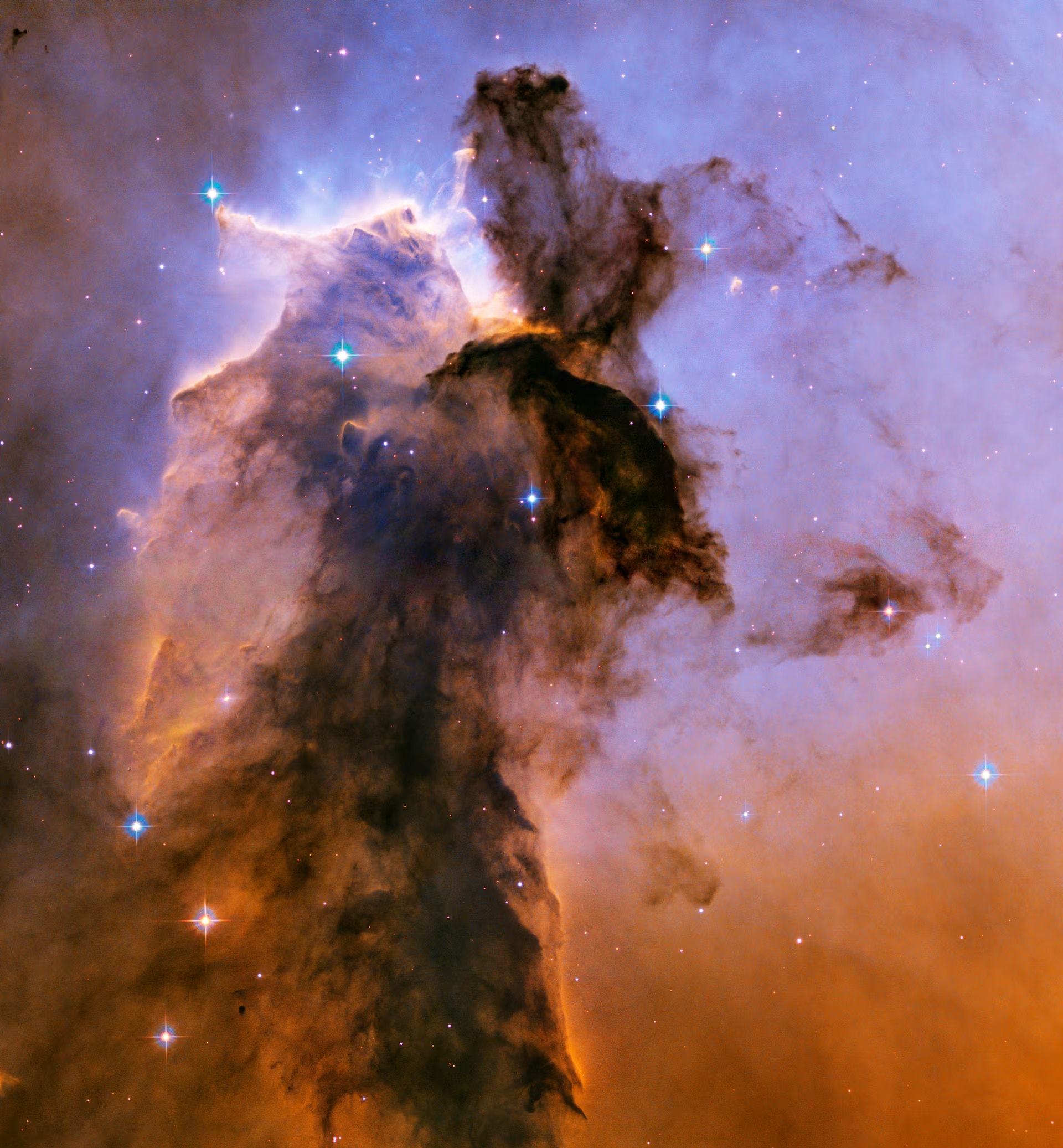
A reprocessed Hubble image reveals towering columns of cold gas inside the Eagle Nebula. Sculpted by fierce radiation from young stars, these cosmic pillars show how destruction and creation coexist in the Milky Way. (Credit: ESA/Hubble, NASA)
- 4/15
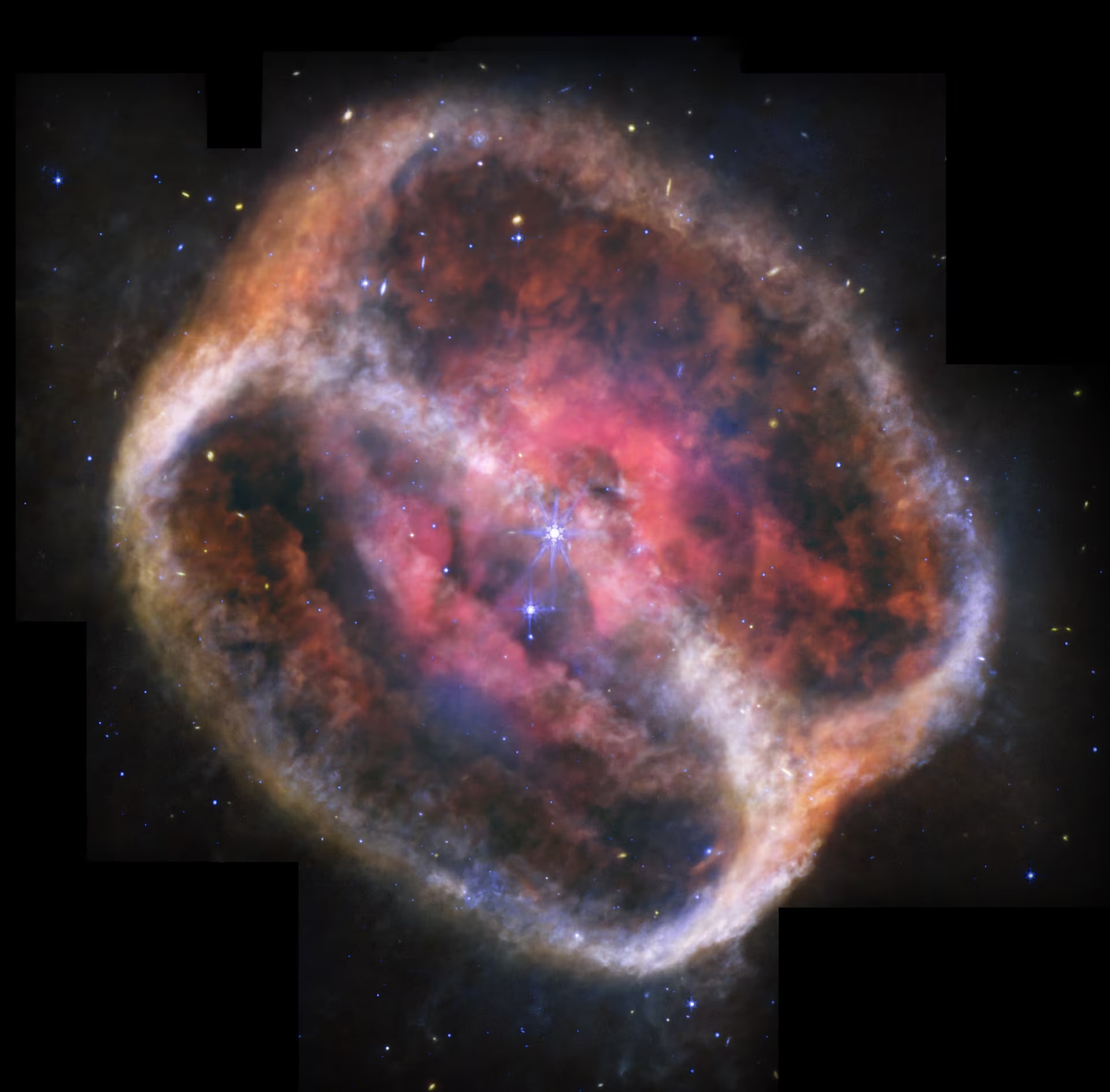
NGC 1514 glows like a cosmic hourglass as a dying star sheds its outer layers. Webb’s mid-infrared view exposes dust shells invisible for centuries, reminding astronomers that even stellar death can be luminous. (Credit: NASA, ESA)
- 5/15
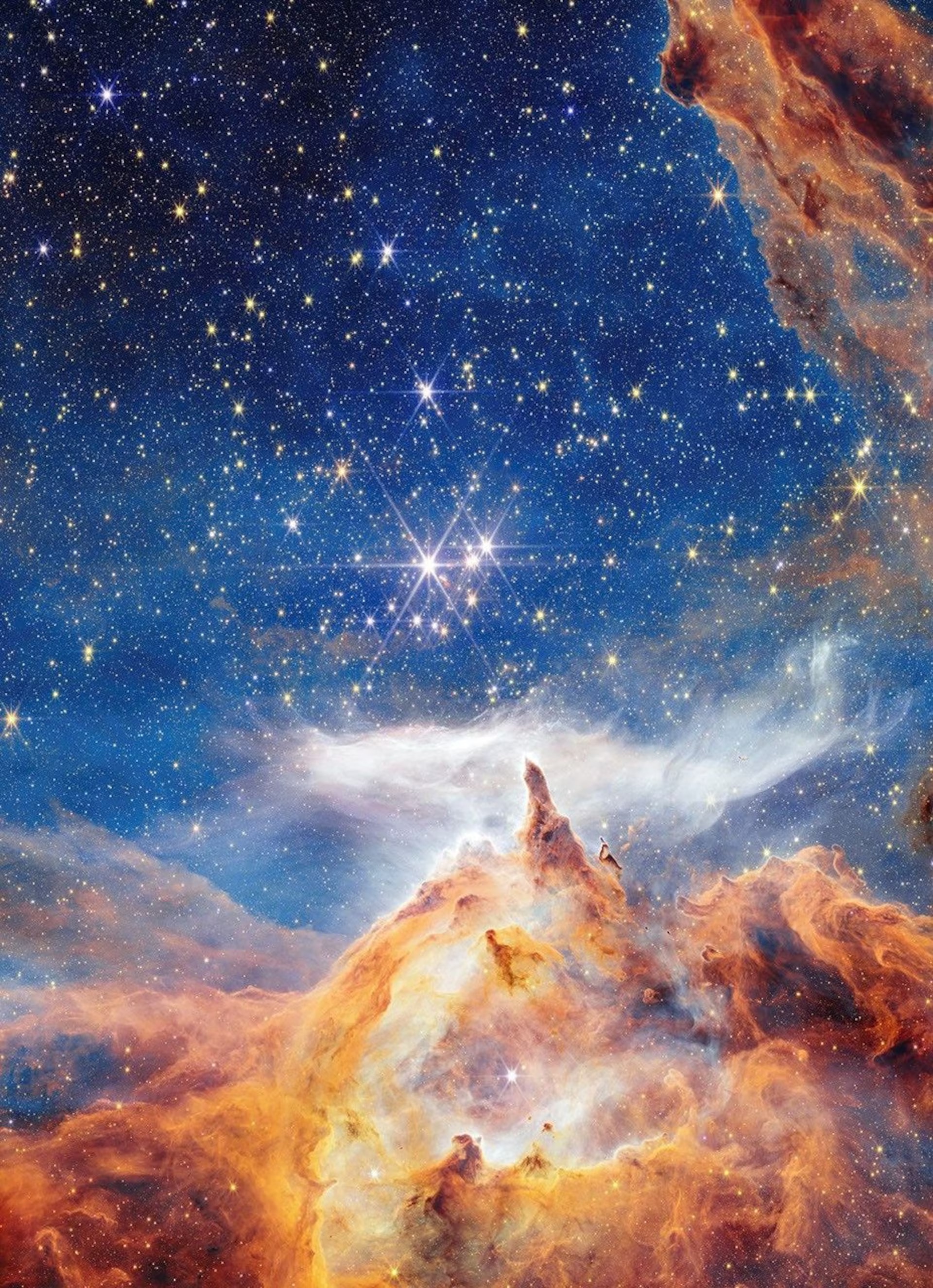
Inside the Lobster Nebula, massive stars ignite amid swirling gas. Webb’s image of Pismis 24 reveals how intense radiation both triggers and halts star birth—offering rare insight into how giants shape their neighborhoods. (Credit: NASA/James Webb Telescope)
- 6/15
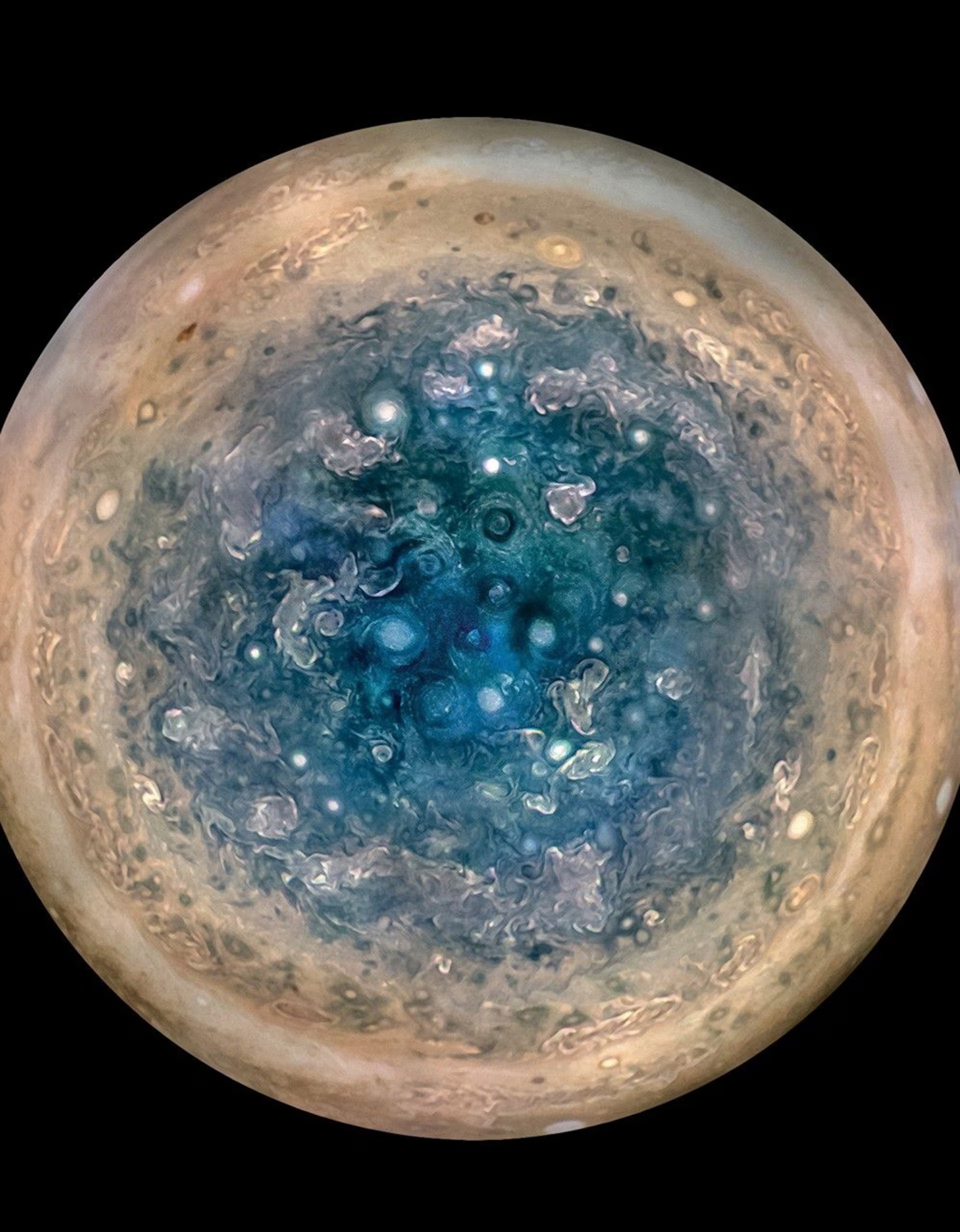
From above Jupiter’s south pole, giant cyclones churn like alien hurricanes. Images from Juno show storms hundreds of miles wide, challenging models of planetary weather systems. (Credit: NASA/JPL-Caltech)
- 7/15
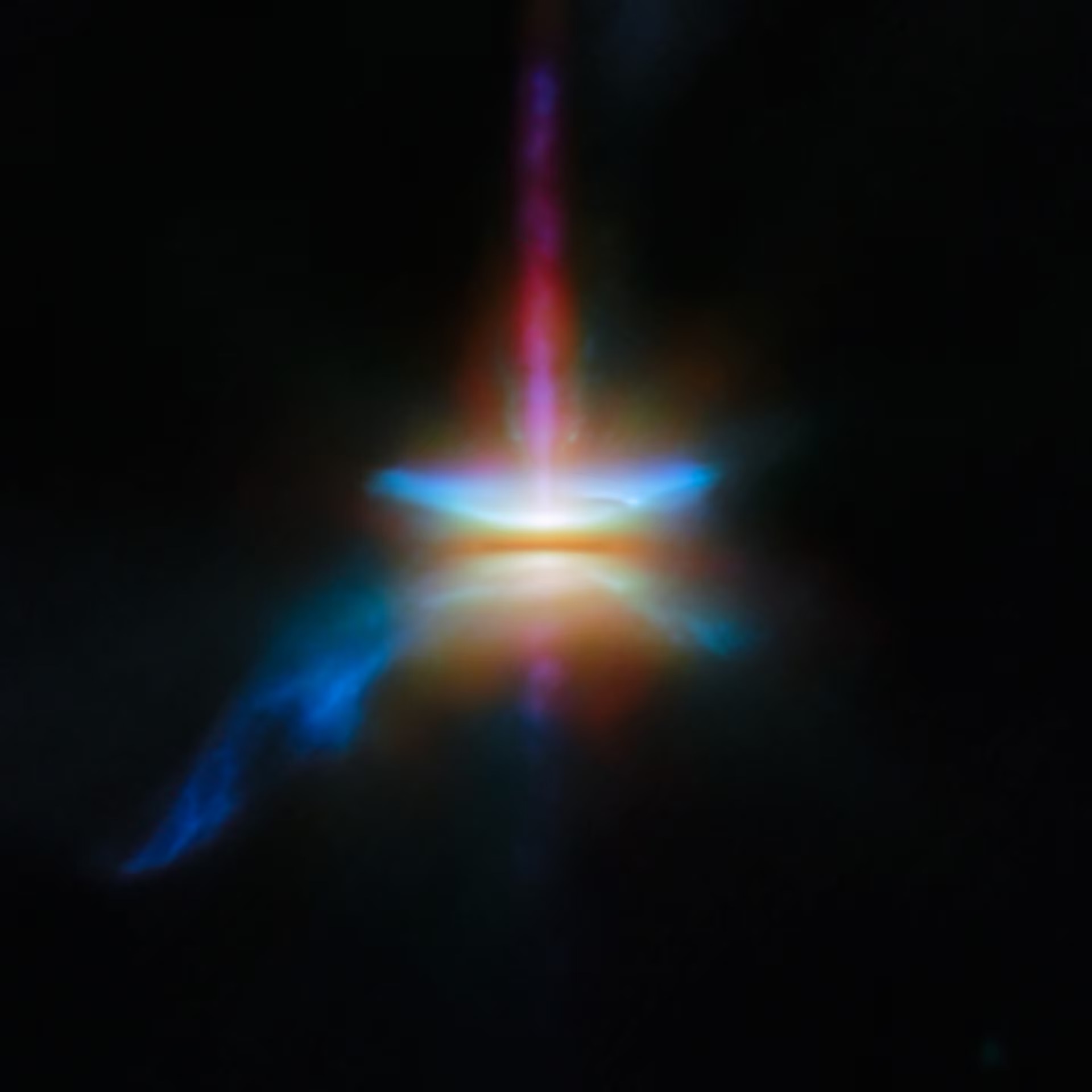
An edge-on disc around a newborn star exposes dust grains and powerful jets in action. Astronomers say this Webb image of HH 30 is a front-row seat to planet formation in real time. (Credit: NASA)
- 8/15
Sagittarius B2 glows intensely as massive stars heat surrounding dust. Webb’s infrared view shows why this region produces half the galactic center’s stars despite having far less gas—a mystery astronomers are racing to solve. (Credit: NASA, ESA)
- 9/15
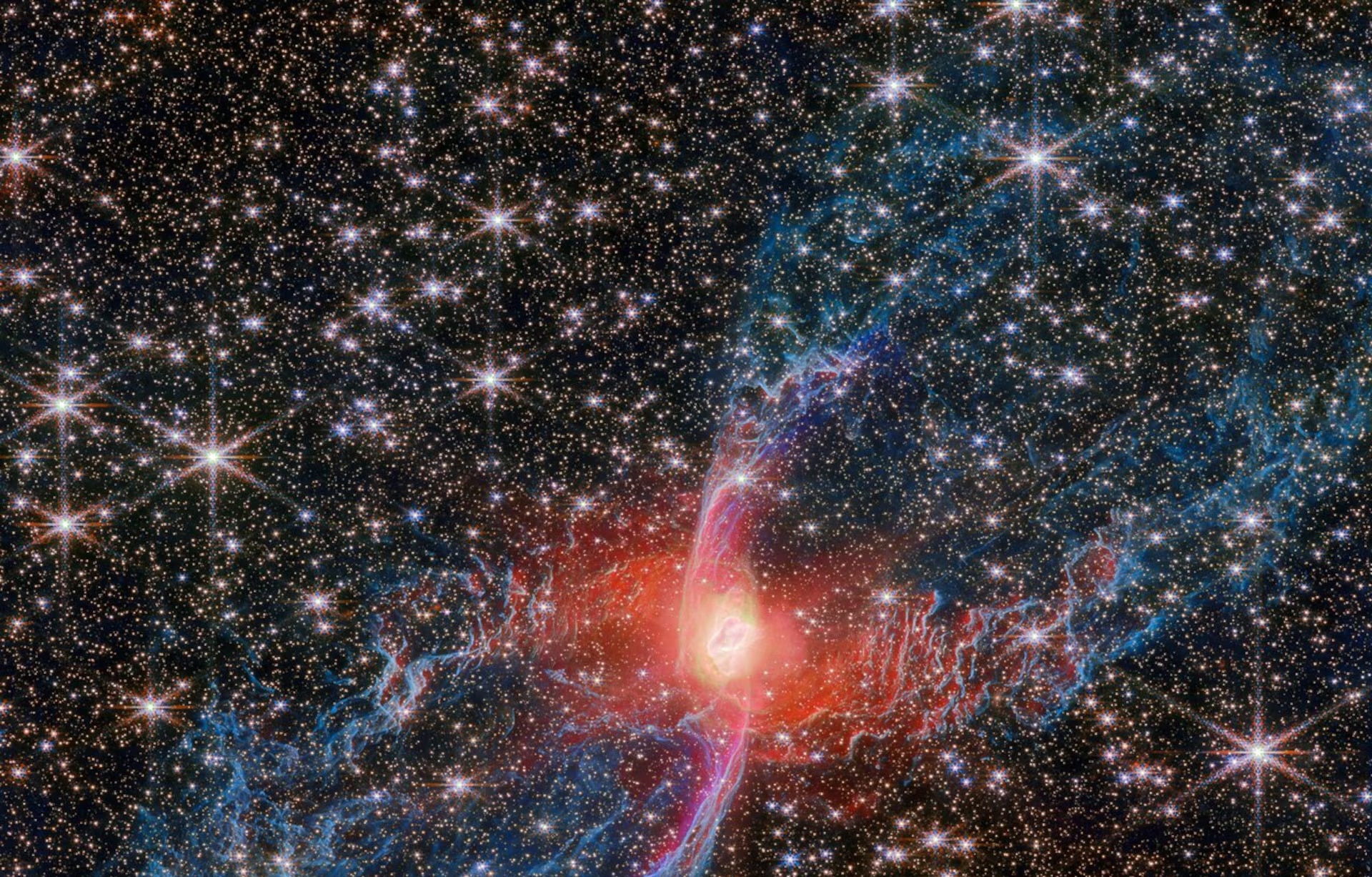
NGC 6537 looks delicate but hides violent winds. Webb reveals razor-sharp filaments in this planetary nebula, capturing a fleeting stage in a star’s life that lasts just tens of thousands of years. (Credit: NASA/ESA)
- 10/15
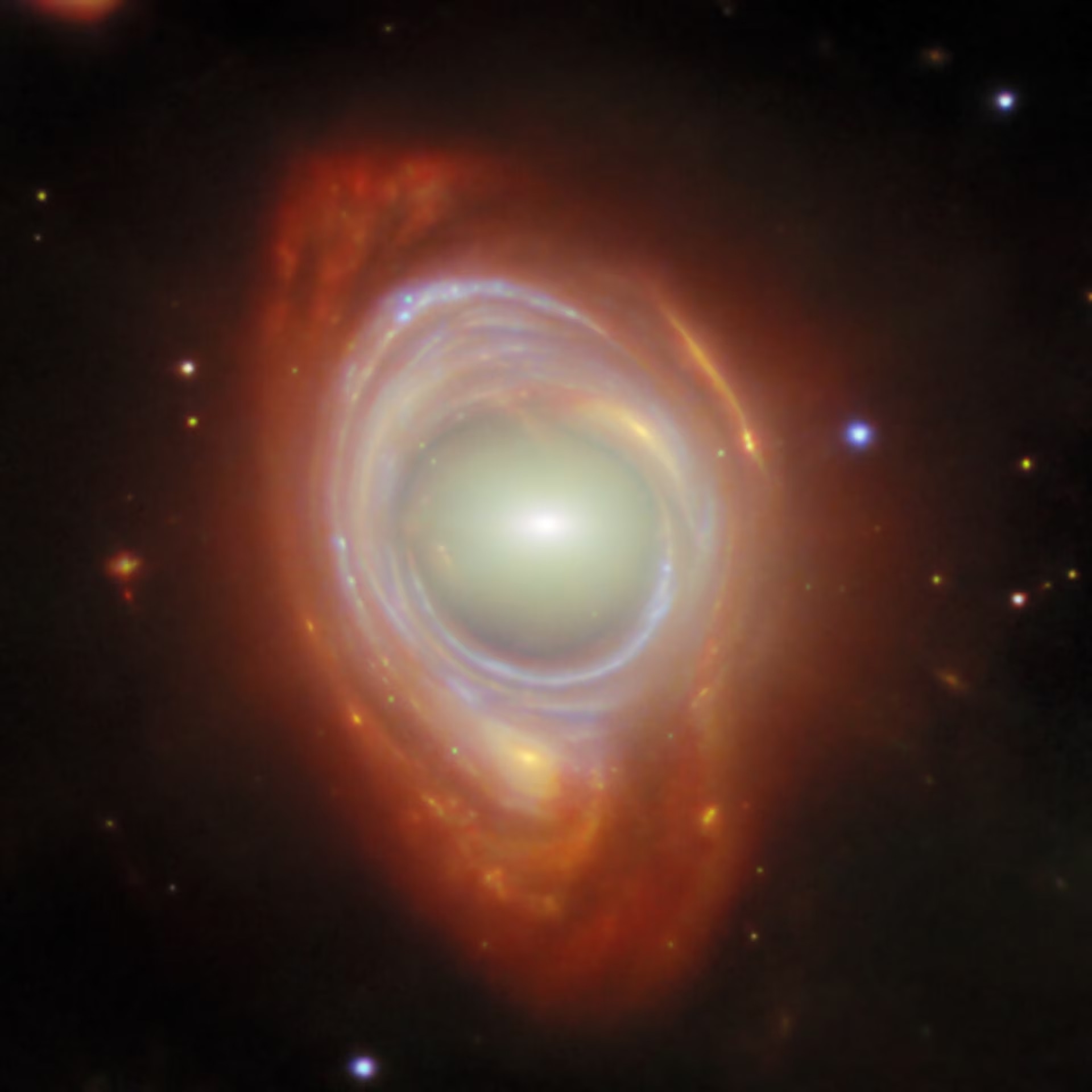
What looks like one galaxy is actually two, warped by gravity into an Einstein ring. Webb’s image offers a striking demonstration of Einstein’s relativity—where spacetime itself becomes a cosmic lens. (Credit: ESA, NASA)
- 11/15
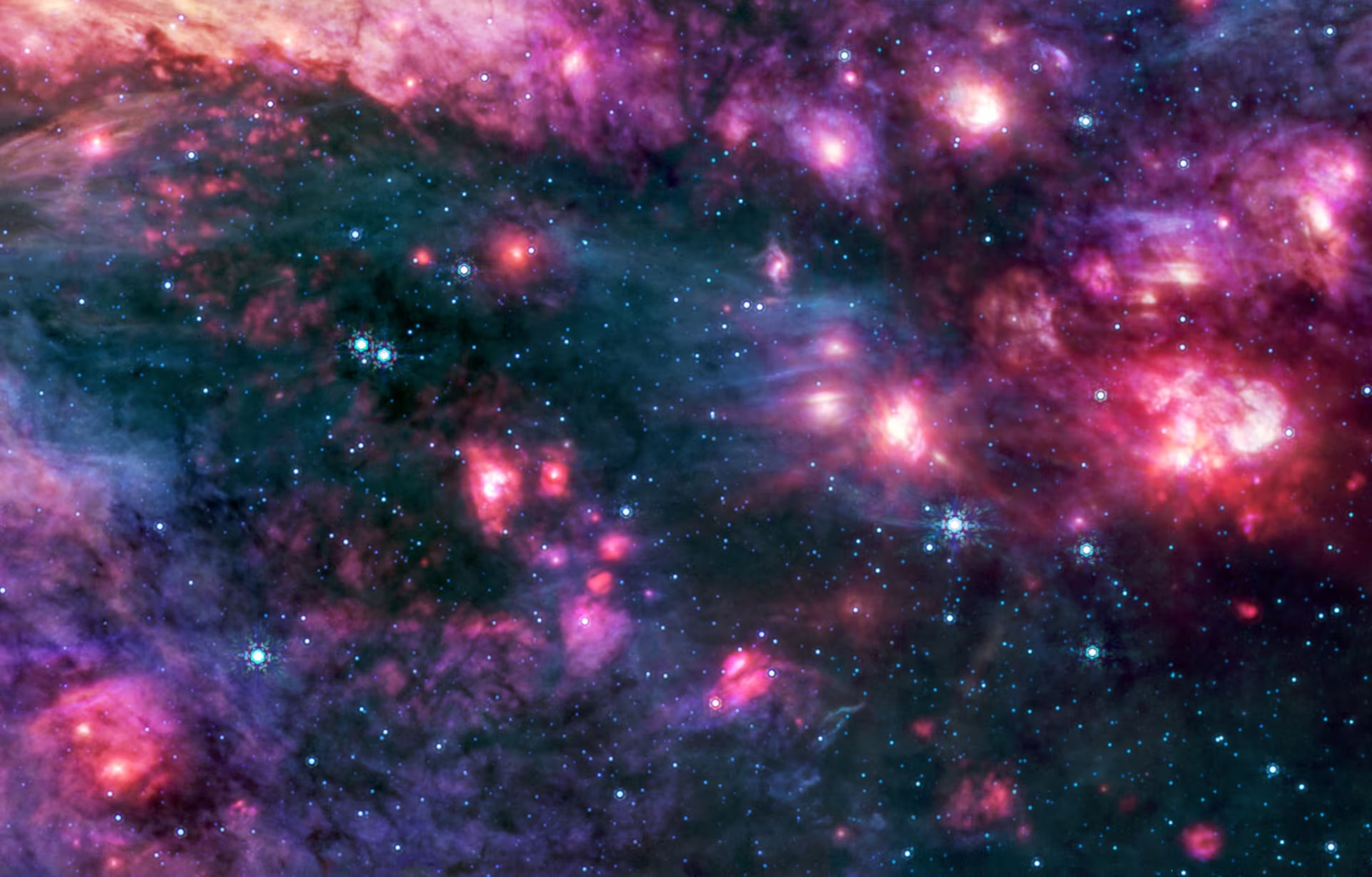
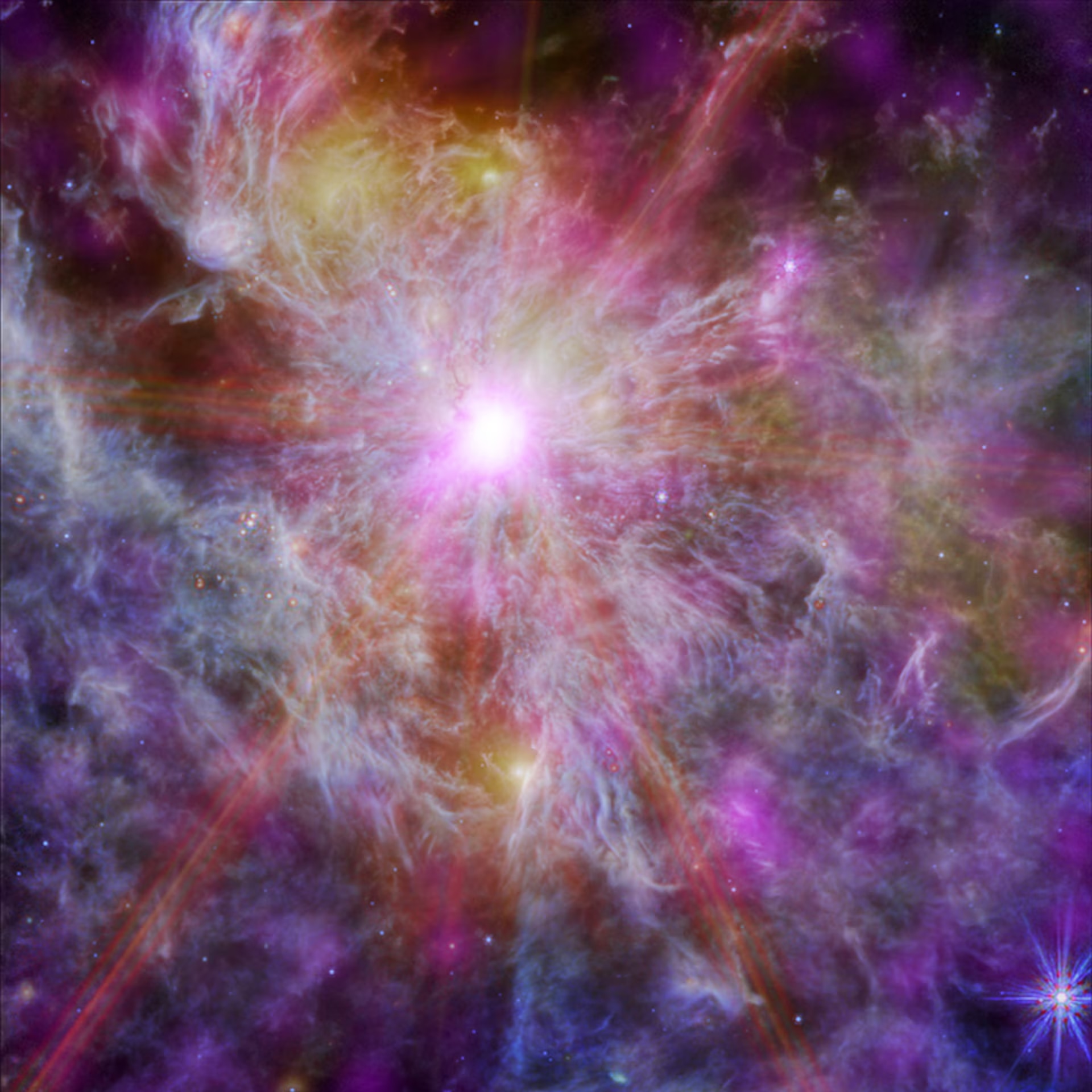
N79 in the Large Magellanic Cloud glows in X-rays and infrared. Chandra shows hot gas from newborn stars, helping astronomers piece together how Sun-like stars formed billions of years ago. (Credit: NASA/ Chandra X-ray Observatory)
- 12/15
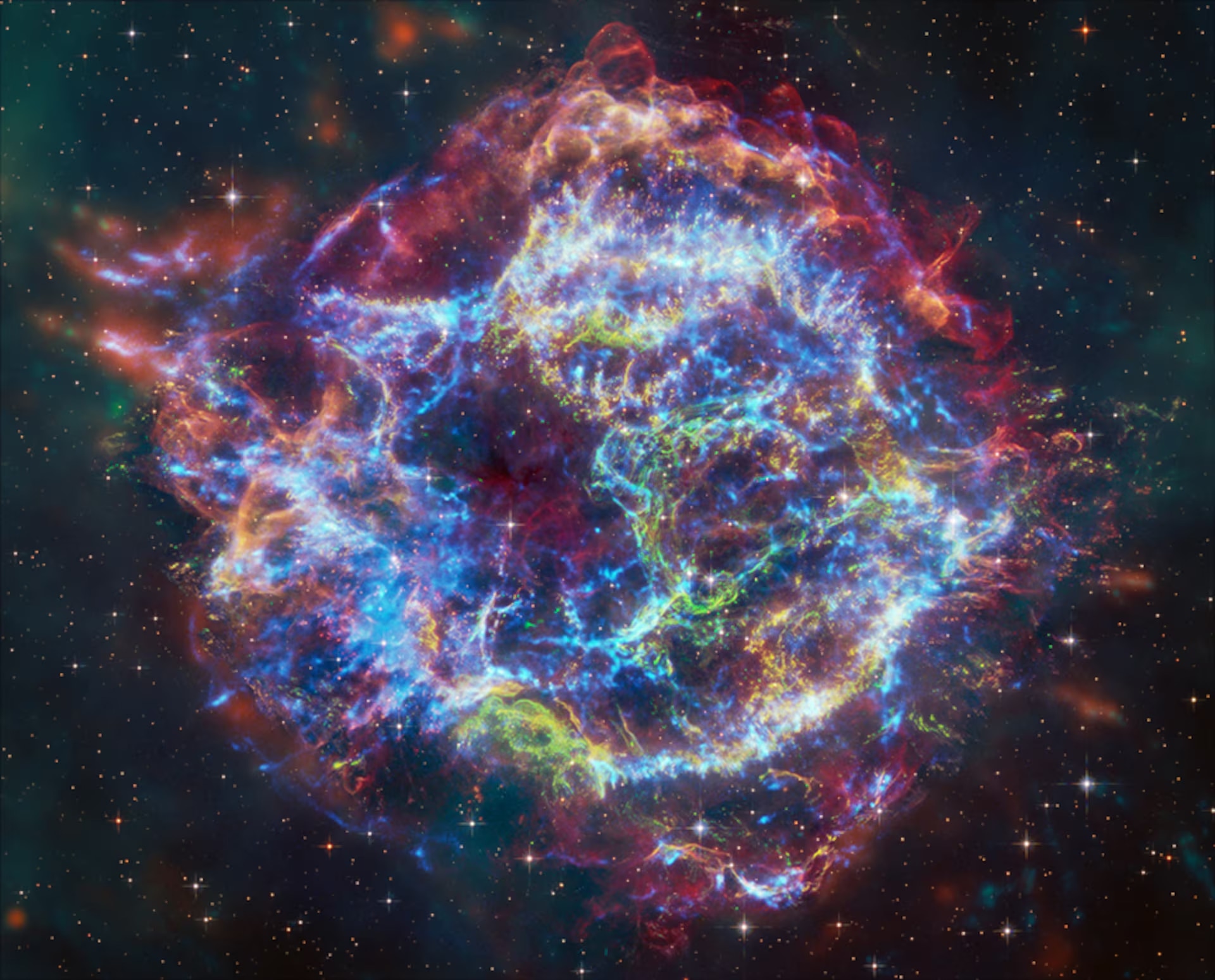
Cassiopeia A, the Milky Way’s youngest known supernova remnant, glows across multiple wavelengths. Combined data from Webb, Hubble, Chandra, and Spitzer reveal how exploded stars seed space with elements. (Credit: NASA)
- 13/15
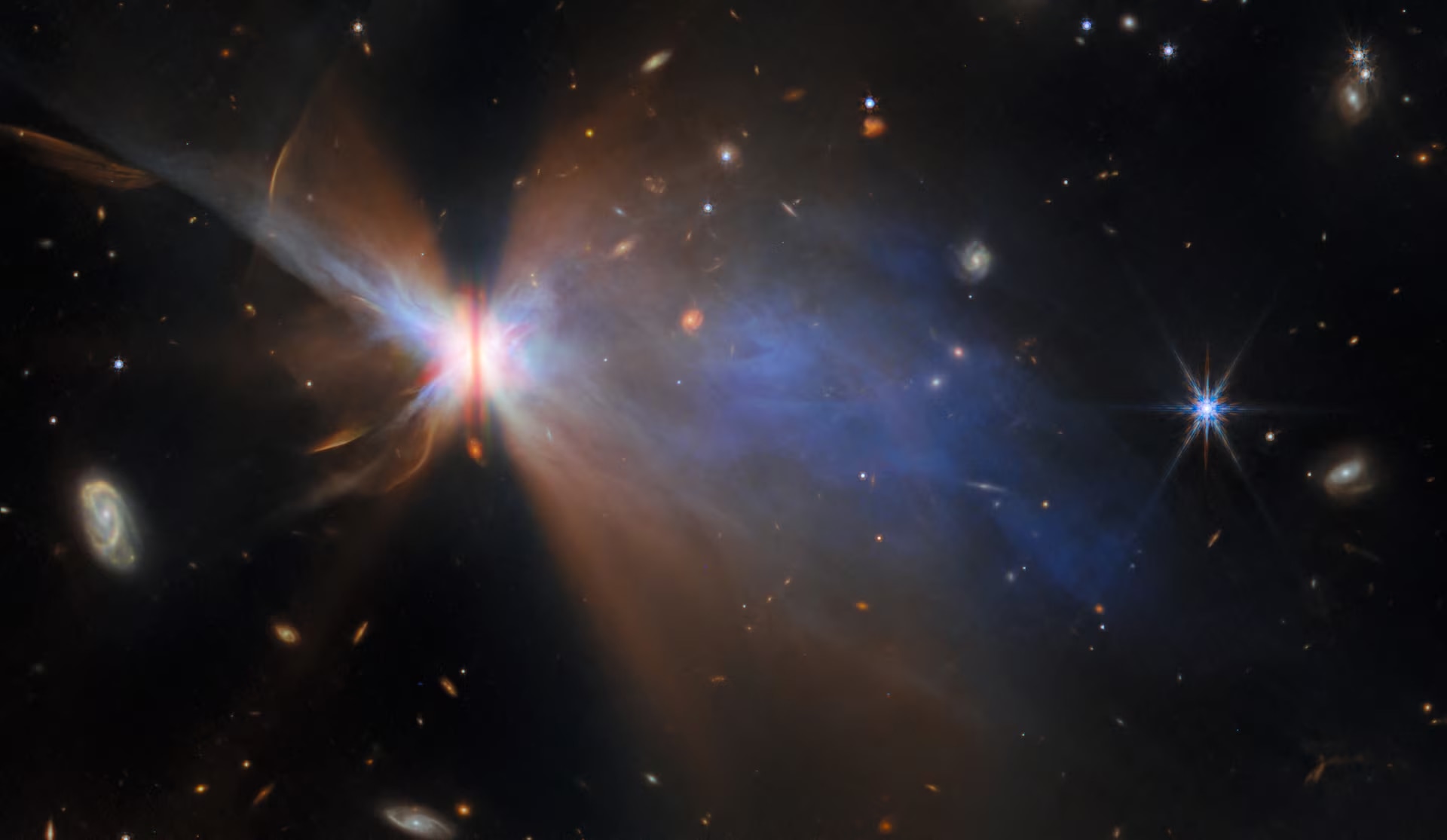
IRAS 04302+2247, a protostar wrapped in a dusty disc, offers clues to our own origins. Webb’s image lets scientists peer back 4.5 billion years to the birth of the Solar System. (Credit: NASA, ESA)
- 14/15
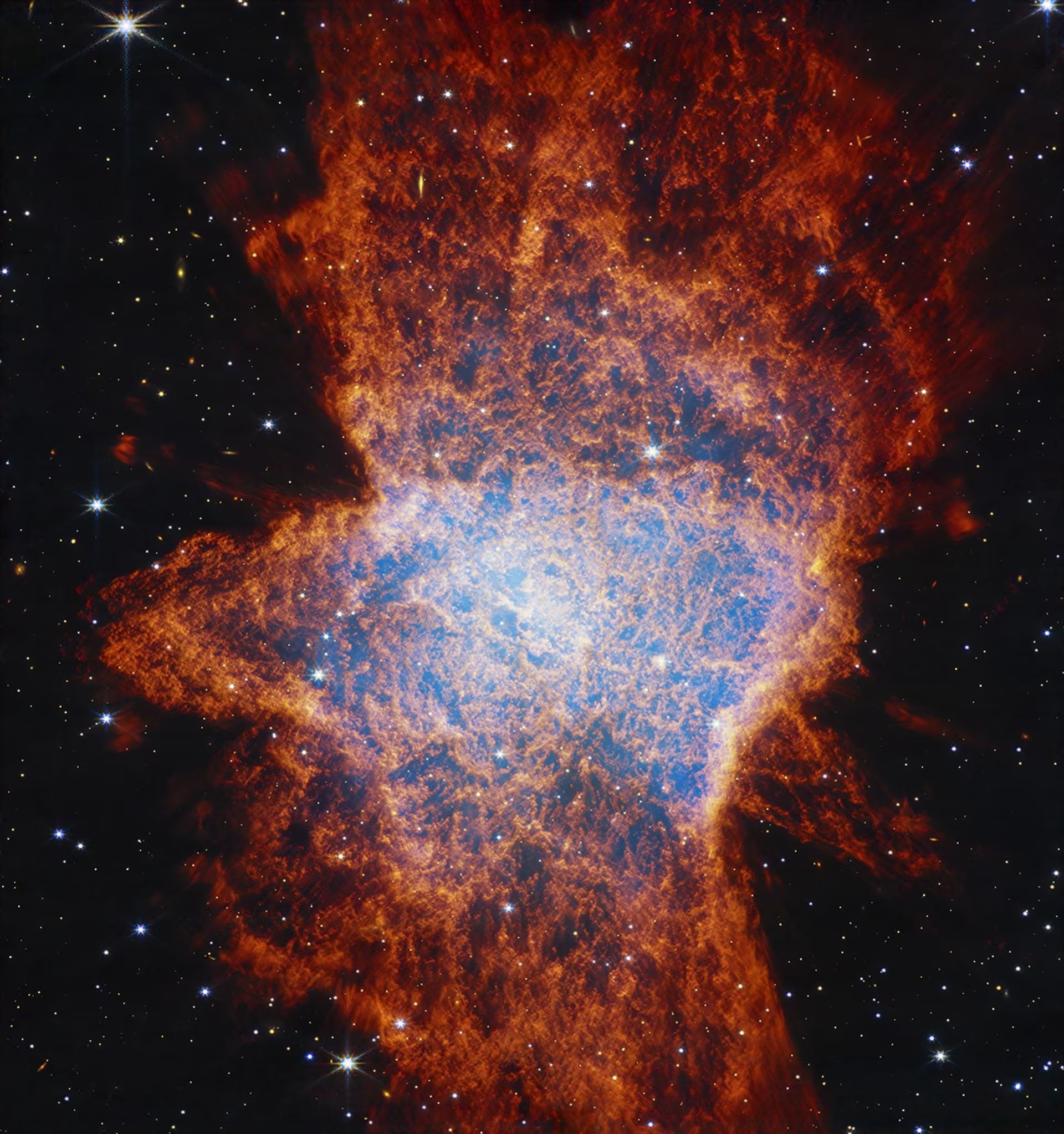
NGC 6072 defies symmetry. Astronomers suspect two stars interacting violently, warping the nebula into an uneven shape—evidence that stellar companionship can dramatically alter cosmic endings. (Credit: NASA, ESA)
- 15/15
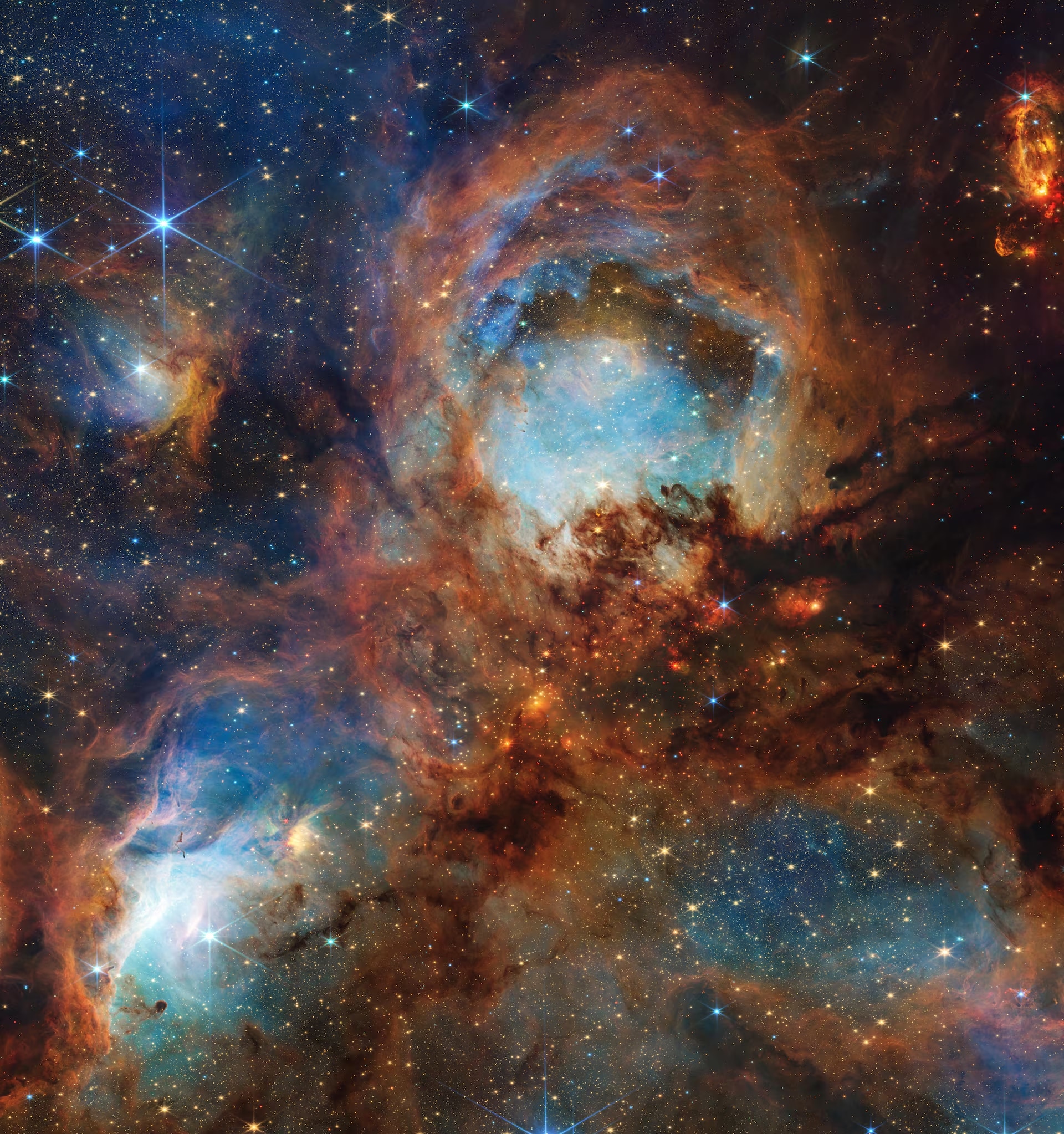
The Cat’s Paw Nebula burns with hidden star formation. Webb’s view exposes fiery clumps buried in dust, showing how stars continue to ignite even in heavily obscured regions. (Credit: NASA, ESA)