
NASA releases historic Artemis II images from beyond Earth orbit
NASA’s Artemis II mission offers a rare look at Earth and the Moon from deep space, capturing historic moments as astronauts travel beyond Earth orbit for the first time in decades.
- Apr 7, 2026,
- Updated Apr 7, 2026 3:57 PM IST
- 1/10
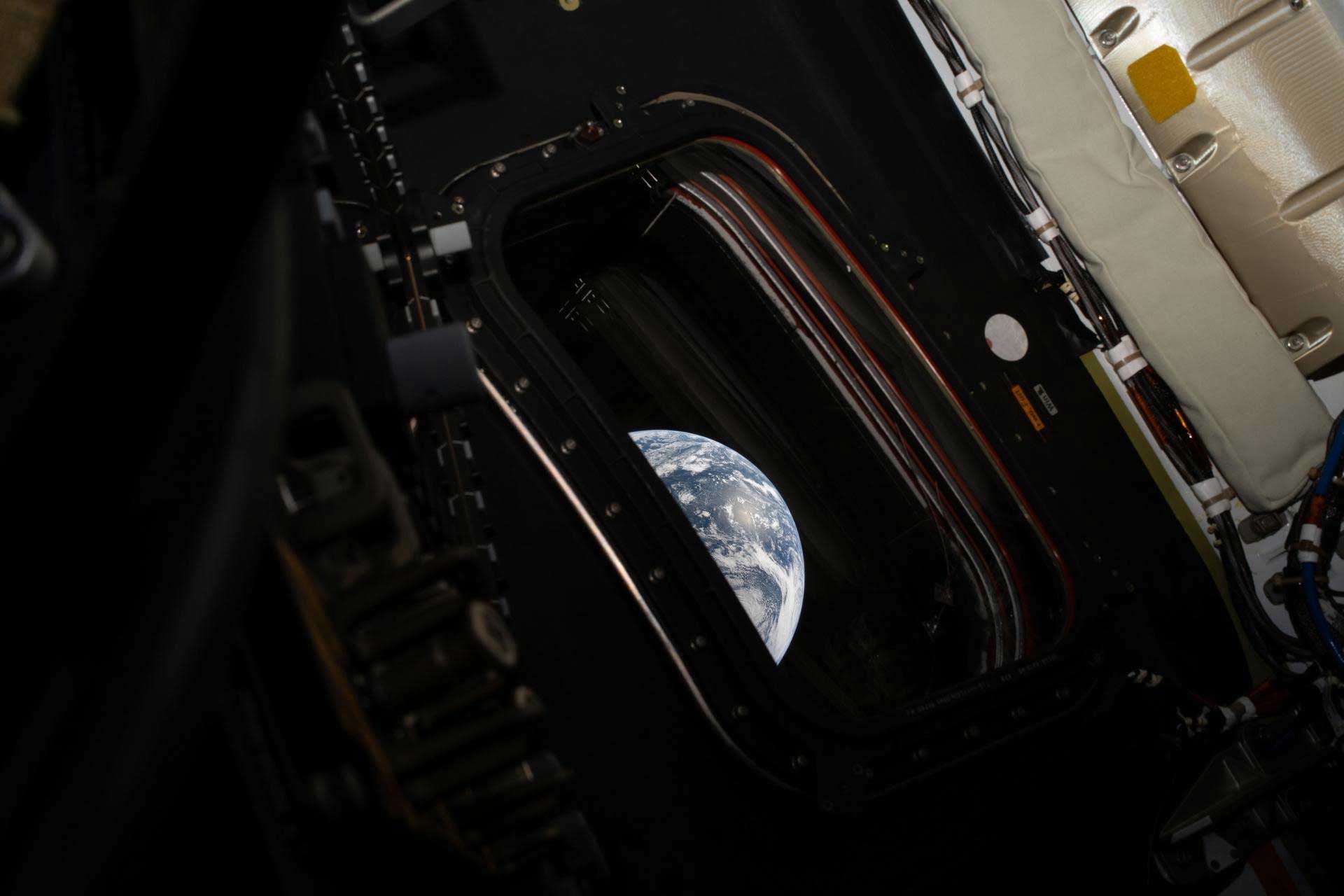
The journey begins not with silence—but with velocity. Moments after the translunar injection burn, Orion breaks free from Earth’s orbit. This is the first time since 1972 that humans are officially heading toward deep space, marking a turning point in modern exploration. (Credit:NASA)
- 2/10
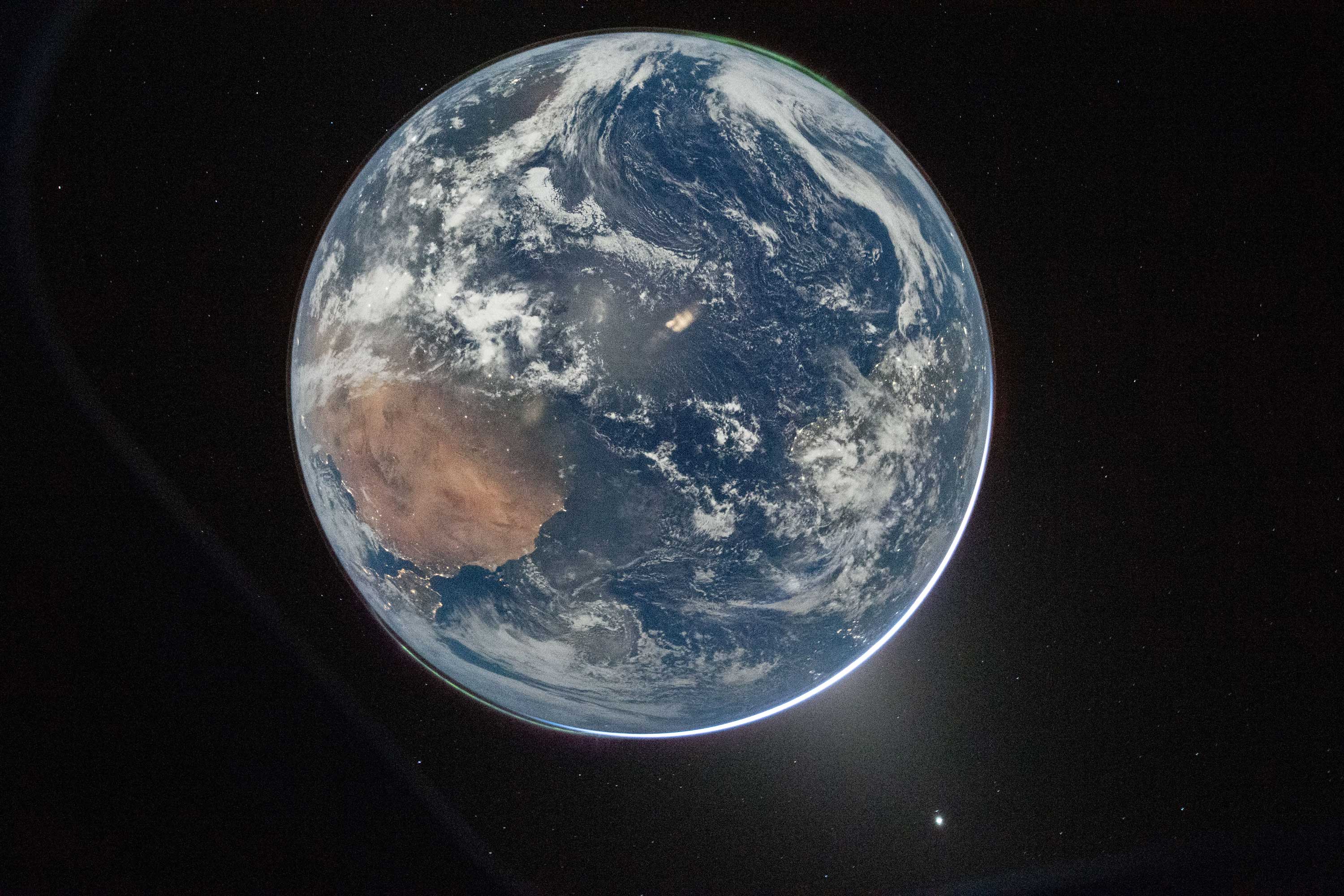
Commander Reid Wiseman captures Earth from Orion’s window—no longer a landscape, but a glowing sphere suspended in darkness. NASA describes this phase as the psychological shift point, where astronauts begin to grasp the scale of distance and isolation. (Credit: NASA/Reid Wiseman)
- 3/10
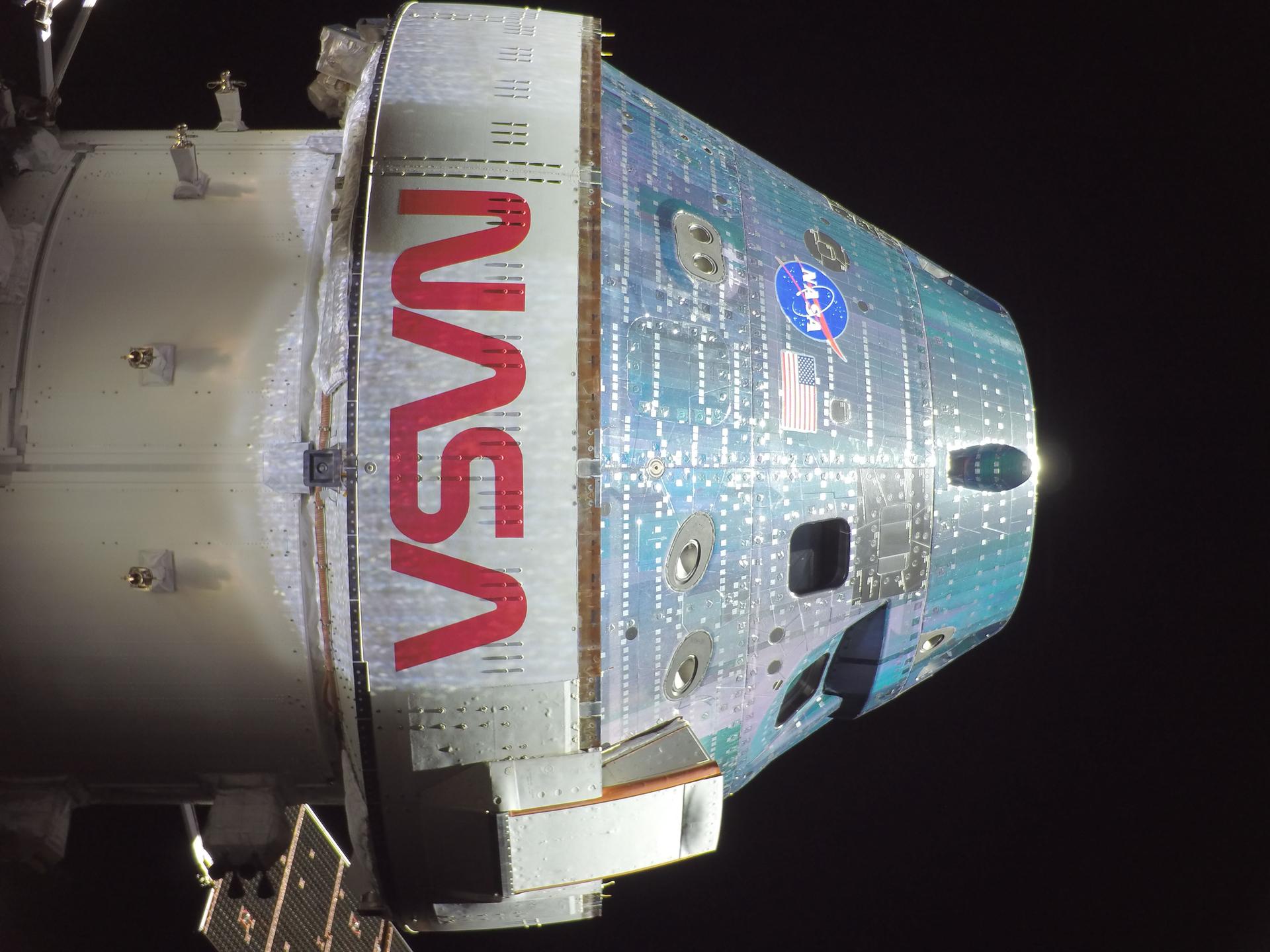
Orion turns its gaze inward—literally. During a routine inspection, the spacecraft snaps a high-resolution “selfie” using its solar array camera. Engineers rely on such visuals to confirm structural integrity during deep space travel. (Credit: NASA)
- 4/10
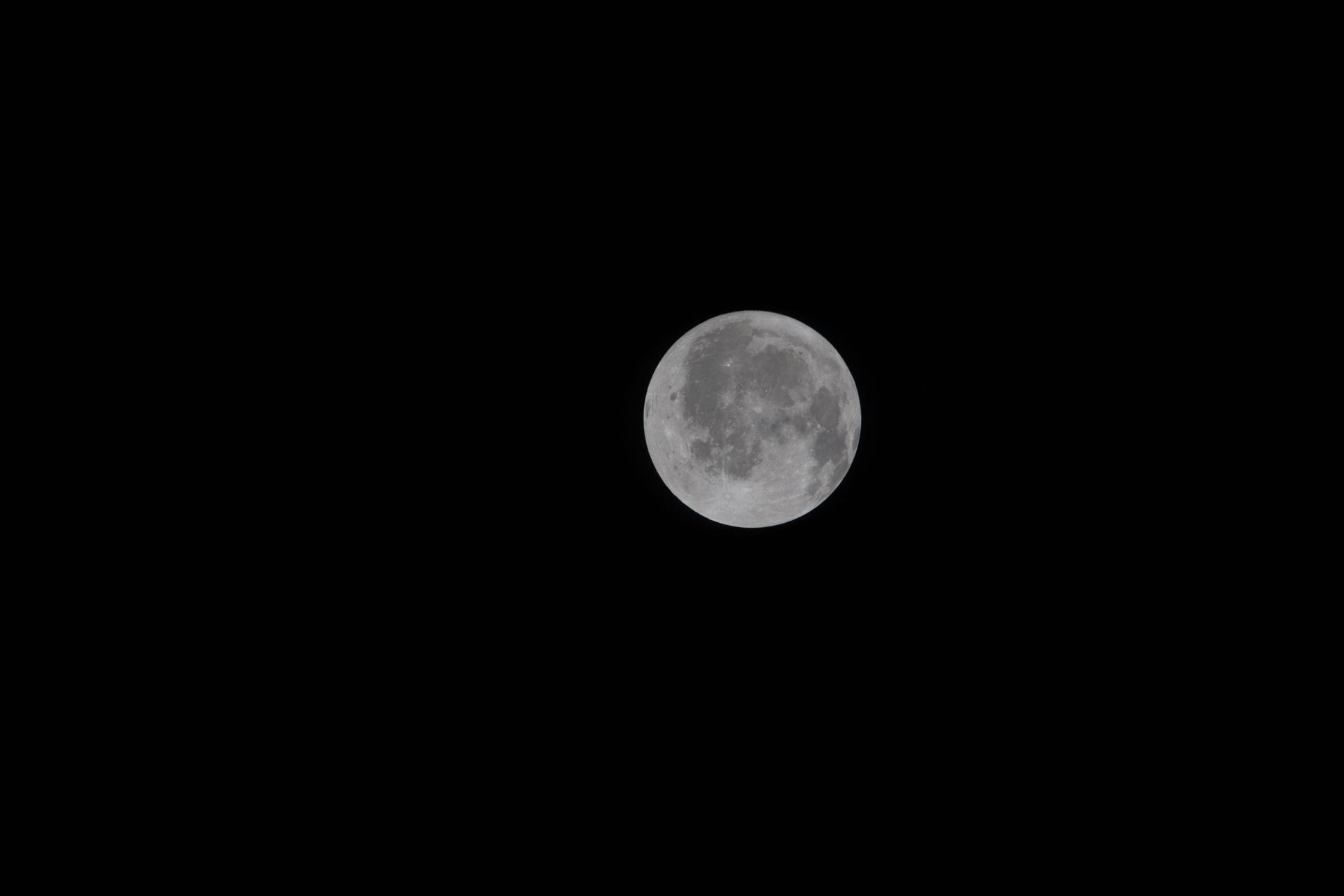
The Moon appears—not as a distant dot, but a looming destination. Captured through Orion’s window, this moment marks the crew’s first direct visual connection with their target, a sight unseen by humans for over half a century. (Credit: NASA)
- 5/10
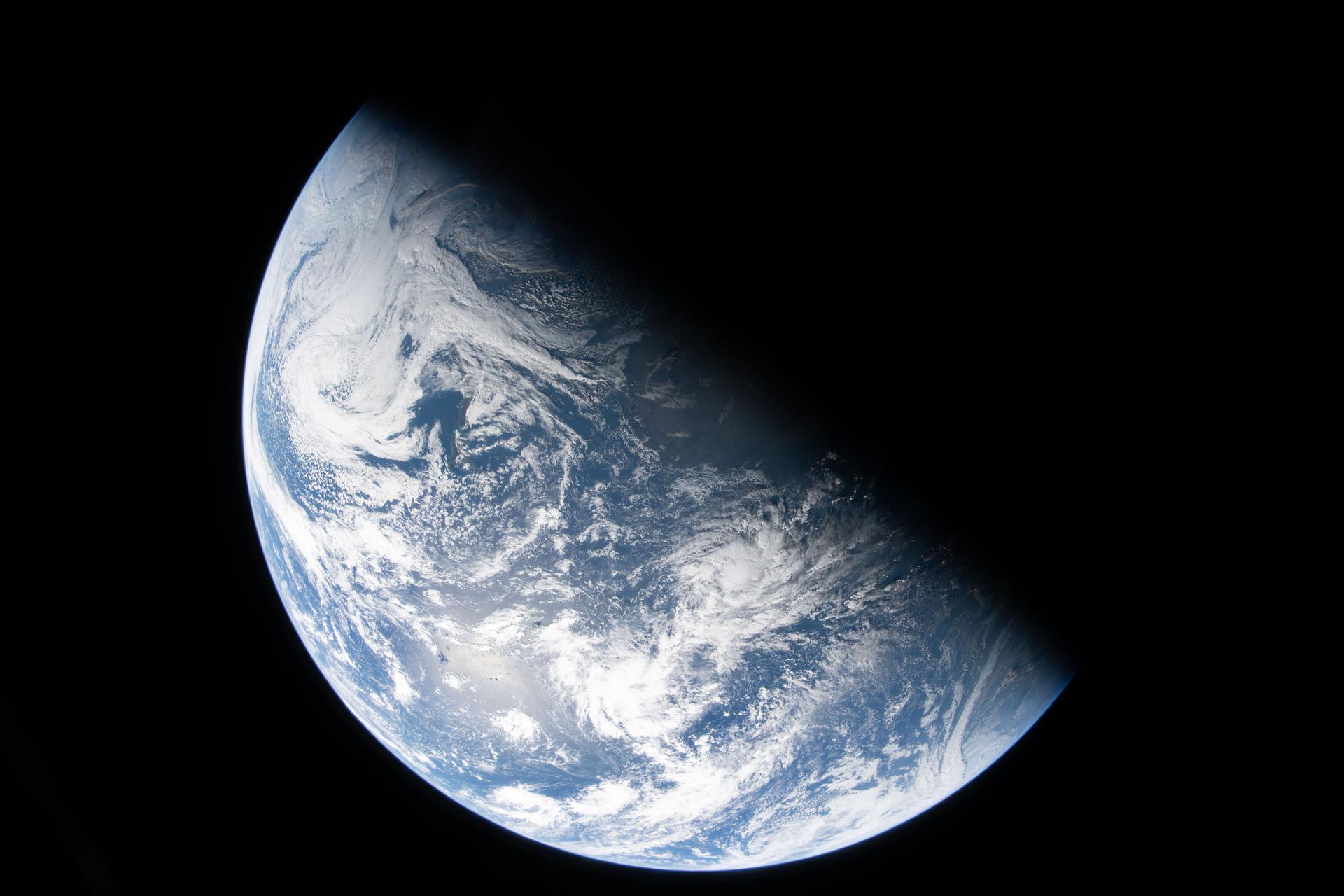
Earth reveals its most dramatic feature—the terminator line, where day meets night. This razor-thin boundary highlights the planet’s curvature and rotation, offering scientists valuable data on atmospheric light scattering. (Credit: NASA)

- 6/10
Even in deep space, routine matters. Christina Koch prepares for lunar flyby operations after completing exercise—a reminder that human survival in space depends as much on discipline as technology. NASA mandates daily physical activity to counter microgravity effects. (Credit: NASA)
- 7/10
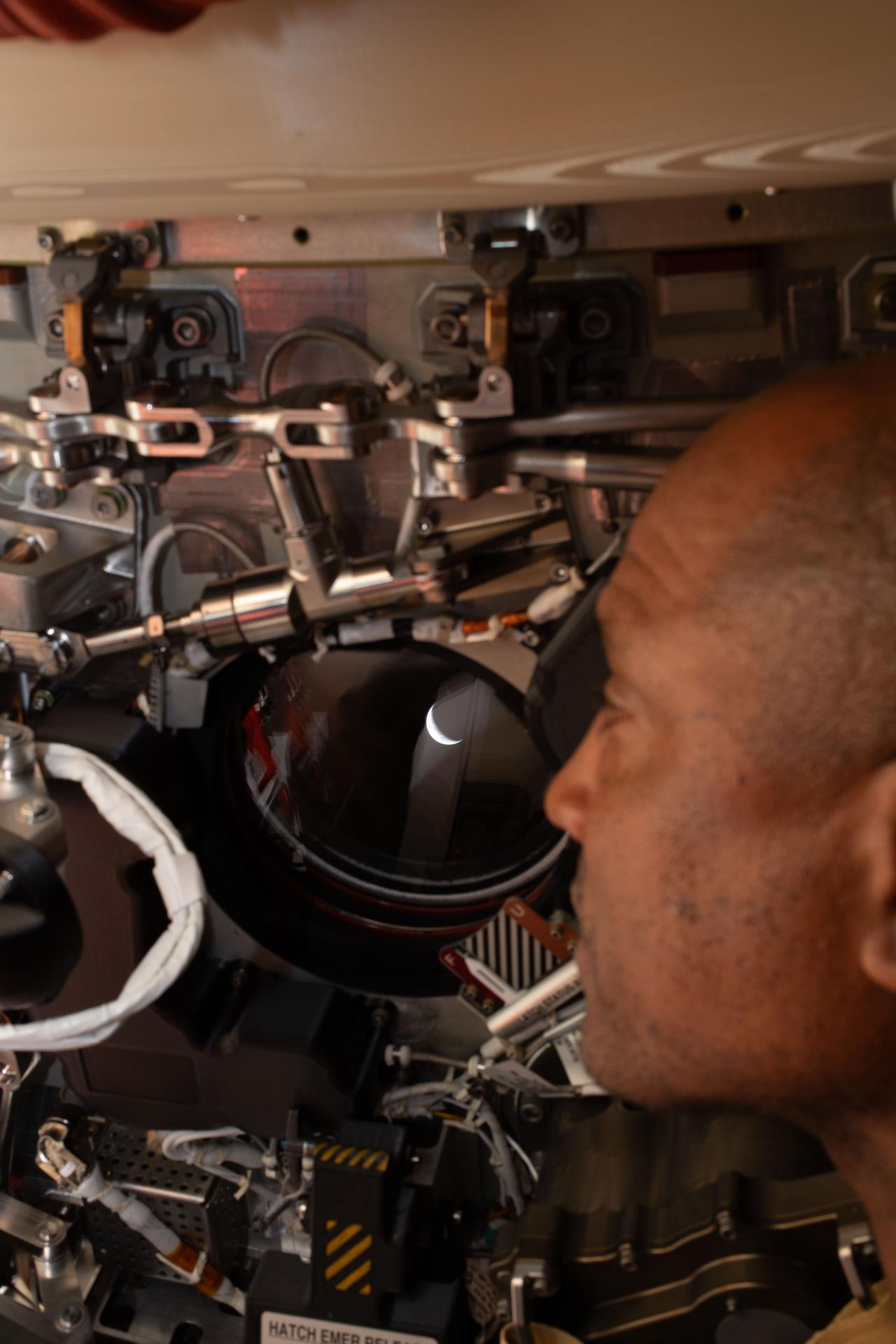
Victor Glover pauses at Orion’s window, looking back at Earth—a moment that blends science with reflection. NASA astronauts often describe this view as transformative, reinforcing the fragility and unity of life on a distant planet. (Credit: NASA)
- 8/10
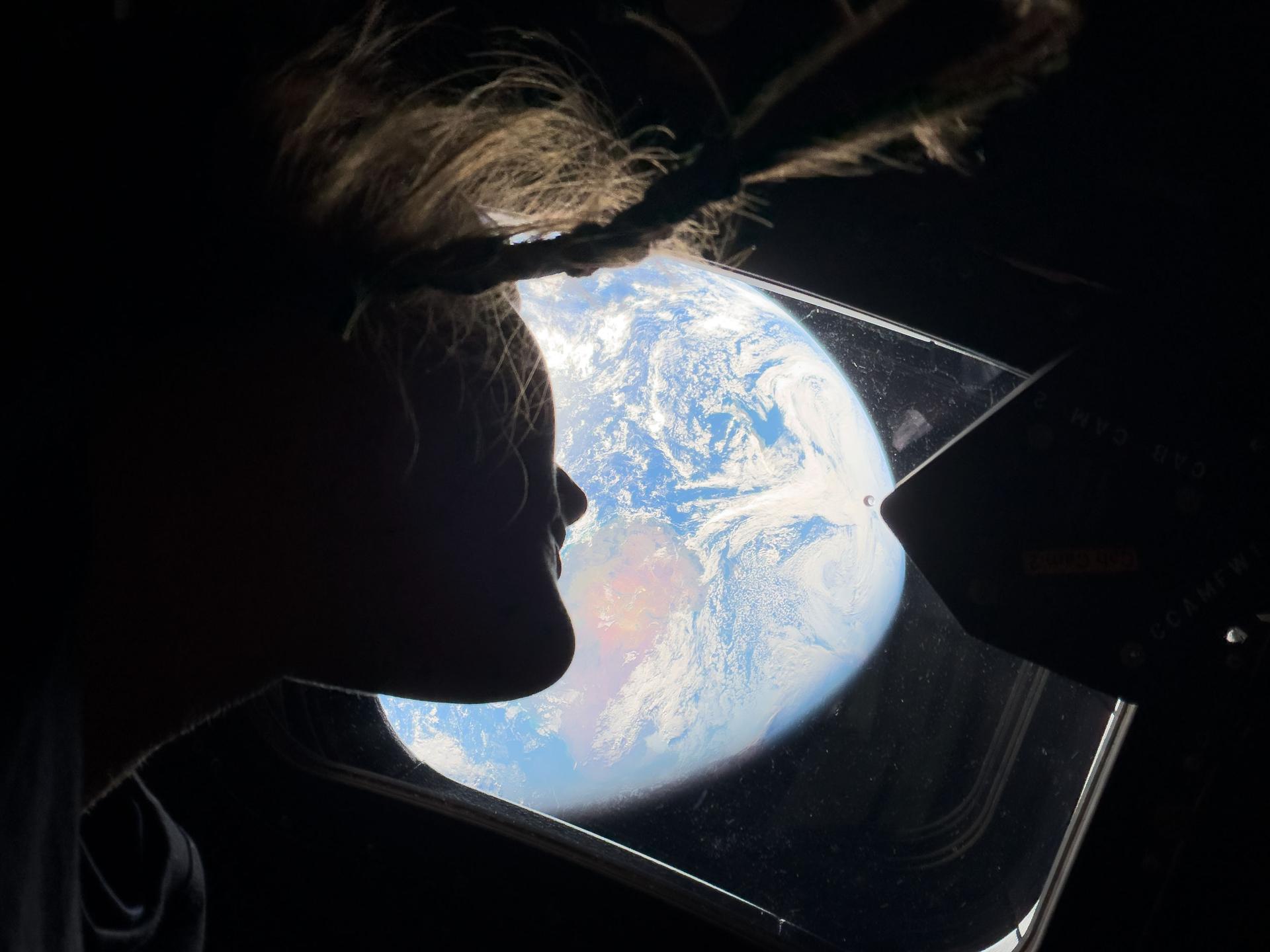
Christina Koch peers out again—but this time, the narrative shifts. Earth is no longer “home”—it’s a destination behind them. NASA often refers to Earth itself as “Spaceship Earth,” a closed system sustaining billions in a vast vacuum. (Credit: NASA)
- 9/10
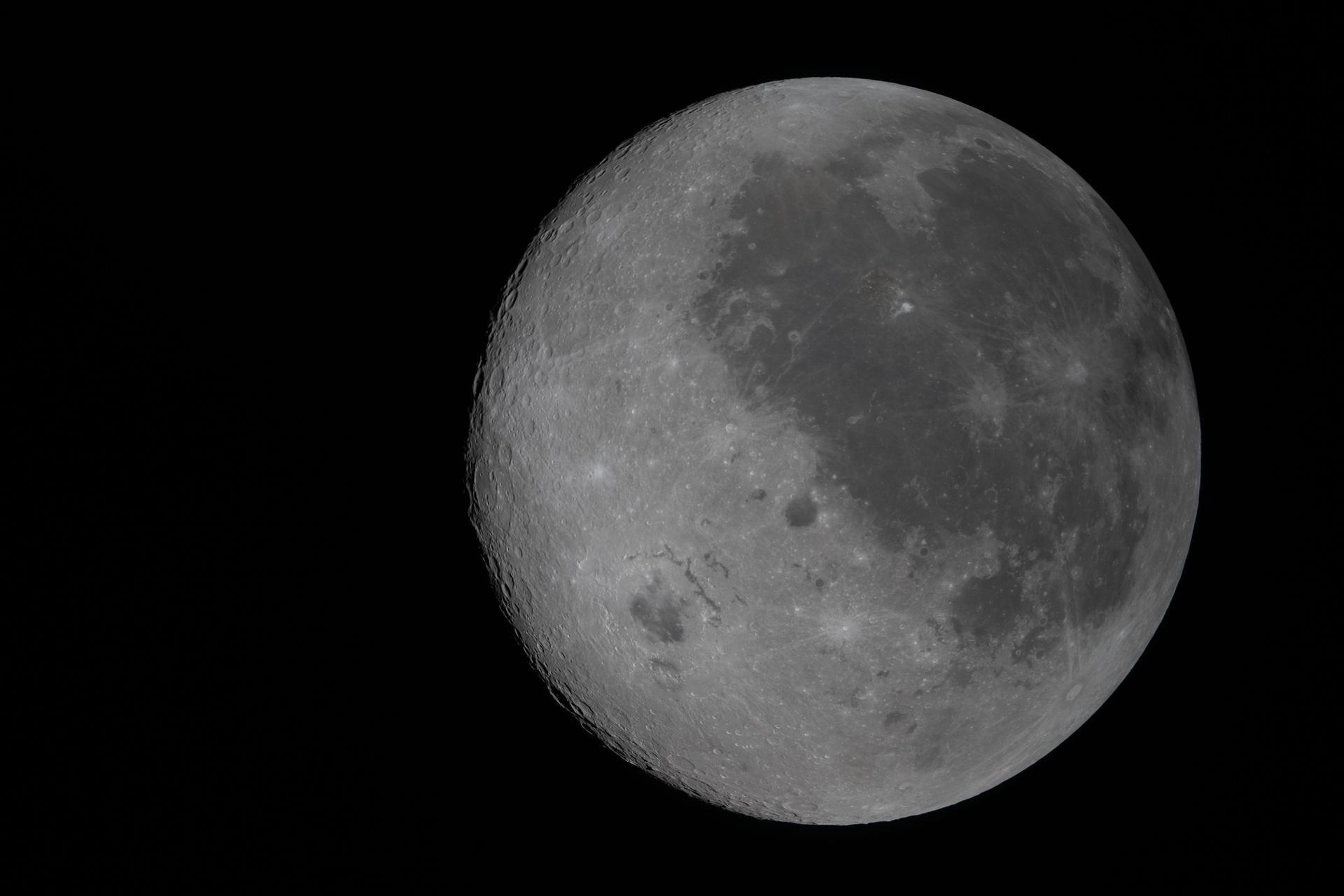
The Moon, fully illuminated, exposes the massive Orientale basin—a 600-mile-wide scar bridging the near and far sides. Rarely visible from Earth, this view offers scientists a complete look at one of the Moon’s most significant geological features. (Credit: NASA)
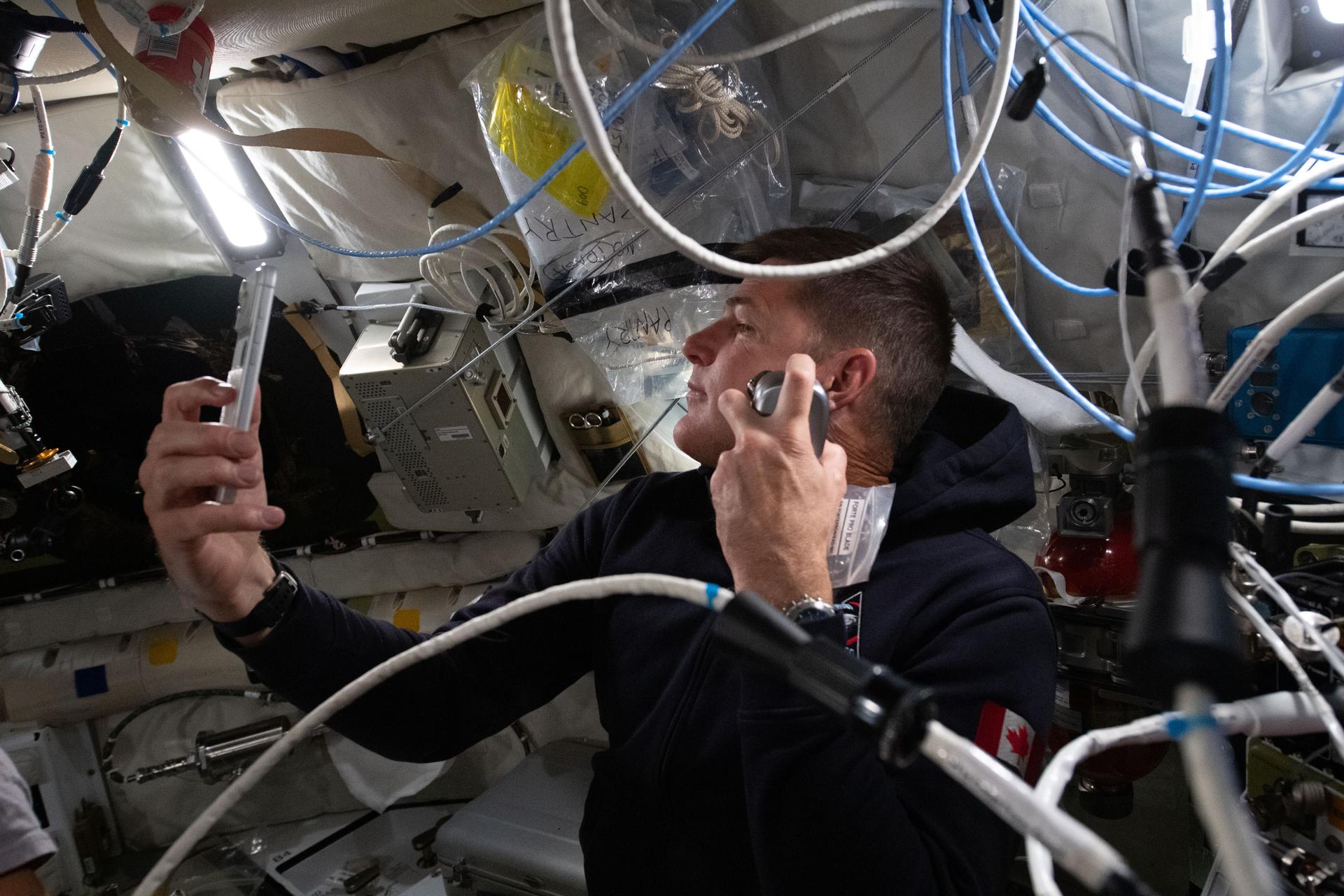
- 10/10
Amid history, humanity persists. Canadian astronaut Jeremy Hansen takes a moment to shave inside Orion before the lunar flyby. It’s a small act—but one that captures the surreal normalcy of life inside a spacecraft heading toward the Moon. (Credit: NASA)