
A volcano blew in Ethiopia: What that means for north India's air, flights, and health
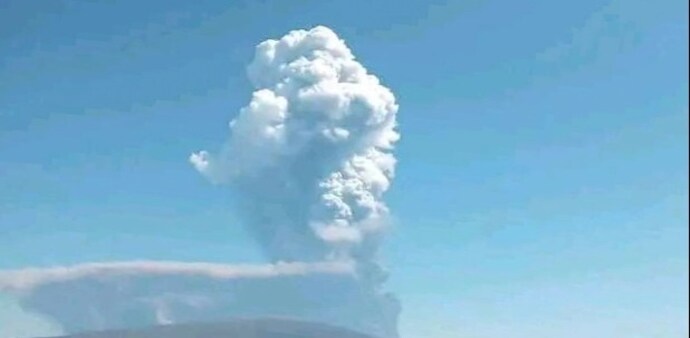
The disruption follows Sunday’s eruption of the Hayli Gubbi volcano in Ethiopia’s Afar region—its first in nearly 12,000 years.
- Nov 25, 2025,
- Updated Nov 25, 2025 7:39 AM IST
Flights were reportedly cancelled and airspace alerts issued across India on Monday as a massive ash cloud from Ethiopia’s Hayli Gubbi volcano drifted toward the subcontinent, raising concerns about air safety and air quality. The Directorate General of Civil Aviation (DGCA) directed Indian airlines to steer clear of ash-affected routes and recalibrate flight paths amid growing disruptions. “Airlines have been advised to monitor volcanic ash movements using satellite and meteorological data, and report any anomalies like cabin smoke or engine issues immediately,” the DGCA stated.
Akasa Air, IndiGo, and KLM were among the first to ground flights. Akasa cancelled all services to and from Jeddah, Kuwait, and Abu Dhabi for November 25. KLM halted its Amsterdam-Delhi flights, while IndiGo acknowledged passenger concerns in a social media post, assuring that “safety remains our highest priority.”
The disruption follows Sunday’s eruption of the Hayli Gubbi volcano in Ethiopia’s Afar region—its first in nearly 12,000 years. The event sent towering ash columns across the Red Sea, with satellite data showing the cloud now spreading over the northern Arabian Sea and moving into Indian airspace.
Dense ash plumes are currently passing high above Delhi, Haryana, and parts of Uttar Pradesh. While health experts warned of potential air quality dips, the DGCA clarified that the ash remains thousands of feet above ground and is unlikely to pose immediate respiratory risks.
The DGCA also told airport operators to conduct emergency inspections of runways and aprons if ashfall is detected. Meanwhile, tremors were reported in nearby Ethiopian villages, with Afdera blanketed in dust, according to local broadcaster Afar TV.
India’s aviation authorities and carriers continue to track the evolving ash cloud in real-time, ready to take further action if conditions worsen.
What that means for India
- The volcanic ash cloud from Ethiopia has entered northern Indian states, including Gujarat, Rajasthan, Delhi, Haryana, Punjab, and parts of Uttar Pradesh.
- The cloud is expected to move further toward the Himalayan region, raising concerns over environmental impact.
- Visibility has dropped in affected areas, with hazier and darker skies reported.
- Airlines have experienced travel disruptions, issuing advisories, rerouting or delaying flights, and inspecting runways for ash contamination.
- Short-term environmental effects may include a dip in air quality and elevated sulphur dioxide levels, particularly over the Himalayas and nearby regions of Uttar Pradesh.
Flights were reportedly cancelled and airspace alerts issued across India on Monday as a massive ash cloud from Ethiopia’s Hayli Gubbi volcano drifted toward the subcontinent, raising concerns about air safety and air quality. The Directorate General of Civil Aviation (DGCA) directed Indian airlines to steer clear of ash-affected routes and recalibrate flight paths amid growing disruptions. “Airlines have been advised to monitor volcanic ash movements using satellite and meteorological data, and report any anomalies like cabin smoke or engine issues immediately,” the DGCA stated.
Akasa Air, IndiGo, and KLM were among the first to ground flights. Akasa cancelled all services to and from Jeddah, Kuwait, and Abu Dhabi for November 25. KLM halted its Amsterdam-Delhi flights, while IndiGo acknowledged passenger concerns in a social media post, assuring that “safety remains our highest priority.”
The disruption follows Sunday’s eruption of the Hayli Gubbi volcano in Ethiopia’s Afar region—its first in nearly 12,000 years. The event sent towering ash columns across the Red Sea, with satellite data showing the cloud now spreading over the northern Arabian Sea and moving into Indian airspace.
Dense ash plumes are currently passing high above Delhi, Haryana, and parts of Uttar Pradesh. While health experts warned of potential air quality dips, the DGCA clarified that the ash remains thousands of feet above ground and is unlikely to pose immediate respiratory risks.
The DGCA also told airport operators to conduct emergency inspections of runways and aprons if ashfall is detected. Meanwhile, tremors were reported in nearby Ethiopian villages, with Afdera blanketed in dust, according to local broadcaster Afar TV.
India’s aviation authorities and carriers continue to track the evolving ash cloud in real-time, ready to take further action if conditions worsen.
What that means for India
- The volcanic ash cloud from Ethiopia has entered northern Indian states, including Gujarat, Rajasthan, Delhi, Haryana, Punjab, and parts of Uttar Pradesh.
- The cloud is expected to move further toward the Himalayan region, raising concerns over environmental impact.
- Visibility has dropped in affected areas, with hazier and darker skies reported.
- Airlines have experienced travel disruptions, issuing advisories, rerouting or delaying flights, and inspecting runways for ash contamination.
- Short-term environmental effects may include a dip in air quality and elevated sulphur dioxide levels, particularly over the Himalayas and nearby regions of Uttar Pradesh.