
Artemis II: NASA prepares historic crewed mission around the Moon on April 1
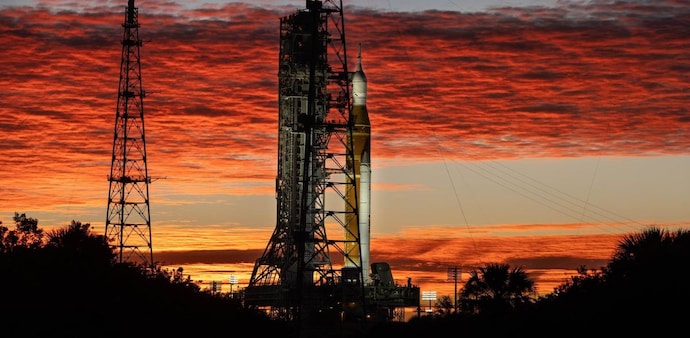
Artemis II will launch aboard the powerful Space Launch System rocket from Kennedy Space Center in Florida. The rocket will carry the Orion spacecraft, which will transport four astronauts on a roughly 10-day mission around the Moon and back to Earth.
- Mar 30, 2026,
- Updated Mar 30, 2026 9:26 PM IST
More than half a century after humans last ventured beyond low-Earth orbit, NASA is preparing to send astronauts back toward the Moon with the launch of the Artemis II mission on April 1, 2026.
The mission will mark the first time since the Apollo era that astronauts travel around the Moon, representing a major milestone in humanity’s return to deep-space exploration. If successful, Artemis II will pave the way for future lunar landings and long-term human presence on the Moon under the Artemis programme.
A historic return to deep space
Artemis II will launch aboard the powerful Space Launch System rocket from Kennedy Space Center in Florida. The rocket will carry the Orion spacecraft, which will transport four astronauts on a roughly 10-day mission around the Moon and back to Earth.
The spacecraft will follow a “free-return” trajectory, looping around the Moon and using gravity to guide the crew safely back to Earth without requiring major propulsion changes. This approach is considered a safety measure during early deep-space missions.
Artemis II will also be the first crewed flight of both the Space Launch System rocket and the Orion spacecraft, testing key systems such as navigation, communications, life support and the capsule’s heat shield during high-speed re-entry into Earth’s atmosphere.
Meet the Artemis II crew
The four-member international crew includes:
- Reid Wiseman – Commander
- Victor Glover – Pilot
- Christina Koch – Mission Specialist
- Jeremy Hansen – Mission Specialist representing the Canadian Space Agency
The mission is expected to mark several milestones:
- Koch is set to become the first woman to travel beyond low-Earth orbit.
- Glover will be the first person of colour on a lunar mission.
- Hansen will be the first non-American astronaut to journey beyond Earth orbit.
What astronauts will do during the mission
During the flight, the crew will conduct a series of tests and demonstrations to validate spacecraft performance in deep space. Their activities will include:
- Testing Orion’s life-support and navigation systems
- Capturing images and scientific observations around the Moon
- Conducting operational experiments for future deep-space missions
- Practising emergency procedures and crew operations
The mission will conclude with a high-speed re-entry at nearly 40,000 km/h, followed by a splashdown in the Pacific Ocean where recovery teams will retrieve the capsule and astronauts.
Part of a larger Moon strategy
Artemis II is the second mission in NASA’s Artemis programme, which aims to establish a sustained human presence on the Moon and prepare for future missions to Mars.
The programme began with the successful uncrewed Artemis I mission in 2022, which tested Orion’s ability to travel deep into lunar space and return safely. Artemis II will validate those systems with astronauts on board.
The next step, Artemis III, aims to land astronauts on the Moon and begin building the foundation for long-term lunar exploration. The Artemis missions come at a time when several nations are expanding their lunar ambitions, signalling a renewed global race for the Moon.
More than half a century after humans last ventured beyond low-Earth orbit, NASA is preparing to send astronauts back toward the Moon with the launch of the Artemis II mission on April 1, 2026.
The mission will mark the first time since the Apollo era that astronauts travel around the Moon, representing a major milestone in humanity’s return to deep-space exploration. If successful, Artemis II will pave the way for future lunar landings and long-term human presence on the Moon under the Artemis programme.
A historic return to deep space
Artemis II will launch aboard the powerful Space Launch System rocket from Kennedy Space Center in Florida. The rocket will carry the Orion spacecraft, which will transport four astronauts on a roughly 10-day mission around the Moon and back to Earth.
The spacecraft will follow a “free-return” trajectory, looping around the Moon and using gravity to guide the crew safely back to Earth without requiring major propulsion changes. This approach is considered a safety measure during early deep-space missions.
Artemis II will also be the first crewed flight of both the Space Launch System rocket and the Orion spacecraft, testing key systems such as navigation, communications, life support and the capsule’s heat shield during high-speed re-entry into Earth’s atmosphere.
Meet the Artemis II crew
The four-member international crew includes:
- Reid Wiseman – Commander
- Victor Glover – Pilot
- Christina Koch – Mission Specialist
- Jeremy Hansen – Mission Specialist representing the Canadian Space Agency
The mission is expected to mark several milestones:
- Koch is set to become the first woman to travel beyond low-Earth orbit.
- Glover will be the first person of colour on a lunar mission.
- Hansen will be the first non-American astronaut to journey beyond Earth orbit.
What astronauts will do during the mission
During the flight, the crew will conduct a series of tests and demonstrations to validate spacecraft performance in deep space. Their activities will include:
- Testing Orion’s life-support and navigation systems
- Capturing images and scientific observations around the Moon
- Conducting operational experiments for future deep-space missions
- Practising emergency procedures and crew operations
The mission will conclude with a high-speed re-entry at nearly 40,000 km/h, followed by a splashdown in the Pacific Ocean where recovery teams will retrieve the capsule and astronauts.
Part of a larger Moon strategy
Artemis II is the second mission in NASA’s Artemis programme, which aims to establish a sustained human presence on the Moon and prepare for future missions to Mars.
The programme began with the successful uncrewed Artemis I mission in 2022, which tested Orion’s ability to travel deep into lunar space and return safely. Artemis II will validate those systems with astronauts on board.
The next step, Artemis III, aims to land astronauts on the Moon and begin building the foundation for long-term lunar exploration. The Artemis missions come at a time when several nations are expanding their lunar ambitions, signalling a renewed global race for the Moon.