
China's viral rooftop mist is cooling entire neighbourhood. Here's the science behind it
China has experienced more frequent and longer-lasting heatwaves in recent years, a trend that scientists link to climate change.
- Jul 2, 2026,
- Updated Jul 2, 2026 4:23 PM IST
As extreme summer heat grips parts of China, a residential neighbourhood in the northern city of Yuncheng has found an unusual way to stay cool.
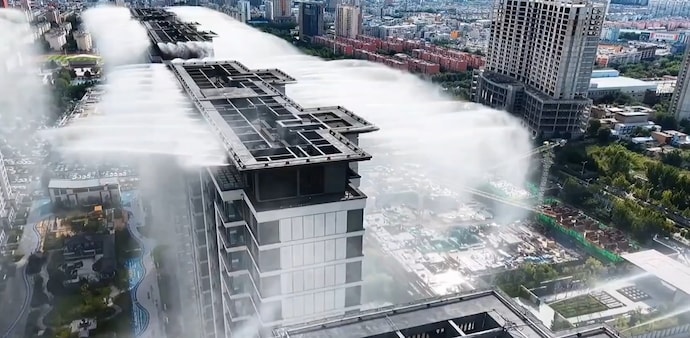
High-rise apartment buildings in Shanxi Province have been fitted with rooftop misting systems that spray a fine mist of water into the air. The mist helps lower temperatures around the buildings and gives residents relief from the intense heat.
Videos of the system have gone viral on social media, showing thick clouds of mist drifting down from rooftops and cooling the streets and walkways below.
The striking images have drawn attention around the world as cities look for new ways to deal with rising temperatures caused by climate change.
How does the mist cool the area?
The system works using a scientific process called evaporative cooling.
High-pressure nozzles installed on rooftops spray extremely fine droplets of water into the air. As these droplets evaporate, they absorb heat from the surrounding air, cooling it in much the same way that sweat cools the human body.
Don't Miss: AC politics: Europe debates using air conditioner as temperatures shoot up
According to Chinese media reports, the system can reduce local air and surface temperatures by around 5°C to 8°C within minutes when outdoor temperatures are close to 38°C.
The water droplets are so small that they evaporate quickly in hot and relatively dry weather. This means people and roads stay dry while still benefiting from the cooling effect.
The system also uses much less electricity than conventional air conditioning because it mainly relies on water, pumps and high-pressure nozzles.
Similar outdoor misting systems are already being used in several Chinese cities, including parks, public squares, pedestrian streets and bus stops during the peak summer months.
Why is China testing these cooling solutions?
China has experienced more frequent and longer-lasting heatwaves in recent years, a trend that scientists link to climate change.
Cities also face the urban heat island effect, where buildings, roads and concrete absorb and hold heat, making urban areas much warmer than nearby rural regions.
These conditions can make daily life especially difficult for people living in densely populated apartment complexes, particularly those without access to adequate cooling.
Chinese Foreign Ministry spokesperson Mao Ning highlighted the project as an example of efforts to improve people's daily lives.
Not everyone is convinced
Some experts have raised concerns about water consumption, particularly in areas facing water shortages.
Supporters, however, argue that the systems use relatively small amounts of water because the fine mist evaporates almost immediately.
Could this become more common?
The Shanxi project is part of a growing global effort to help cities adapt to rising temperatures with practical and energy-efficient cooling solutions.
As heatwaves become more frequent, innovations such as rooftop misting systems could become a more common feature in cities looking to keep residents cool without relying entirely on air conditioning.
As extreme summer heat grips parts of China, a residential neighbourhood in the northern city of Yuncheng has found an unusual way to stay cool.
High-rise apartment buildings in Shanxi Province have been fitted with rooftop misting systems that spray a fine mist of water into the air. The mist helps lower temperatures around the buildings and gives residents relief from the intense heat.
Videos of the system have gone viral on social media, showing thick clouds of mist drifting down from rooftops and cooling the streets and walkways below.
The striking images have drawn attention around the world as cities look for new ways to deal with rising temperatures caused by climate change.
How does the mist cool the area?
The system works using a scientific process called evaporative cooling.
High-pressure nozzles installed on rooftops spray extremely fine droplets of water into the air. As these droplets evaporate, they absorb heat from the surrounding air, cooling it in much the same way that sweat cools the human body.
Don't Miss: AC politics: Europe debates using air conditioner as temperatures shoot up
According to Chinese media reports, the system can reduce local air and surface temperatures by around 5°C to 8°C within minutes when outdoor temperatures are close to 38°C.
The water droplets are so small that they evaporate quickly in hot and relatively dry weather. This means people and roads stay dry while still benefiting from the cooling effect.
The system also uses much less electricity than conventional air conditioning because it mainly relies on water, pumps and high-pressure nozzles.
Similar outdoor misting systems are already being used in several Chinese cities, including parks, public squares, pedestrian streets and bus stops during the peak summer months.
Why is China testing these cooling solutions?
China has experienced more frequent and longer-lasting heatwaves in recent years, a trend that scientists link to climate change.
Cities also face the urban heat island effect, where buildings, roads and concrete absorb and hold heat, making urban areas much warmer than nearby rural regions.
These conditions can make daily life especially difficult for people living in densely populated apartment complexes, particularly those without access to adequate cooling.
Chinese Foreign Ministry spokesperson Mao Ning highlighted the project as an example of efforts to improve people's daily lives.
Not everyone is convinced
Some experts have raised concerns about water consumption, particularly in areas facing water shortages.
Supporters, however, argue that the systems use relatively small amounts of water because the fine mist evaporates almost immediately.
Could this become more common?
The Shanxi project is part of a growing global effort to help cities adapt to rising temperatures with practical and energy-efficient cooling solutions.
As heatwaves become more frequent, innovations such as rooftop misting systems could become a more common feature in cities looking to keep residents cool without relying entirely on air conditioning.