
From a corporate job to a ₹1 crore flower business: How this Odisha entrepreneur turned setbacks into success
Encouraged by the success, Sanjeev expanded into African marigold cultivation in 2023.
- Aug 7, 2026,
- Updated Aug 7, 2026 7:30 AM IST
A science graduate from Odisha who left behind a secure corporate job more than two decades ago has built a flower cultivation and trading business with an annual turnover of around ₹1 crore, proving that persistence can pay off even after repeated setbacks.
His journey, marked by failed ventures, natural disasters and fresh beginnings, is now inspiring many aspiring entrepreneurs, according to a report by Odisha TV
A resident of Kalyanpur village in Odisha's Ganjam district, A. Sanjeev Reddy began his career in 1995 as a Planning Assistant with a company, earning around ₹96,000 annually.
While working, he completed a diploma in business administration through correspondence from the National Industries Research and Development Council in Gurugram and saved most of his salary with the aim of starting his own business.
"I always wanted to create something independently rather than spend my entire life in a salaried job. Every rupee I saved was for that dream," he said.
Don't Miss: Good news for Assam! ₹8,970 crore Guwahati-Tezpur corridor approved, travel time to halve
Mushroom farming setbacks and a fresh start
In 2000, Sanjeev resigned from his job and entered entrepreneurship. He launched a 2,000-square-foot paddy mushroom cultivation unit in 2001. But an expansion during an unsuitable winter season in 2005 led to heavy losses. He briefly returned to employment before trying again in 2013 with a larger 10,000-square-foot mushroom unit that cultivated oyster and paddy straw mushrooms. That venture too suffered a major setback in 2019 when Cyclone Hudhud damaged the infrastructure.
"Every setback teaches you something. After the cyclone, I decided to return with a stronger and more sustainable business model," he said.
A bet on lotus farming changes everything
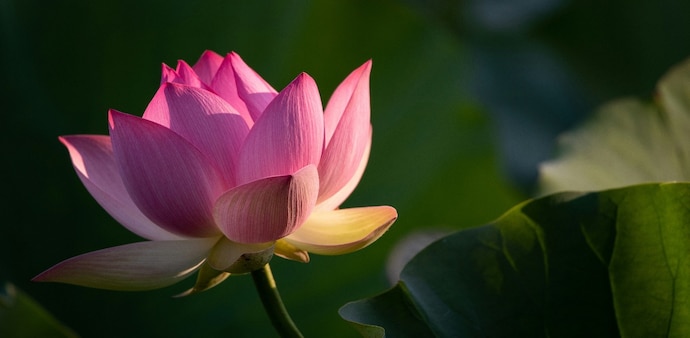
His fortunes changed in 2020 when he entered floriculture. Sanjeev signed an agreement with the National Botanical Research Institute (NBRI), Lucknow, to cultivate the premium 108-petalled lotus variety 'Namoh-108', also known as Laxmi Kamal. He invested around ₹1.08 lakh from his savings to gain access to the variety and its cultivation technology.
NBRI provided nearly 400 seedlings and 100 grams of packaged seeds, helping him establish the business. He then leased village tanks spread across four water bodies in Makarajhola Panchayat for an annual cost of around ₹3 lakh and started lotus cultivation.
To scale up production, Sanjeev purchased 10,000 lotus saplings from Nagercoil in Tamil Nadu by spending another ₹50,000. The plants began flowering within 60 to 70 days.
Today, his lotus farms produce over 30,000 flowers every year, supplying traders in Delhi, Ludhiana and Kolkata. The flowers typically sell for ₹5 to ₹10 each, with prices rising during religious festivals. By 2021-22, lotus cultivation alone had generated a turnover of more than ₹5 lakh.
Expanding into marigolds and flower trading
Encouraged by the success, Sanjeev expanded into African marigold cultivation in 2023. He leased four acres of land in Karatali village and started with 1,000 saplings sourced from Kolkata. The plantation has since grown to nearly 7,000 plants.
Each acre produces around 8 to 10 tonnes of flowers, which generally sell for about ₹30 per kg. During wedding seasons and festivals, prices can climb to as high as ₹200 per kg.
Sanjeev follows natural farming practices, preparing organic inputs such as Jeevamruta and Bijamruta while using Agniastra for pest control. He also encourages farmers to reduce the use of chemical fertilisers and pesticides.
As demand grew, he expanded beyond cultivation by transforming his wife T. Jayashree Reddy's registered venture, Happy Dukan, into a flower procurement and distribution business. The company now sources around 25 varieties of flowers, including lotus, rose, gerbera and African marigold, from Tamil Nadu, Odisha, Andhra Pradesh, West Bengal, Karnataka, Chhattisgarh and Maharashtra.
Happy Dukan clocks ₹1 crore turnover
Focusing on competitive pricing and long-term customer relationships, Happy Dukan has emerged as one of southern Odisha's notable flower businesses, recording an annual turnover of around ₹1 crore.
The enterprise currently employs 12 permanent workers, each earning around ₹15,000 a month along with accommodation and meals. Additional workers are hired during peak demand seasons.
From quitting a stable corporate career to rebuilding after repeated business losses and a devastating cyclone, Sanjeev Reddy's journey highlights how resilience and innovation helped transform a long-held dream into a thriving enterprise.
A science graduate from Odisha who left behind a secure corporate job more than two decades ago has built a flower cultivation and trading business with an annual turnover of around ₹1 crore, proving that persistence can pay off even after repeated setbacks.
His journey, marked by failed ventures, natural disasters and fresh beginnings, is now inspiring many aspiring entrepreneurs, according to a report by Odisha TV
A resident of Kalyanpur village in Odisha's Ganjam district, A. Sanjeev Reddy began his career in 1995 as a Planning Assistant with a company, earning around ₹96,000 annually.
While working, he completed a diploma in business administration through correspondence from the National Industries Research and Development Council in Gurugram and saved most of his salary with the aim of starting his own business.
"I always wanted to create something independently rather than spend my entire life in a salaried job. Every rupee I saved was for that dream," he said.
Don't Miss: Good news for Assam! ₹8,970 crore Guwahati-Tezpur corridor approved, travel time to halve
Mushroom farming setbacks and a fresh start
In 2000, Sanjeev resigned from his job and entered entrepreneurship. He launched a 2,000-square-foot paddy mushroom cultivation unit in 2001. But an expansion during an unsuitable winter season in 2005 led to heavy losses. He briefly returned to employment before trying again in 2013 with a larger 10,000-square-foot mushroom unit that cultivated oyster and paddy straw mushrooms. That venture too suffered a major setback in 2019 when Cyclone Hudhud damaged the infrastructure.
"Every setback teaches you something. After the cyclone, I decided to return with a stronger and more sustainable business model," he said.
A bet on lotus farming changes everything
His fortunes changed in 2020 when he entered floriculture. Sanjeev signed an agreement with the National Botanical Research Institute (NBRI), Lucknow, to cultivate the premium 108-petalled lotus variety 'Namoh-108', also known as Laxmi Kamal. He invested around ₹1.08 lakh from his savings to gain access to the variety and its cultivation technology.
NBRI provided nearly 400 seedlings and 100 grams of packaged seeds, helping him establish the business. He then leased village tanks spread across four water bodies in Makarajhola Panchayat for an annual cost of around ₹3 lakh and started lotus cultivation.
To scale up production, Sanjeev purchased 10,000 lotus saplings from Nagercoil in Tamil Nadu by spending another ₹50,000. The plants began flowering within 60 to 70 days.
Today, his lotus farms produce over 30,000 flowers every year, supplying traders in Delhi, Ludhiana and Kolkata. The flowers typically sell for ₹5 to ₹10 each, with prices rising during religious festivals. By 2021-22, lotus cultivation alone had generated a turnover of more than ₹5 lakh.
Expanding into marigolds and flower trading
Encouraged by the success, Sanjeev expanded into African marigold cultivation in 2023. He leased four acres of land in Karatali village and started with 1,000 saplings sourced from Kolkata. The plantation has since grown to nearly 7,000 plants.
Each acre produces around 8 to 10 tonnes of flowers, which generally sell for about ₹30 per kg. During wedding seasons and festivals, prices can climb to as high as ₹200 per kg.
Sanjeev follows natural farming practices, preparing organic inputs such as Jeevamruta and Bijamruta while using Agniastra for pest control. He also encourages farmers to reduce the use of chemical fertilisers and pesticides.
As demand grew, he expanded beyond cultivation by transforming his wife T. Jayashree Reddy's registered venture, Happy Dukan, into a flower procurement and distribution business. The company now sources around 25 varieties of flowers, including lotus, rose, gerbera and African marigold, from Tamil Nadu, Odisha, Andhra Pradesh, West Bengal, Karnataka, Chhattisgarh and Maharashtra.
Happy Dukan clocks ₹1 crore turnover
Focusing on competitive pricing and long-term customer relationships, Happy Dukan has emerged as one of southern Odisha's notable flower businesses, recording an annual turnover of around ₹1 crore.
The enterprise currently employs 12 permanent workers, each earning around ₹15,000 a month along with accommodation and meals. Additional workers are hired during peak demand seasons.
From quitting a stable corporate career to rebuilding after repeated business losses and a devastating cyclone, Sanjeev Reddy's journey highlights how resilience and innovation helped transform a long-held dream into a thriving enterprise.