
From Silicon Valley to Kollywood: Meet the Aravinds powering the AI moment
From Silicon Valley boardrooms to AI research labs — and even India’s film industry — the Aravinds are shaping how AI is built, debated and consumed.
- Feb 7, 2026,
- Updated Feb 7, 2026 5:43 PM IST
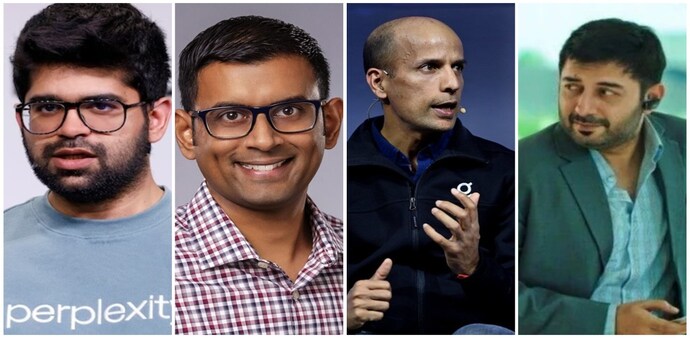
In a curious coincidence that has set social media buzzing, some of the most influential conversations around artificial intelligence today feature the same first name: Aravind. From Silicon Valley boardrooms to AI research labs — and even India’s film industry — the Aravinds are shaping how AI is built, debated and consumed.
Here’s a closer look at the four Aravinds leaving their imprint on the AI era.
Aravind Srinivas: Rewriting how the internet answers back
As co-founder and CEO of Perplexity, Aravind Srinivas has emerged as one of the most visible challengers to Google’s traditional search model. Perplexity’s pitch is simple but radical: answers first, links second.
A former OpenAI and DeepMind researcher, Srinivas has positioned Perplexity as an “answer engine” that uses large language models to deliver cited, conversational responses in real time. With rapid user growth and backing from top Silicon Valley investors, Srinivas is increasingly seen as a founder redefining how people discover information in the AI age.
Aravind Narayanan: The ethicist inside the machine
At OpenAI, Aravind Narayanan represents the conscience behind the code. A Princeton professor turned AI researcher, Narayanan is best known for his work on algorithmic accountability, data privacy and the societal risks of large language models. His research has consistently warned against overhyping AI capabilities while underestimating their harms — from bias and surveillance to misinformation.
In an era when AI companies face growing scrutiny from regulators and the public, Narayanan’s voice has become critical in shaping how frontier models are evaluated, deployed and governed.
Aravind Jain: Fixing enterprise search
While consumer AI grabs headlines, Aravind Jain, founder and CEO of Glean, is focused on a quieter but equally painful problem: how employees find information at work.
A former Google engineer, Jain built Glean to bring AI-powered search and assistants into enterprises drowning in internal documents, emails and chat threads. Glean’s models understand company context, permissions and workflows — turning AI into a productivity tool rather than a novelty.
As enterprises race to integrate AI safely, Jain’s approach highlights where AI may deliver its most immediate economic value.
Aravind Swami: When Kollywood meets algorithms
The fourth Aravind comes from an unexpected corner: Kollywood.
Actor Aravind Swami, known for iconic roles in Tamil cinema, has recently entered AI conversations through public commentary and experimentation around digital creativity, deepfakes and AI-assisted storytelling. While not a technologist by training, Swami’s engagement reflects how AI is seeping into creative industries — raising questions about authorship, performance and the future of cinema.
His presence in AI discussions underscores a broader truth: artificial intelligence is no longer confined to labs and startups — it’s reshaping culture itself.
Different paths, different professions — but together, they capture the breadth of AI’s impact in 2026. And for now, one name keeps popping up wherever the future is being written.
In a curious coincidence that has set social media buzzing, some of the most influential conversations around artificial intelligence today feature the same first name: Aravind. From Silicon Valley boardrooms to AI research labs — and even India’s film industry — the Aravinds are shaping how AI is built, debated and consumed.
Here’s a closer look at the four Aravinds leaving their imprint on the AI era.
Aravind Srinivas: Rewriting how the internet answers back
As co-founder and CEO of Perplexity, Aravind Srinivas has emerged as one of the most visible challengers to Google’s traditional search model. Perplexity’s pitch is simple but radical: answers first, links second.
A former OpenAI and DeepMind researcher, Srinivas has positioned Perplexity as an “answer engine” that uses large language models to deliver cited, conversational responses in real time. With rapid user growth and backing from top Silicon Valley investors, Srinivas is increasingly seen as a founder redefining how people discover information in the AI age.
Aravind Narayanan: The ethicist inside the machine
At OpenAI, Aravind Narayanan represents the conscience behind the code. A Princeton professor turned AI researcher, Narayanan is best known for his work on algorithmic accountability, data privacy and the societal risks of large language models. His research has consistently warned against overhyping AI capabilities while underestimating their harms — from bias and surveillance to misinformation.
In an era when AI companies face growing scrutiny from regulators and the public, Narayanan’s voice has become critical in shaping how frontier models are evaluated, deployed and governed.
Aravind Jain: Fixing enterprise search
While consumer AI grabs headlines, Aravind Jain, founder and CEO of Glean, is focused on a quieter but equally painful problem: how employees find information at work.
A former Google engineer, Jain built Glean to bring AI-powered search and assistants into enterprises drowning in internal documents, emails and chat threads. Glean’s models understand company context, permissions and workflows — turning AI into a productivity tool rather than a novelty.
As enterprises race to integrate AI safely, Jain’s approach highlights where AI may deliver its most immediate economic value.
Aravind Swami: When Kollywood meets algorithms
The fourth Aravind comes from an unexpected corner: Kollywood.
Actor Aravind Swami, known for iconic roles in Tamil cinema, has recently entered AI conversations through public commentary and experimentation around digital creativity, deepfakes and AI-assisted storytelling. While not a technologist by training, Swami’s engagement reflects how AI is seeping into creative industries — raising questions about authorship, performance and the future of cinema.
His presence in AI discussions underscores a broader truth: artificial intelligence is no longer confined to labs and startups — it’s reshaping culture itself.
Different paths, different professions — but together, they capture the breadth of AI’s impact in 2026. And for now, one name keeps popping up wherever the future is being written.