
'Gurugram, Mumbai...': Startup founder explains why traffic jams are vital for soaring property prices
The disconnect between commuter frustration and investor optimism is most visible in cities like Gurugram, Bengaluru and Mumbai.
- Sep 14, 2025,
- Updated Sep 14, 2025 8:40 PM IST
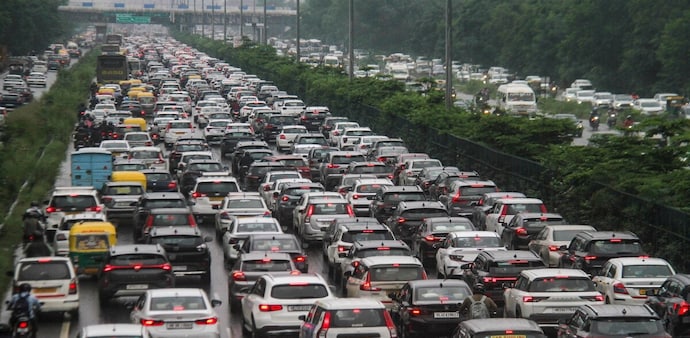
Traffic jams may be the bane of urban life, but for property investors, they often signal booming demand and rising prices. In a recent post on LinkedIn, Tej Pandya, Founder of Groweasy.ai, argued that congestion is directly linked to real estate appreciation.
“Unpopular opinion: If an Indian city has no traffic, your property prices won’t rise,” Pandya wrote. He illustrated this with the case of Gurgaon’s Golf Course Road, where property that once sold at ₹2,500 per sq. ft. in 2005 now fetches over ₹25,000, coinciding with the locality’s transformation into a traffic-clogged business and residential hub.
“Everyone hates traffic. But it’s the single biggest proof that your city is growing,” Pandya added, highlighting the chain reaction: traffic means demand, demand brings jobs, and jobs fuel real estate appreciation.
Metro Woes: Commuters vs Investors
The disconnect between commuter frustration and investor optimism is most visible in cities like Gurugram, Bengaluru and Mumbai. Each is grappling with gridlock so severe that residents regularly spend two to three hours a day stuck on the road.
- Gurugram: The Millennium City’s arterial roads, particularly Sohna Road and Cyber City approaches, are perpetually jammed during office hours. What used to be 15-minute stretches now often take over an hour.
- Bengaluru: Infamous for its traffic, the IT capital has some of the slowest average commute speeds in the world. Employees frequently lose hours of productivity, and companies have even adjusted work hours to cope.
- Mumbai: As India’s financial capital continues to grow, arterial routes such as the Western Express Highway and Eastern Freeway face bumper-to-bumper snarls, especially during peak hours.
For daily commuters, this is a constant struggle. Yet for investors, these bottlenecks are a clear sign of economic vitality.
Housing demand adds to pressure
The traffic narrative overlaps with the housing crisis in these metros. Both rental and purchase markets are under strain as demand far outpaces supply. In Gurugram, rental values in popular sectors have jumped over 20% in the past year. Bengaluru’s tech corridors see bidding wars for apartments, while in Mumbai, affordability remains the perennial challenge, with mid-income buyers increasingly priced out of the city center.
Industry experts say the paradox is here to stay: while urban residents continue to demand better infrastructure and faster commutes, investors will keep treating traffic as a proxy for economic opportunity.
As Pandya framed it: “Would you rather have peace on the road or growth in your pocket?”
Traffic jams may be the bane of urban life, but for property investors, they often signal booming demand and rising prices. In a recent post on LinkedIn, Tej Pandya, Founder of Groweasy.ai, argued that congestion is directly linked to real estate appreciation.
“Unpopular opinion: If an Indian city has no traffic, your property prices won’t rise,” Pandya wrote. He illustrated this with the case of Gurgaon’s Golf Course Road, where property that once sold at ₹2,500 per sq. ft. in 2005 now fetches over ₹25,000, coinciding with the locality’s transformation into a traffic-clogged business and residential hub.
“Everyone hates traffic. But it’s the single biggest proof that your city is growing,” Pandya added, highlighting the chain reaction: traffic means demand, demand brings jobs, and jobs fuel real estate appreciation.
Metro Woes: Commuters vs Investors
The disconnect between commuter frustration and investor optimism is most visible in cities like Gurugram, Bengaluru and Mumbai. Each is grappling with gridlock so severe that residents regularly spend two to three hours a day stuck on the road.
- Gurugram: The Millennium City’s arterial roads, particularly Sohna Road and Cyber City approaches, are perpetually jammed during office hours. What used to be 15-minute stretches now often take over an hour.
- Bengaluru: Infamous for its traffic, the IT capital has some of the slowest average commute speeds in the world. Employees frequently lose hours of productivity, and companies have even adjusted work hours to cope.
- Mumbai: As India’s financial capital continues to grow, arterial routes such as the Western Express Highway and Eastern Freeway face bumper-to-bumper snarls, especially during peak hours.
For daily commuters, this is a constant struggle. Yet for investors, these bottlenecks are a clear sign of economic vitality.
Housing demand adds to pressure
The traffic narrative overlaps with the housing crisis in these metros. Both rental and purchase markets are under strain as demand far outpaces supply. In Gurugram, rental values in popular sectors have jumped over 20% in the past year. Bengaluru’s tech corridors see bidding wars for apartments, while in Mumbai, affordability remains the perennial challenge, with mid-income buyers increasingly priced out of the city center.
Industry experts say the paradox is here to stay: while urban residents continue to demand better infrastructure and faster commutes, investors will keep treating traffic as a proxy for economic opportunity.
As Pandya framed it: “Would you rather have peace on the road or growth in your pocket?”