
ISRO's 16-satellite launch: Who pays when a rocket fails? The growing role of space insurance
Space insurance traces its roots to 1965, when Lloyd’s of London underwrote the first satellite policy for Intelsat I, known as “Early Bird.” Although the mission succeeded and no claim was filed, it set a precedent for insuring space assets.
- Jan 12, 2026,
- Updated Jan 12, 2026 3:03 PM IST
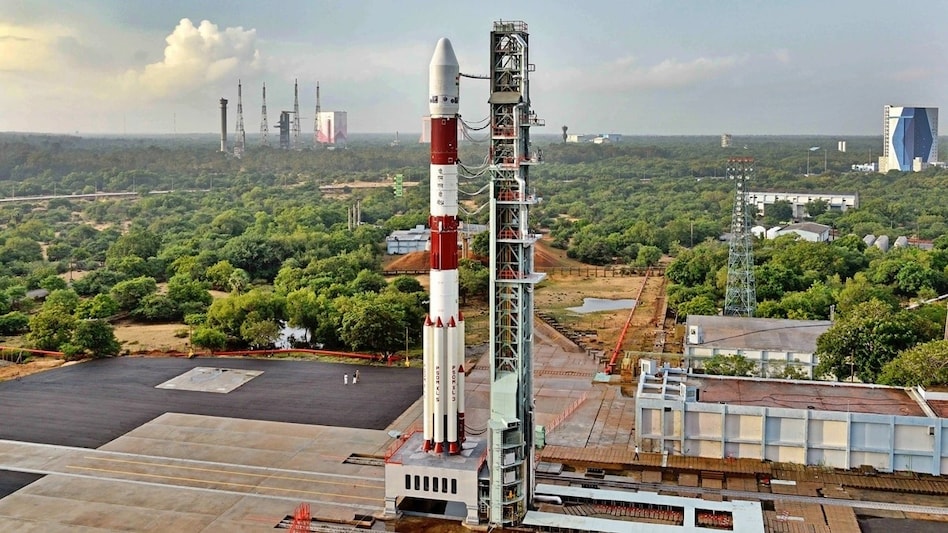
Rocket launches are unforgiving, a reality underscored once again today after ISRO’s launch carrying 16 satellites failed to complete its mission, turning years of engineering effort and significant financial investment into debris in a matter of minutes. While the technical causes will be analysed in the days ahead, the setback highlights a less visible but crucial aspect of the modern space race: who bears the financial loss when a mission goes wrong.
With satellites costing anywhere from a few million to hundreds of millions of dollars, such failures bring space insurance into sharp focus — an industry designed to absorb the economic shock of launch mishaps, protect operators and investors, and ensure that one bad day in orbit does not derail an entire space programme.
At its most basic, space insurance transfers the financial risk of launch and satellite failure from operators to insurers. Typically, the launch provider carries the policy, with costs passed on to the satellite owner. Coverage, however, is anything but standardised. Unlike car or health insurance, every space mission is governed by bespoke contracts where nearly everything — from coverage duration to payout conditions — is negotiable.
In most cases, launch companies such as SpaceX offer insurance-backed terms to customers. If a rocket explodes on the pad or fails en route to orbit, the satellite owner may receive a partial or full refund, while the launch provider files a claim with its insurer. But once the satellite separates successfully, responsibility often shifts. If a spacecraft reaches orbit and then suffers a deployment failure — say, a jammed antenna — it becomes the owner’s problem unless in-orbit insurance was purchased.
Some operators deliberately fly uninsured, betting on reliability to save on premiums. Others opt for partial coverage — protecting only the riskiest launch phase while assuming responsibility afterward. The trade-offs can mean saving millions upfront, but also risking total loss.
From 'early bird' to a global market
Space insurance traces its roots to 1965, when Lloyd’s of London underwrote the first satellite policy for Intelsat I, known as “Early Bird.” Although the mission succeeded and no claim was filed, it set a precedent for insuring space assets. The industry’s first real reckoning came in the 1980s, when a string of costly satellite failures — including the loss of a $100 million Intelsat V — forced insurers to confront the true financial stakes of orbital mishaps.
These early shocks led to more sophisticated risk modelling. Today, policies often span a satellite’s entire lifecycle — from ground assembly to end-of-life operations in orbit. Launch insurance alone can cover the full replacement value of a satellite, including launch costs and even the insurance premium itself. Because any single failure can result in enormous payouts, insurers typically spread risk across multiple underwriters and reinsurers.
Types of coverage
Modern space missions rely on a layered insurance approach. Pre-launch insurance protects spacecraft during manufacturing, testing, and handling on Earth, covering damage caused by accidents in cleanrooms or during transport. Launch insurance, widely considered essential, covers the high-risk period from ignition through deployment, compensating for explosions, engine failures, or trajectory errors.
Once operational, satellites may be covered by in-orbit insurance, which protects against malfunctions, power failures, design flaws, or collisions with space debris. These policies may pay for repairs, replacement satellites, or even lost revenue. Some include partial-loss clauses that trigger payouts if a satellite’s capacity is reduced rather than completely lost.
Third-party liability insurance is often mandatory. Under international treaties such as the Outer Space Treaty of 1967 and the Liability Convention of 1972, launching states are liable for damage caused by space objects. As a result, many governments require private operators to carry liability coverage running into hundreds of millions of dollars before issuing launch licenses.
A newer frontier is human spaceflight and tourism insurance. As companies like Blue Origin and others fly paying passengers, policies now extend to passenger life and injury, vehicle damage, and liability for accidents affecting people on the ground. These specialised products are evolving rapidly as commercial space travel moves from novelty to business.
Market under pressure
Risk assessment sits at the heart of the industry. Insurers employ aerospace engineers and former space agency experts to evaluate rocket reliability, satellite design, and mission profiles. Increasingly, underwriters are using telemetry data and predictive analytics to fine-tune premiums, rewarding operators who build redundancy and invest in robust testing.
Despite rising launch volumes, the insurance market faces structural strain. Of roughly 10,000 active satellites currently in orbit, only about 300 are insured, most of them large geostationary communications satellites. In low Earth orbit — now home to more than 9,000 satellites — fewer than 50 carry insurance. Small satellites and CubeSats are often cheap enough for operators to self-insure, accepting losses as part of doing business.
This shift has squeezed insurers. Traditional high-premium missions are declining, while the market’s total annual premium pool remains relatively small — around $500-$600 million globally. A handful of major failures can wipe out years of profits. In 2023, nearly $1 billion in claims, including a record $420 million payout linked to a Viasat satellite malfunction, pushed the sector into significant losses.
Insurance in action
High-profile cases show why coverage still matters. SpaceX’s reusable launch model relies heavily on insurance to absorb the impact of occasional failures, such as the 2016 Falcon 9 pad explosion that destroyed the Amos-6 satellite. OneWeb, deploying a massive broadband constellation, uses insurance to protect against launch and in-orbit losses that could disrupt service rollout. Blue Origin’s suborbital tourism flights depend on passenger and liability coverage to manage the heightened risks of human spaceflight.
Rocket launches are unforgiving, a reality underscored once again today after ISRO’s launch carrying 16 satellites failed to complete its mission, turning years of engineering effort and significant financial investment into debris in a matter of minutes. While the technical causes will be analysed in the days ahead, the setback highlights a less visible but crucial aspect of the modern space race: who bears the financial loss when a mission goes wrong.
With satellites costing anywhere from a few million to hundreds of millions of dollars, such failures bring space insurance into sharp focus — an industry designed to absorb the economic shock of launch mishaps, protect operators and investors, and ensure that one bad day in orbit does not derail an entire space programme.
At its most basic, space insurance transfers the financial risk of launch and satellite failure from operators to insurers. Typically, the launch provider carries the policy, with costs passed on to the satellite owner. Coverage, however, is anything but standardised. Unlike car or health insurance, every space mission is governed by bespoke contracts where nearly everything — from coverage duration to payout conditions — is negotiable.
In most cases, launch companies such as SpaceX offer insurance-backed terms to customers. If a rocket explodes on the pad or fails en route to orbit, the satellite owner may receive a partial or full refund, while the launch provider files a claim with its insurer. But once the satellite separates successfully, responsibility often shifts. If a spacecraft reaches orbit and then suffers a deployment failure — say, a jammed antenna — it becomes the owner’s problem unless in-orbit insurance was purchased.
Some operators deliberately fly uninsured, betting on reliability to save on premiums. Others opt for partial coverage — protecting only the riskiest launch phase while assuming responsibility afterward. The trade-offs can mean saving millions upfront, but also risking total loss.
From 'early bird' to a global market
Space insurance traces its roots to 1965, when Lloyd’s of London underwrote the first satellite policy for Intelsat I, known as “Early Bird.” Although the mission succeeded and no claim was filed, it set a precedent for insuring space assets. The industry’s first real reckoning came in the 1980s, when a string of costly satellite failures — including the loss of a $100 million Intelsat V — forced insurers to confront the true financial stakes of orbital mishaps.
These early shocks led to more sophisticated risk modelling. Today, policies often span a satellite’s entire lifecycle — from ground assembly to end-of-life operations in orbit. Launch insurance alone can cover the full replacement value of a satellite, including launch costs and even the insurance premium itself. Because any single failure can result in enormous payouts, insurers typically spread risk across multiple underwriters and reinsurers.
Types of coverage
Modern space missions rely on a layered insurance approach. Pre-launch insurance protects spacecraft during manufacturing, testing, and handling on Earth, covering damage caused by accidents in cleanrooms or during transport. Launch insurance, widely considered essential, covers the high-risk period from ignition through deployment, compensating for explosions, engine failures, or trajectory errors.
Once operational, satellites may be covered by in-orbit insurance, which protects against malfunctions, power failures, design flaws, or collisions with space debris. These policies may pay for repairs, replacement satellites, or even lost revenue. Some include partial-loss clauses that trigger payouts if a satellite’s capacity is reduced rather than completely lost.
Third-party liability insurance is often mandatory. Under international treaties such as the Outer Space Treaty of 1967 and the Liability Convention of 1972, launching states are liable for damage caused by space objects. As a result, many governments require private operators to carry liability coverage running into hundreds of millions of dollars before issuing launch licenses.
A newer frontier is human spaceflight and tourism insurance. As companies like Blue Origin and others fly paying passengers, policies now extend to passenger life and injury, vehicle damage, and liability for accidents affecting people on the ground. These specialised products are evolving rapidly as commercial space travel moves from novelty to business.
Market under pressure
Risk assessment sits at the heart of the industry. Insurers employ aerospace engineers and former space agency experts to evaluate rocket reliability, satellite design, and mission profiles. Increasingly, underwriters are using telemetry data and predictive analytics to fine-tune premiums, rewarding operators who build redundancy and invest in robust testing.
Despite rising launch volumes, the insurance market faces structural strain. Of roughly 10,000 active satellites currently in orbit, only about 300 are insured, most of them large geostationary communications satellites. In low Earth orbit — now home to more than 9,000 satellites — fewer than 50 carry insurance. Small satellites and CubeSats are often cheap enough for operators to self-insure, accepting losses as part of doing business.
This shift has squeezed insurers. Traditional high-premium missions are declining, while the market’s total annual premium pool remains relatively small — around $500-$600 million globally. A handful of major failures can wipe out years of profits. In 2023, nearly $1 billion in claims, including a record $420 million payout linked to a Viasat satellite malfunction, pushed the sector into significant losses.
Insurance in action
High-profile cases show why coverage still matters. SpaceX’s reusable launch model relies heavily on insurance to absorb the impact of occasional failures, such as the 2016 Falcon 9 pad explosion that destroyed the Amos-6 satellite. OneWeb, deploying a massive broadband constellation, uses insurance to protect against launch and in-orbit losses that could disrupt service rollout. Blue Origin’s suborbital tourism flights depend on passenger and liability coverage to manage the heightened risks of human spaceflight.