
Jail for good work? UK lawyer sentenced to 2 years for cleaning river
The case has drawn scrutiny over action against volunteers while pollution and dumping complaints persist.
- Jun 24, 2026,
- Updated Jun 24, 2026 1:10 PM IST
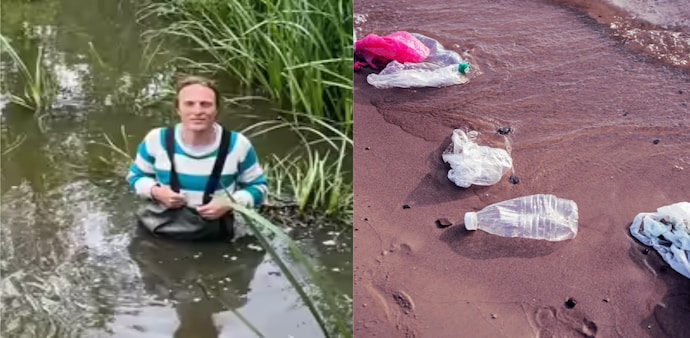
What began as a volunteer effort to revive a choked and stagnant stretch of river in East London has left its organiser facing a criminal investigation and the possibility of jail, according to a report by The Guardian. Paul Powlesland, a UK lawyer and environmental campaigner, led a 10-day community cleanup on Alders Brook, a tributary of the River Roding in Barking, in late February.
Working alongside the River Roding Trust, volunteers removed around 200 bags of litter, silt, weeds and branches from a 250-metre stretch of the brook. The cleanup reportedly had an effect, with locals saying that fish, dragonflies, herons and reed beds returned to the revived section within days.
Powlesland told The Guardian that he spent years asking the Environment Agency to act on pollution and fly-tipping in the Roding but received no response, after which his group stepped in. Within a week of the cleanup, Environment Agency investigators visited the site and sent him a letter stating that the group was under investigation for "unpermitted works" in breach of the Environmental Permitting (England and Wales) Regulations 2016.
"We consider that unpermitted works have taken place... in contravention of the Environmental Permitting (England and Wales) Regulations 2016," the letter, seen by The Guardian, said. "The site is currently under investigation for permitting and waste offences." The agency argues that the dredging could pose a flood risk and has also alleged waste offences. The maximum penalty for the offence is up to two years in jail.
Responding to the action, Powlesland told the media outlet that "after decades of overlooking serious environmental violations on the Roding, the Environment Agency finally decided to act". He said the enforcement was being directed at volunteers rather than Thames Water's sewage discharges or illegal dumping. "But it's not action against Thames Water for dumping billions of litres of sewage in the Roding, or the waste criminals who have dumped thousands of tonnes of rubbish on its banks, but against the River Roding Trust for... restoring a river without a permit," he said.
Powlesland said he remained proud of the result of the effort. "The restored stretch of the river is thriving again, wildlife is returning, yet we're being threatened with prosecution." He added, "This seems to get to the nub of the problem with the EA. They do not prosecute things that they should prosecute, and all they are doing is going after easy targets."
What began as a volunteer effort to revive a choked and stagnant stretch of river in East London has left its organiser facing a criminal investigation and the possibility of jail, according to a report by The Guardian. Paul Powlesland, a UK lawyer and environmental campaigner, led a 10-day community cleanup on Alders Brook, a tributary of the River Roding in Barking, in late February.
Working alongside the River Roding Trust, volunteers removed around 200 bags of litter, silt, weeds and branches from a 250-metre stretch of the brook. The cleanup reportedly had an effect, with locals saying that fish, dragonflies, herons and reed beds returned to the revived section within days.
Powlesland told The Guardian that he spent years asking the Environment Agency to act on pollution and fly-tipping in the Roding but received no response, after which his group stepped in. Within a week of the cleanup, Environment Agency investigators visited the site and sent him a letter stating that the group was under investigation for "unpermitted works" in breach of the Environmental Permitting (England and Wales) Regulations 2016.
"We consider that unpermitted works have taken place... in contravention of the Environmental Permitting (England and Wales) Regulations 2016," the letter, seen by The Guardian, said. "The site is currently under investigation for permitting and waste offences." The agency argues that the dredging could pose a flood risk and has also alleged waste offences. The maximum penalty for the offence is up to two years in jail.
Responding to the action, Powlesland told the media outlet that "after decades of overlooking serious environmental violations on the Roding, the Environment Agency finally decided to act". He said the enforcement was being directed at volunteers rather than Thames Water's sewage discharges or illegal dumping. "But it's not action against Thames Water for dumping billions of litres of sewage in the Roding, or the waste criminals who have dumped thousands of tonnes of rubbish on its banks, but against the River Roding Trust for... restoring a river without a permit," he said.
Powlesland said he remained proud of the result of the effort. "The restored stretch of the river is thriving again, wildlife is returning, yet we're being threatened with prosecution." He added, "This seems to get to the nub of the problem with the EA. They do not prosecute things that they should prosecute, and all they are doing is going after easy targets."