
₹1 lakh for 'burnt' shirt! Swiss-French luxury brand's latest offering ignites price vs taste debate
Outlandish designs generate enormous online engagement, functioning as marketing engines in an era where virality can be more valuable than traditional advertising.
- Feb 21, 2026,
- Updated Feb 21, 2026 9:14 PM IST
From grass-stained sneakers paraded as couture to pre-ripped sweaters that look rescued from a thrift-store reject pile, fashion’s most viral moments today often come from designs that seem intentionally awkward, unfinished, or outright bizarre. Social media has repeatedly turned such unconventional creations into talking points — whether it is ultra-distressed denim, exaggerated silhouettes, or accessories modeled after everyday objects — blurring the line between satire and luxury.
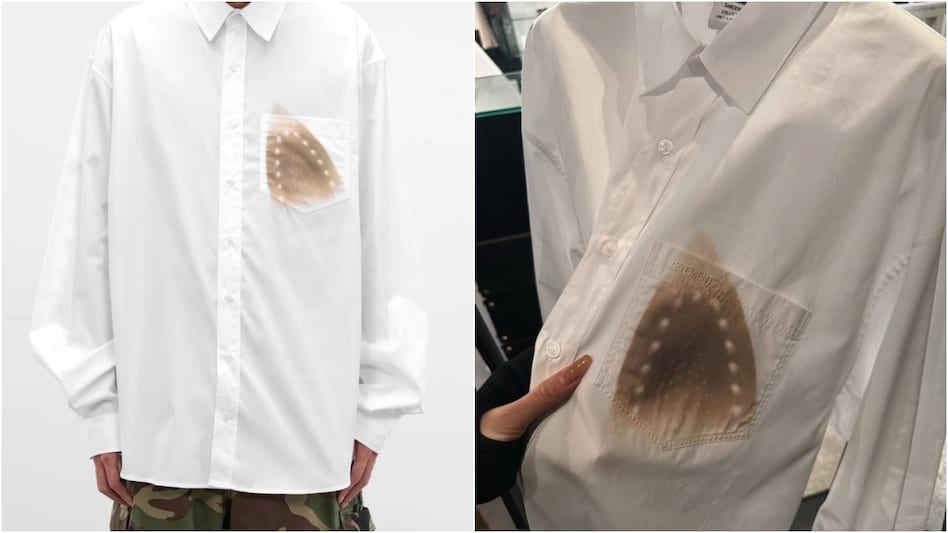
The latest entrant to this genre has left the internet both amused and baffled: a plain white shirt designed to look like it was accidentally scorched by a hot iron.
Created by Vetements, the piece — titled White Ironing Burn Graphic Shirt — features an oversized silhouette and a printed scorch mark on the chest pocket. The graphic mimics the effect of fabric burned by an iron left too long in one spot, giving the garment the appearance of damage rather than deliberate design.
While high-end labels have long experimented with pushing aesthetic boundaries, many online observers said this particular design crossed into another territory. The reaction intensified when users discovered the price: $1,139 (roughly ₹1 lakh).
Vetements started in 2014 as a Swiss-French luxury fashion house and "design collective" founded by Georgian fashion designers Demna Gvasalia and Guram Gvasalia.
What netizens said
The post quickly went viral, sparking a wave of sarcastic commentary.
“I’ve been doing this for free for years. Turns out my laundry pile is actually a high-fashion archive,” one user wrote.
“Once again, luxury clothing brands is a social experiment to see how much people are willing to pay for clothes,” another commented.
“This world is very strange, a shirt with a burnt iron on pattern can be sold for $1000, if that’s the case I can create 5 to 10 shirts I can even make a big hole, this is creative,” a third reaction read.
“Only if my dad could see this post now & realise that this work shirt that I burnt years ago, that made him beat me mercilessly .. is now top fashion,” another individual posted.
“VETEMENTS really said, What if we sold laundry accidents… but make it fashion?” quipped yet another user.
Provocation in luxury fashion
This is far from the first time luxury fashion has drawn attention for transforming the mundane — or even the unsightly — into premium products.
In 2022, Balenciaga unveiled its Trash Pouch, an accessory deliberately resembling a garbage bag as part of its Fall ready-to-wear collection, igniting debates about whether the brand was critiquing or capitalising on consumer culture.
Similarly, Louis Vuitton raised eyebrows with its Spring/Summer 2026 menswear line, which included a miniature auto-rickshaw-shaped bag wrapped in the label’s signature monogram and reportedly priced around ₹35 lakh — an example of hyper-novelty meeting heritage branding.
Even Prada faced backlash last year after presenting Kolhapuri-style footwear without crediting their Indian origins, selling the sandals at approximately ₹84,000 and triggering conversations around cultural acknowledgment and pricing.
Outlandish designs generate enormous online engagement, functioning as marketing engines in an era where virality can be more valuable than traditional advertising. The shock factor drives visibility, reinforces brand identity as boundary-pushing, and appeals to niche consumers who view irony as status.
From grass-stained sneakers paraded as couture to pre-ripped sweaters that look rescued from a thrift-store reject pile, fashion’s most viral moments today often come from designs that seem intentionally awkward, unfinished, or outright bizarre. Social media has repeatedly turned such unconventional creations into talking points — whether it is ultra-distressed denim, exaggerated silhouettes, or accessories modeled after everyday objects — blurring the line between satire and luxury.
The latest entrant to this genre has left the internet both amused and baffled: a plain white shirt designed to look like it was accidentally scorched by a hot iron.
Created by Vetements, the piece — titled White Ironing Burn Graphic Shirt — features an oversized silhouette and a printed scorch mark on the chest pocket. The graphic mimics the effect of fabric burned by an iron left too long in one spot, giving the garment the appearance of damage rather than deliberate design.
While high-end labels have long experimented with pushing aesthetic boundaries, many online observers said this particular design crossed into another territory. The reaction intensified when users discovered the price: $1,139 (roughly ₹1 lakh).
Vetements started in 2014 as a Swiss-French luxury fashion house and "design collective" founded by Georgian fashion designers Demna Gvasalia and Guram Gvasalia.
What netizens said
The post quickly went viral, sparking a wave of sarcastic commentary.
“I’ve been doing this for free for years. Turns out my laundry pile is actually a high-fashion archive,” one user wrote.
“Once again, luxury clothing brands is a social experiment to see how much people are willing to pay for clothes,” another commented.
“This world is very strange, a shirt with a burnt iron on pattern can be sold for $1000, if that’s the case I can create 5 to 10 shirts I can even make a big hole, this is creative,” a third reaction read.
“Only if my dad could see this post now & realise that this work shirt that I burnt years ago, that made him beat me mercilessly .. is now top fashion,” another individual posted.
“VETEMENTS really said, What if we sold laundry accidents… but make it fashion?” quipped yet another user.
Provocation in luxury fashion
This is far from the first time luxury fashion has drawn attention for transforming the mundane — or even the unsightly — into premium products.
In 2022, Balenciaga unveiled its Trash Pouch, an accessory deliberately resembling a garbage bag as part of its Fall ready-to-wear collection, igniting debates about whether the brand was critiquing or capitalising on consumer culture.
Similarly, Louis Vuitton raised eyebrows with its Spring/Summer 2026 menswear line, which included a miniature auto-rickshaw-shaped bag wrapped in the label’s signature monogram and reportedly priced around ₹35 lakh — an example of hyper-novelty meeting heritage branding.
Even Prada faced backlash last year after presenting Kolhapuri-style footwear without crediting their Indian origins, selling the sandals at approximately ₹84,000 and triggering conversations around cultural acknowledgment and pricing.
Outlandish designs generate enormous online engagement, functioning as marketing engines in an era where virality can be more valuable than traditional advertising. The shock factor drives visibility, reinforces brand identity as boundary-pushing, and appeals to niche consumers who view irony as status.