
₹1,000 to hold a bag: Mumbai autorickshaw driver turns visa interview chaos into a ₹8 lakh per month hustle
Without a tech app, funding, or even moving his vehicle, he's built a bootstrapped service earning more than many white-collar professionals — simply by charging ₹1,000 to watch people’s bags.
- Jun 5, 2025,
- Updated Jun 5, 2025 2:53 PM IST
Outside Mumbai’s US Consulate, where security rules leave hundreds scrambling daily for a place to stash their bags, one autorickshaw driver has turned that chaos into a goldmine. Without a tech app, funding, or even moving his vehicle, he's built a bootstrapped service earning more than many white-collar professionals — simply by charging ₹1,000 to watch people’s bags.
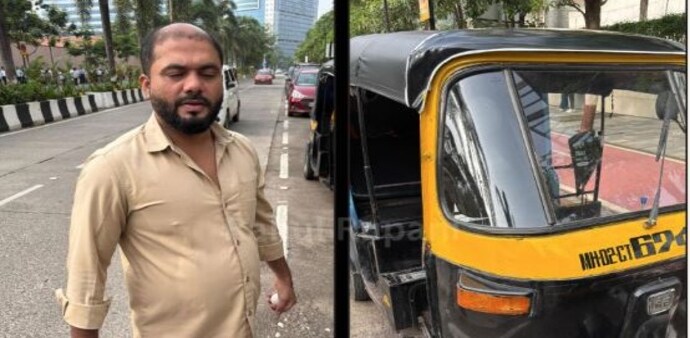
The driver parks just outside the US Consulate, where visitors discover a last-minute snag: bags aren't allowed inside, and no official lockers are available. That's where he steps in.
This enterprising rickshaw driver offers to safeguard bags for ₹1,000 while applicants attend their visa appointments. The idea came to light through a viral LinkedIn post by Rahul Rupani, a product leader at Lenskart, who experienced the service firsthand.
“I was outside the US Consulate this week for my visa appointment, when security told me I couldn’t carry my bag inside. No lockers. No suggestions. Just: Figure it out,” Rupani wrote.
While standing confused on the pavement, a rickshaw driver waved to him and said, “Sir, bag de do. Safe rakhunga, mera roz ka hai. ₹1,000 charge hai.” That moment revealed a low-tech but high-value solution hiding in plain sight.
According to Rupani, the driver gets 20-30 customers daily — netting ₹20,000-30,000 each day, or ₹5-8 lakh a month. The workflow is simple yet clever: he collects the bags, then works with a cooperative police officer to store them securely in a locker facility. The auto acts as a welcoming front, while the backend storage adds credibility.
“This auto driver makes ₹5-8 lakhs/month. No app. No funding. No tech. Just parked in the right place at the right time,” Rupani noted.
He called it a "zero-mile, hyper-profitable" business that’s a “masterclass in solving a hyper-specific pain point” — built entirely on human trust, good timing, and an acute sense of need.
“As a product leader (and 2x founder), I’ve worked on large-scale systems and scaled ops. But this was a masterclass in:
* Solving a hyper-specific pain point * Building trust without tech * Creating a legal moat through the police-run locker * Charging ₹1,000 for instant peace of mind at the right time.”
Rupani summed it up best: “Real entrepreneurship doesn’t always need a pitch deck. Sometimes it just needs a parking spot.”
Outside Mumbai’s US Consulate, where security rules leave hundreds scrambling daily for a place to stash their bags, one autorickshaw driver has turned that chaos into a goldmine. Without a tech app, funding, or even moving his vehicle, he's built a bootstrapped service earning more than many white-collar professionals — simply by charging ₹1,000 to watch people’s bags.
The driver parks just outside the US Consulate, where visitors discover a last-minute snag: bags aren't allowed inside, and no official lockers are available. That's where he steps in.
This enterprising rickshaw driver offers to safeguard bags for ₹1,000 while applicants attend their visa appointments. The idea came to light through a viral LinkedIn post by Rahul Rupani, a product leader at Lenskart, who experienced the service firsthand.
“I was outside the US Consulate this week for my visa appointment, when security told me I couldn’t carry my bag inside. No lockers. No suggestions. Just: Figure it out,” Rupani wrote.
While standing confused on the pavement, a rickshaw driver waved to him and said, “Sir, bag de do. Safe rakhunga, mera roz ka hai. ₹1,000 charge hai.” That moment revealed a low-tech but high-value solution hiding in plain sight.
According to Rupani, the driver gets 20-30 customers daily — netting ₹20,000-30,000 each day, or ₹5-8 lakh a month. The workflow is simple yet clever: he collects the bags, then works with a cooperative police officer to store them securely in a locker facility. The auto acts as a welcoming front, while the backend storage adds credibility.
“This auto driver makes ₹5-8 lakhs/month. No app. No funding. No tech. Just parked in the right place at the right time,” Rupani noted.
He called it a "zero-mile, hyper-profitable" business that’s a “masterclass in solving a hyper-specific pain point” — built entirely on human trust, good timing, and an acute sense of need.
“As a product leader (and 2x founder), I’ve worked on large-scale systems and scaled ops. But this was a masterclass in:
* Solving a hyper-specific pain point * Building trust without tech * Creating a legal moat through the police-run locker * Charging ₹1,000 for instant peace of mind at the right time.”
Rupani summed it up best: “Real entrepreneurship doesn’t always need a pitch deck. Sometimes it just needs a parking spot.”