
'Self-contained civilisation': Indian co-founder visits Shenzhen, returns with a lesson for India
Mathur also highlighted Shenzhen’s extensive public infrastructure, including its metro network, pedestrian facilities, cycling infrastructure, parks and public transport
- Sep 24, 2026,
- Updated Sep 24, 2026 9:04 PM IST
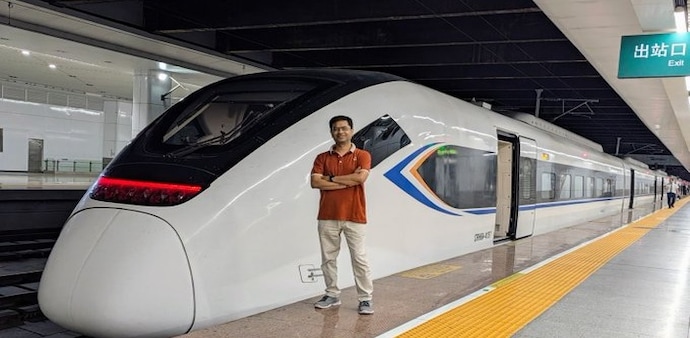
Shenzhen’s rapid transformation from a small border settlement into a major technology and manufacturing hub has been highlighted by Rishihood University Vice Chancellor and co-founder Shobhit Mathur, who recently visited the Chinese city.
Sharing his observations in a 20-part post on X, Mathur described a city where technology, infrastructure, manufacturing and everyday life have become deeply integrated.
“I just returned from Shenzhen today morning. I went specifically looking for China’s technology story,” Mathur wrote on X. “I came back thinking about something much bigger: How does a city transform itself so completely in one generation?”
Mathur’s first impression was of a city that operates through its own digital ecosystem. He described Shenzhen as a “self-contained civilisation”, pointing to its apps, payment systems, maps, consumer platforms and other digital services.
“You can enter it as a foreigner, but you have to make an effort,” he wrote, adding, “Global trade does not necessarily create global everyday life.”
Smartphone-driven urban life
According to Mathur, smartphones play a central role in everyday life in Shenzhen, functioning as more than communication devices.
“The phone here is not just a phone,” he wrote. “It is your wallet, map, taxi, food delivery, shopping mall, train ticket, identity and increasingly your interface with the city itself.”
He described the development as a situation where “the physical city is becoming an operating system.”
Mathur also highlighted Shenzhen’s extensive public infrastructure, including its metro network, pedestrian facilities, cycling infrastructure, parks and public transport. He described the city as “dense, but walkable” and “high-rise, but green”.
Manufacturing remains central
A key observation in Mathur’s thread was that Shenzhen’s rise as a technology hub has not meant abandoning manufacturing.
“Shenzhen still gets 37% of its GDP from the secondary sector,” he wrote, listing robotics, electric vehicles, drones, electronics, communications equipment and industrial machinery among the industries driving the city.
“This is not a city that ‘moved from manufacturing to technology’,” Mathur said. “It made technology out of manufacturing.”
He also described the close integration between businesses and suppliers, writing: “The factory, engineer, designer, entrepreneur, investor, supplier and exporter are all part of one ecosystem.”
What happened in 45 years?
Mathur ultimately said Shenzhen’s transformation should be viewed through the pace and scale of its development rather than simply its present-day technology.
“Don’t ask: ‘How advanced is Shenzhen today?’” he wrote. “Ask: ‘What happened here in 45 years?’”
He noted that Shenzhen was a small border settlement in 1980 and has since developed into a major economic centre. “The astonishing thing is the pace of transformation,” Mathur wrote. “It is a reminder that the economic geography of a country can change within a single generation.”
He ended his observations with a question for India: “What would it take for an Indian city to transform this much, this fast?”
Shenzhen’s rapid transformation from a small border settlement into a major technology and manufacturing hub has been highlighted by Rishihood University Vice Chancellor and co-founder Shobhit Mathur, who recently visited the Chinese city.
Sharing his observations in a 20-part post on X, Mathur described a city where technology, infrastructure, manufacturing and everyday life have become deeply integrated.
“I just returned from Shenzhen today morning. I went specifically looking for China’s technology story,” Mathur wrote on X. “I came back thinking about something much bigger: How does a city transform itself so completely in one generation?”
Mathur’s first impression was of a city that operates through its own digital ecosystem. He described Shenzhen as a “self-contained civilisation”, pointing to its apps, payment systems, maps, consumer platforms and other digital services.
“You can enter it as a foreigner, but you have to make an effort,” he wrote, adding, “Global trade does not necessarily create global everyday life.”
Smartphone-driven urban life
According to Mathur, smartphones play a central role in everyday life in Shenzhen, functioning as more than communication devices.
“The phone here is not just a phone,” he wrote. “It is your wallet, map, taxi, food delivery, shopping mall, train ticket, identity and increasingly your interface with the city itself.”
He described the development as a situation where “the physical city is becoming an operating system.”
Mathur also highlighted Shenzhen’s extensive public infrastructure, including its metro network, pedestrian facilities, cycling infrastructure, parks and public transport. He described the city as “dense, but walkable” and “high-rise, but green”.
Manufacturing remains central
A key observation in Mathur’s thread was that Shenzhen’s rise as a technology hub has not meant abandoning manufacturing.
“Shenzhen still gets 37% of its GDP from the secondary sector,” he wrote, listing robotics, electric vehicles, drones, electronics, communications equipment and industrial machinery among the industries driving the city.
“This is not a city that ‘moved from manufacturing to technology’,” Mathur said. “It made technology out of manufacturing.”
He also described the close integration between businesses and suppliers, writing: “The factory, engineer, designer, entrepreneur, investor, supplier and exporter are all part of one ecosystem.”
What happened in 45 years?
Mathur ultimately said Shenzhen’s transformation should be viewed through the pace and scale of its development rather than simply its present-day technology.
“Don’t ask: ‘How advanced is Shenzhen today?’” he wrote. “Ask: ‘What happened here in 45 years?’”
He noted that Shenzhen was a small border settlement in 1980 and has since developed into a major economic centre. “The astonishing thing is the pace of transformation,” Mathur wrote. “It is a reminder that the economic geography of a country can change within a single generation.”
He ended his observations with a question for India: “What would it take for an Indian city to transform this much, this fast?”