
'That day, I didn't feel like a leader': Mumbai CEO recalls firing 25 employees in a single day
He recalled being asked to fire 25 people in a single day, one after another, during an organisational downsizing exercise.
- Aug 19, 2025,
- Updated Aug 19, 2025 1:33 PM IST
For many professionals, losing a job is among the hardest days of their lives. But for those asked to deliver the news, the memory can be just as heavy. Mumbai-based CEO and leadership trainer Sampark Sachdeva recently shared such an experience on LinkedIn, describing it as one of the “darkest days” of his corporate career.
He recalled being asked to fire 25 people in a single day, one after another, during an organisational downsizing exercise.
The script he was given was cold and direct: “Please submit your ID card and laptop. HR will reach out for formalities. Your systems access will be disabled shortly.” He was instructed not to soften the blow, not even to say “I’m sorry,” because it could be seen as accepting blame.
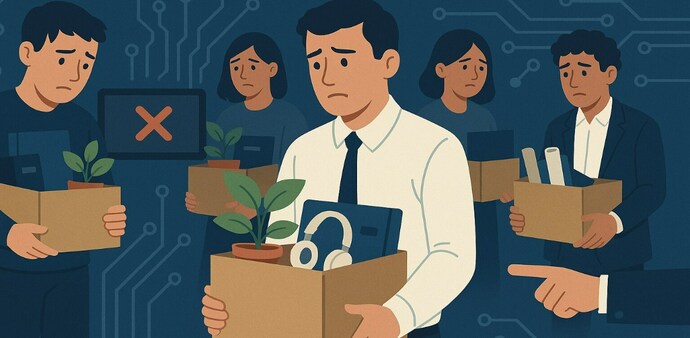
Behind each termination was a life suddenly disrupted — a single mother, a father of two, an employee who had just taken a home loan, and a young woman who had moved cities for the role. One worker told him: “Sir, you had hired me. You were here, so I stayed. Today, you are asking me to go, so I will go.”
Sachdeva admitted the weight of the moment stayed with him long after. “That day, I didn’t feel like a leader. I felt like a number. A face delivering a system’s decision. And yet, I carried their faces with me long after,” he wrote.
Reflecting on that day, Sachdeva added: “Corporate life teaches us resilience. But it must also teach us compassion. Because behind every role is a life. And behind every termination is a story that deserves dignity.”
The post drew strong reactions from professionals who related to his experience.
One user commented: “Such decisions are never easy and often leave a lasting impact on both sides. Respect for sharing your vulnerable leadership moments—it takes courage to speak about the human side of corporate life.”
Another user wrote: “Often it would take me a long time to get over the guilt, knowing how many needed the jobs and the family commitments. And more often than not you don’t agree with the action but still execute. The only thing I could do personally was be available to them, give references for them to explore, be in touch. And it still is painful, for it will come back to hit where it hurts the most.”
For many professionals, losing a job is among the hardest days of their lives. But for those asked to deliver the news, the memory can be just as heavy. Mumbai-based CEO and leadership trainer Sampark Sachdeva recently shared such an experience on LinkedIn, describing it as one of the “darkest days” of his corporate career.
He recalled being asked to fire 25 people in a single day, one after another, during an organisational downsizing exercise.
The script he was given was cold and direct: “Please submit your ID card and laptop. HR will reach out for formalities. Your systems access will be disabled shortly.” He was instructed not to soften the blow, not even to say “I’m sorry,” because it could be seen as accepting blame.
Behind each termination was a life suddenly disrupted — a single mother, a father of two, an employee who had just taken a home loan, and a young woman who had moved cities for the role. One worker told him: “Sir, you had hired me. You were here, so I stayed. Today, you are asking me to go, so I will go.”
Sachdeva admitted the weight of the moment stayed with him long after. “That day, I didn’t feel like a leader. I felt like a number. A face delivering a system’s decision. And yet, I carried their faces with me long after,” he wrote.
Reflecting on that day, Sachdeva added: “Corporate life teaches us resilience. But it must also teach us compassion. Because behind every role is a life. And behind every termination is a story that deserves dignity.”
The post drew strong reactions from professionals who related to his experience.
One user commented: “Such decisions are never easy and often leave a lasting impact on both sides. Respect for sharing your vulnerable leadership moments—it takes courage to speak about the human side of corporate life.”
Another user wrote: “Often it would take me a long time to get over the guilt, knowing how many needed the jobs and the family commitments. And more often than not you don’t agree with the action but still execute. The only thing I could do personally was be available to them, give references for them to explore, be in touch. And it still is painful, for it will come back to hit where it hurts the most.”