
This farmer swapped pomegranates for drumsticks. Now he earns ₹80 lakh a year
Sagar has also created a second source of income by selling quality drumstick seeds.
- Aug 6, 2026,
- Updated Aug 6, 2026 8:00 AM IST
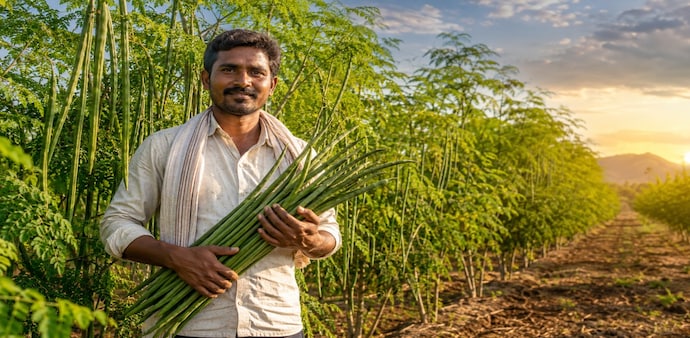
Can replacing just one crop change a farmer's fortunes? For Maharashtra farmer Sagar Yelpale, the answer turned out to be yes. What began as a one-acre experiment with drumsticks has grown into an 18-acre plantation that now records an annual turnover of ₹1.15 crore and profits of around ₹80 lakh.
According to a report by 30Stades, Sagar, from Solapur district, did not make the switch overnight. After completing his studies in 2012, he joined his father on the family's 10-acre farm and continued growing pomegranates, just as earlier generations had done. But rising costs and unpredictable weather gradually made the crop less rewarding.
Rising costs forced a rethink
Explaining what pushed him to look for alternatives, Sagar said, "Pomegranate had become an expensive crop to maintain. Diseases due to high humidity or sudden heat spikes were increasing, and the cost of chemicals kept rising. Out of the earnings of Rs 3 lakh per acre, nearly Rs 1.5 lakh went into cultivation costs."
The crop also demanded patience before any money came in.
Don't Miss: Govt approves ₹4,687 crore to fuel India's ethanol push
"We had to wait nearly six months before harvesting to receive the income. So I began exploring alternatives that could offer better profitability and regular income with lower risks," he shared.
Looking for a crop that required lower investment, offered quicker returns and was more resilient to changing weather, Sagar came across commercial drumstick cultivation in 2017 after a friend introduced him to it.
A one-acre experiment
Instead of taking a big risk, he started small.
"I wanted a crop that was hardy, required lower investment, gave faster returns and had a stable market. Drumstick seemed like a good fit," he said.
To test the idea, Sagar bought 400 grams of drumstick seeds for ₹4,000 from Malshiras, around 19 km from his village near Sangola. After enriching the soil with well-decomposed cow dung manure, he sowed the seeds in January 2017 and harvested the crop within five months.
The trial exceeded his expectations.
"I started harvesting in June 2017. From just one acre, I harvested nearly 10 tonnes over five months. The average selling price was around Rs 25 to Rs 30 per kg. and I earned over Rs 3 lakh," he recalled.
From one acre to 18
The successful first season gave him the confidence to gradually replace the family's pomegranate orchards with drumsticks instead of making a sudden shift.
"My parents owned 10 acres, and I added eight more acres," he shared.
Today, Sagar's farm stretches across 18 acres with around 12,000 drumstick plants, primarily of the ODC-3 and ODC-4 varieties. As the plantation matured, annual yields per tree increased from about 25 kg to nearly 50 kg, taking total production to around 180-200 tonnes every year.
Keeping costs low
To keep costs under control, Sagar focused on soil health. He installed a biogas plant that produces 200-300 litres of slurry every day, which is supplied directly to the fields. According to him, the slurry improves soil health, reduces fertiliser costs and the gas generated is used for cooking at home.
Building a ready market
Growing the crop, however, was only half the battle. Finding reliable buyers proved equally important.
Over the years, Sagar built a steady network of wholesalers, with most of his harvest now travelling nearly 400 km to Hyderabad, where almost the entire produce is sold.
Speaking about demand, he revealed, "Earlier, I even exported drumsticks to Dubai. But now demand from Hyderabad itself is so strong that my entire production gets sold there."
Prices fluctuate through the year, but the business continues to remain profitable.
"During winter, I receive nearly Rs 200 per kg because supply is limited. In summer, prices may fall to around Rs 25 per kg. Overall, the annual average remains profitable at around Rs 50 per kg," he explained.
A second income stream
Sagar has also created a second source of income by selling quality drumstick seeds. As more farmers visited his plantation and saw the results, demand for the seeds increased. He now sells them for around ₹10,000 per kg, earning nearly ₹15 lakh a year. Together with drumstick sales, the farm records an annual turnover of around ₹1.15 crore.
For Sagar, the biggest lesson was not making a blind leap, but testing the crop before expanding. He advises farmers to first understand the crop, its management and market demand before making a complete shift, while emphasising that securing buyers is just as important as growing the produce.
Can replacing just one crop change a farmer's fortunes? For Maharashtra farmer Sagar Yelpale, the answer turned out to be yes. What began as a one-acre experiment with drumsticks has grown into an 18-acre plantation that now records an annual turnover of ₹1.15 crore and profits of around ₹80 lakh.
According to a report by 30Stades, Sagar, from Solapur district, did not make the switch overnight. After completing his studies in 2012, he joined his father on the family's 10-acre farm and continued growing pomegranates, just as earlier generations had done. But rising costs and unpredictable weather gradually made the crop less rewarding.
Rising costs forced a rethink
Explaining what pushed him to look for alternatives, Sagar said, "Pomegranate had become an expensive crop to maintain. Diseases due to high humidity or sudden heat spikes were increasing, and the cost of chemicals kept rising. Out of the earnings of Rs 3 lakh per acre, nearly Rs 1.5 lakh went into cultivation costs."
The crop also demanded patience before any money came in.
Don't Miss: Govt approves ₹4,687 crore to fuel India's ethanol push
"We had to wait nearly six months before harvesting to receive the income. So I began exploring alternatives that could offer better profitability and regular income with lower risks," he shared.
Looking for a crop that required lower investment, offered quicker returns and was more resilient to changing weather, Sagar came across commercial drumstick cultivation in 2017 after a friend introduced him to it.
A one-acre experiment
Instead of taking a big risk, he started small.
"I wanted a crop that was hardy, required lower investment, gave faster returns and had a stable market. Drumstick seemed like a good fit," he said.
To test the idea, Sagar bought 400 grams of drumstick seeds for ₹4,000 from Malshiras, around 19 km from his village near Sangola. After enriching the soil with well-decomposed cow dung manure, he sowed the seeds in January 2017 and harvested the crop within five months.
The trial exceeded his expectations.
"I started harvesting in June 2017. From just one acre, I harvested nearly 10 tonnes over five months. The average selling price was around Rs 25 to Rs 30 per kg. and I earned over Rs 3 lakh," he recalled.
From one acre to 18
The successful first season gave him the confidence to gradually replace the family's pomegranate orchards with drumsticks instead of making a sudden shift.
"My parents owned 10 acres, and I added eight more acres," he shared.
Today, Sagar's farm stretches across 18 acres with around 12,000 drumstick plants, primarily of the ODC-3 and ODC-4 varieties. As the plantation matured, annual yields per tree increased from about 25 kg to nearly 50 kg, taking total production to around 180-200 tonnes every year.
Keeping costs low
To keep costs under control, Sagar focused on soil health. He installed a biogas plant that produces 200-300 litres of slurry every day, which is supplied directly to the fields. According to him, the slurry improves soil health, reduces fertiliser costs and the gas generated is used for cooking at home.
Building a ready market
Growing the crop, however, was only half the battle. Finding reliable buyers proved equally important.
Over the years, Sagar built a steady network of wholesalers, with most of his harvest now travelling nearly 400 km to Hyderabad, where almost the entire produce is sold.
Speaking about demand, he revealed, "Earlier, I even exported drumsticks to Dubai. But now demand from Hyderabad itself is so strong that my entire production gets sold there."
Prices fluctuate through the year, but the business continues to remain profitable.
"During winter, I receive nearly Rs 200 per kg because supply is limited. In summer, prices may fall to around Rs 25 per kg. Overall, the annual average remains profitable at around Rs 50 per kg," he explained.
A second income stream
Sagar has also created a second source of income by selling quality drumstick seeds. As more farmers visited his plantation and saw the results, demand for the seeds increased. He now sells them for around ₹10,000 per kg, earning nearly ₹15 lakh a year. Together with drumstick sales, the farm records an annual turnover of around ₹1.15 crore.
For Sagar, the biggest lesson was not making a blind leap, but testing the crop before expanding. He advises farmers to first understand the crop, its management and market demand before making a complete shift, while emphasising that securing buyers is just as important as growing the produce.