














 India's ethanol story under scrutiny as maize prices stay below MSP
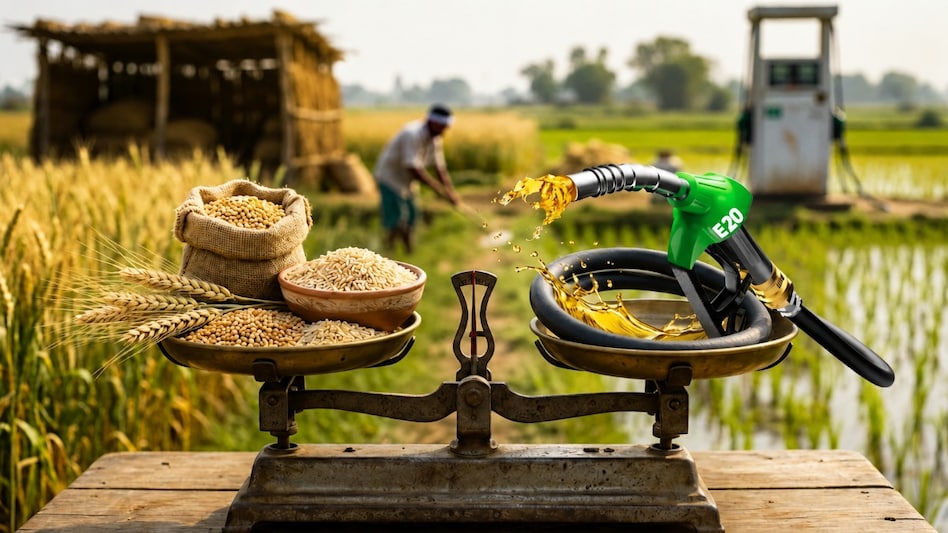
The government's ethanol programme has been promoted as a way to turn India's farmers from "annadata" (food providers) into "urjadata" (energy providers). But official data from the Union Agriculture Ministry and Agmarknet is raising questions over whether the biggest gains have reached farmers.
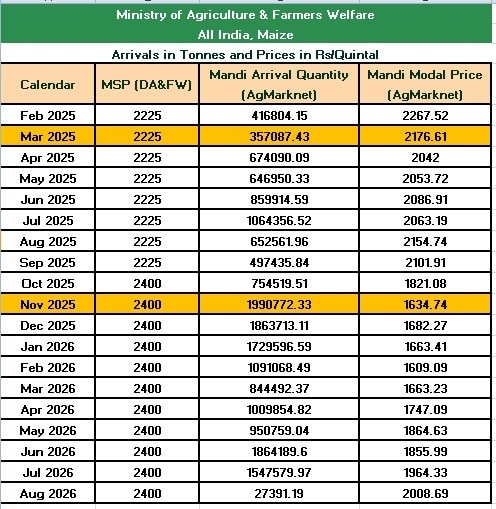
The data shows that despite a strong policy push for maize-based ethanol production, the average mandi price of maize remained below the Minimum Support Price (MSP) every month between March 2025 and August 2026.
 India braves global headwinds: Q1GDP surges 7.8% as investment and services fire on all cylinders
  HDFC Bank races to hire search firm for new CEO: Report
 Centre fast-tracks HMT revival plan; ₹2,000 crore package under consideration
  Semicon 2.0 notified: ₹1.27 lakh crore scheme widens India’s chip ambitions
 Defense boost: Tata Advanced Systems signs MoU for Javelin missile co-production
 Midcap Fund Strategy: Where WhiteOak Capital Sees The Biggest Opportunities
 Adani Stocks Fall Sharply: What’s Behind The Sell-Off?
 EMS Stocks: Can India’s Electronics Boom Drive More Gains?
 HDFC Bank CEO Exit: What Investors Should Know About Succession, Governance & Stock Outlook
 Gold & Silver Outlook: Should Investors Buy ETFs After The Big Rally?
 Ola Electric shares jump 5%; still down 34% in a year; what's ahead?
 Sensex falls 307 points, Nifty settles below 24,100; what happened today
 Market veteran Ajay Bagga on top sectoral picks; impact of oil prices, monsoon on economy
  Nifty Bank jumps over 600 points in last five minutes; CAS in focus
 Indian market outlook: ‘Pessimism is excessive’; Maneesh Dangi turns neutral, sees better 6-12 monthsMidcap Fund Strategy: Where WhiteOak Capital Sees The Biggest Opportunities
 FM Nirmala Sitharaman Arrives In U.S. For G20 Meet, Carries Her Own Luggage At Airport
 “Bharat Became Vishwaguru, Not Mahashakti”: RSS Chief Mohan Bhagwat In Toronto
 Strength In Metals, Defence, Auto Ancs
 “Felt Like Gujarat Came Alive”: PM Modi Thanks Uzbekistan For Grand Welcome In Tashkent


