
Water purifier wars: Kent withdraws ads against Urban Company's 2-year filter claim after Delhi HC hearing
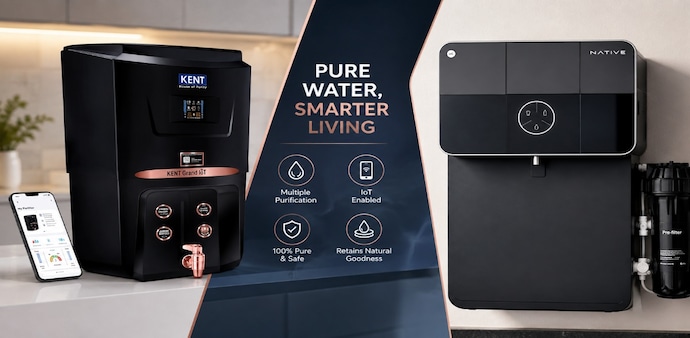
The case concerns Urban Company’s Native M1 and M2 water purifiers, whose key selling proposition is that they can operate for up to two years without routine servicing or filter replacement under specified conditions
- Aug 13, 2026,
- Updated Aug 13, 2026 3:35 PM IST
Kent RO Systems has agreed before the Delhi High Court to withdraw a series of advertisements that questioned Urban Company’s claim that its water purifiers can operate for two years without servicing or filter replacement. The undertaking came after Justice Anup Jairam Bhambhani observed that Urban Company had made out a prima facie case for an ad interim injunction.
The dispute centres on advertisements released by Kent that allegedly described Urban Company’s two-year no-servicing claim as “completely false”, a “marketing gimmick” and “fake”. One advertisement also warned that relying on a water purifier for two years without maintenance or filter replacement could pose a “serious health and equipment risk,” according to Bar and Bench.
Delhi High Court questions Kent
During the hearing, Justice Bhambhani said Urban Company had established grounds for interim protection against the advertisements.“After hearing [Urban Company's counsel] at length, I am convinced that at least an ad interim injunction is made out,” the judge observed.
The Court also questioned whether Kent’s advertisements were actually promoting its own products or were primarily aimed at discrediting Urban Company’s technology. “You’re not saying why we should buy Kent,” the Court remarked, according to Bar and Bench.
Justice Bhambhani further criticised the broad language used in Kent’s advertisements, particularly claims that the two-year filter-life technology was false or unsafe. “Your disparagement is very, very wide. This can’t be true. These are all fake claims. These are false marketing gimmicks, etcetera. You don’t say this,” the judge said.
Urban Company defends
The case concerns Urban Company’s Native M1 and M2 water purifiers, whose key selling proposition is that they can operate for up to two years without routine servicing or filter replacement under specified conditions.
Senior Advocate Amit Sibal, appearing for Urban Company, told the Court that the company had invested around ₹80 crore in advertising the two-year no-servicing feature. The company also claimed that it holds around 42% market share among water purifiers offering such filter-life technology.
DON'T MISS: Dabur moves Delhi High Court against FSSAI '100%' claims order. What happens next?
Urban Company said its technology relies on multiple systems, including pre-filtration, smart-rinse, anti-scalant dosing and auto-flush, which are designed to reduce clogging and extend filter life.
Company cites laboratory tests
Urban Company also placed laboratory reports before the Court to support its claim. According to the company, its purifiers were tested using approximately 12,000 litres of water, with TDS levels ranging from 1,500 to 2,000 parts per million (PPM). Urban Company said 12,000 litres represents the estimated water consumption of an average household over two years.
The company further alleged that Kent had incorrectly claimed that the two-year filter-life claim was based on testing conducted at only 750 PPM TDS. Urban Company said it had informed Kent through a legal notice that its products had been tested at significantly higher TDS levels, but Kent continued making the allegation in its advertisements.
Kent says filter life depends on water quality
Kent, represented by Senior Advocate Rajeshwari Hariharan, defended its advertising campaign by arguing that the lifespan of a purifier filter cannot be assessed independently of the conditions in which the machine is used, according to Bar and Bench. Kent submitted that factors such as water hardness, turbidity, TDS levels and the amount of water consumed can affect filter performance and longevity.
The company also pointed to the fine print accompanying Urban Company’s own advertisements, arguing that the two-year claim was subject to particular testing conditions. Kent contended that water quality varies significantly across India and even between different localities within Delhi. Therefore, it argued, a two-year filter-life claim could not necessarily be treated as a uniform guarantee for every consumer.
ALSO READ: Diageo challenges India's rum ban in court, says FSSAI was still consulting on labelling rules
Kent agrees to withdraw advertisements
While the Court acknowledged that water quality and household consumption can influence filter life, Justice Bhambhani took issue with the sweeping nature of Kent’s allegations against the technology. Following the Court’s observations, Kent agreed to withdraw the disputed advertisements within 10 days.
The company also undertook not to publish or circulate advertisements or promotional material containing the same or substantially similar claims that could disparage Urban Company’s two-year filter-life or no-servicing proposition. The Court recorded Kent’s undertaking instead of formally passing an interim injunction.
Kent RO Systems has agreed before the Delhi High Court to withdraw a series of advertisements that questioned Urban Company’s claim that its water purifiers can operate for two years without servicing or filter replacement. The undertaking came after Justice Anup Jairam Bhambhani observed that Urban Company had made out a prima facie case for an ad interim injunction.
The dispute centres on advertisements released by Kent that allegedly described Urban Company’s two-year no-servicing claim as “completely false”, a “marketing gimmick” and “fake”. One advertisement also warned that relying on a water purifier for two years without maintenance or filter replacement could pose a “serious health and equipment risk,” according to Bar and Bench.
Delhi High Court questions Kent
During the hearing, Justice Bhambhani said Urban Company had established grounds for interim protection against the advertisements.“After hearing [Urban Company's counsel] at length, I am convinced that at least an ad interim injunction is made out,” the judge observed.
The Court also questioned whether Kent’s advertisements were actually promoting its own products or were primarily aimed at discrediting Urban Company’s technology. “You’re not saying why we should buy Kent,” the Court remarked, according to Bar and Bench.
Justice Bhambhani further criticised the broad language used in Kent’s advertisements, particularly claims that the two-year filter-life technology was false or unsafe. “Your disparagement is very, very wide. This can’t be true. These are all fake claims. These are false marketing gimmicks, etcetera. You don’t say this,” the judge said.
Urban Company defends
The case concerns Urban Company’s Native M1 and M2 water purifiers, whose key selling proposition is that they can operate for up to two years without routine servicing or filter replacement under specified conditions.
Senior Advocate Amit Sibal, appearing for Urban Company, told the Court that the company had invested around ₹80 crore in advertising the two-year no-servicing feature. The company also claimed that it holds around 42% market share among water purifiers offering such filter-life technology.
DON'T MISS: Dabur moves Delhi High Court against FSSAI '100%' claims order. What happens next?
Urban Company said its technology relies on multiple systems, including pre-filtration, smart-rinse, anti-scalant dosing and auto-flush, which are designed to reduce clogging and extend filter life.
Company cites laboratory tests
Urban Company also placed laboratory reports before the Court to support its claim. According to the company, its purifiers were tested using approximately 12,000 litres of water, with TDS levels ranging from 1,500 to 2,000 parts per million (PPM). Urban Company said 12,000 litres represents the estimated water consumption of an average household over two years.
The company further alleged that Kent had incorrectly claimed that the two-year filter-life claim was based on testing conducted at only 750 PPM TDS. Urban Company said it had informed Kent through a legal notice that its products had been tested at significantly higher TDS levels, but Kent continued making the allegation in its advertisements.
Kent says filter life depends on water quality
Kent, represented by Senior Advocate Rajeshwari Hariharan, defended its advertising campaign by arguing that the lifespan of a purifier filter cannot be assessed independently of the conditions in which the machine is used, according to Bar and Bench. Kent submitted that factors such as water hardness, turbidity, TDS levels and the amount of water consumed can affect filter performance and longevity.
The company also pointed to the fine print accompanying Urban Company’s own advertisements, arguing that the two-year claim was subject to particular testing conditions. Kent contended that water quality varies significantly across India and even between different localities within Delhi. Therefore, it argued, a two-year filter-life claim could not necessarily be treated as a uniform guarantee for every consumer.
ALSO READ: Diageo challenges India's rum ban in court, says FSSAI was still consulting on labelling rules
Kent agrees to withdraw advertisements
While the Court acknowledged that water quality and household consumption can influence filter life, Justice Bhambhani took issue with the sweeping nature of Kent’s allegations against the technology. Following the Court’s observations, Kent agreed to withdraw the disputed advertisements within 10 days.
The company also undertook not to publish or circulate advertisements or promotional material containing the same or substantially similar claims that could disparage Urban Company’s two-year filter-life or no-servicing proposition. The Court recorded Kent’s undertaking instead of formally passing an interim injunction.