
'We’d love to be in India': Elon Musk makes the case for Starlink’s rural connectivity mission
“We can't beat a cell tower that's a kilometre away,” he admitted, explaining the physical limitations of satellite beams compared to terrestrial towers. The system works best in low-density areas where existing telecom infrastructure is sparse or non-existent.
- Nov 30, 2025,
- Updated Nov 30, 2025 9:40 PM IST
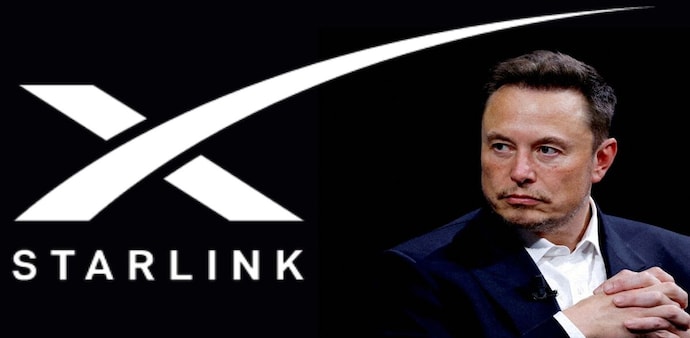
Speaking to investor and entrepreneur Nikhil Kamath on the People of WTF podcast, SpaceX CEO Elon Musk reaffirmed his intent to bring Starlink to India — positioning the satellite internet service not as a competitor to urban telecom giants but as a much-needed solution for the country’s underserved rural regions.
“We’d love to be operating in India,” Musk said, referring to Starlink’s global footprint, which now spans 150 countries. India, however, remains conspicuously absent from that list. Regulatory hurdles and approval delays have kept the low-earth orbit satellite network on standby. Still, Musk’s optimism was clear—and strategic.
Starlink’s offering is particularly well-suited to India’s last-mile connectivity challenge. While urban areas are relatively well-covered by fiber and mobile networks, rural India remains digitally underconnected. According to government data, internet penetration in rural India is still significantly behind urban metrics, despite rapid growth.
But Musk made it clear that Starlink isn’t built to compete in cities — and that’s entirely by design.
“We can't beat a cell tower that's a kilometre away,” he admitted, explaining the physical limitations of satellite beams compared to terrestrial towers. The system works best in low-density areas where existing telecom infrastructure is sparse or non-existent. “It's complementary, not competitive,” Musk added, positioning Starlink as a fill-in-the-gaps service rather than a disruptor in already well-served markets.
This nuance is crucial for India’s telecom regulators, who have long weighed the implications of Starlink’s entry. While some fear disruption to existing players, Musk’s comments offer a reassuring perspective: Starlink could help connect India’s farthest villages, not poach users in its busiest metros.
Musk also highlighted the network’s resilience. He cited recent cable disruptions in the Red Sea, which temporarily knocked out traditional fiber links. Starlink, thanks to its thousands of satellites interconnected via laser, kept working without interruption. This makes it not just a tool for rural inclusion, but also for disaster recovery — another challenge India faces frequently.
Starlink’s relevance to India is also deeply tied to education, healthcare access, and rural entrepreneurship — all of which rely increasingly on stable internet connections. In areas where fiber rollout is cost-prohibitive, Musk’s space-based solution could change lives.
While a timeline for Starlink’s India launch remains unclear, Musk’s intent is unequivocal. “We’d love to be in India,” he repeated — a signal, perhaps, to Indian policymakers as much as to rural citizens waiting to log on.
Speaking to investor and entrepreneur Nikhil Kamath on the People of WTF podcast, SpaceX CEO Elon Musk reaffirmed his intent to bring Starlink to India — positioning the satellite internet service not as a competitor to urban telecom giants but as a much-needed solution for the country’s underserved rural regions.
“We’d love to be operating in India,” Musk said, referring to Starlink’s global footprint, which now spans 150 countries. India, however, remains conspicuously absent from that list. Regulatory hurdles and approval delays have kept the low-earth orbit satellite network on standby. Still, Musk’s optimism was clear—and strategic.
Starlink’s offering is particularly well-suited to India’s last-mile connectivity challenge. While urban areas are relatively well-covered by fiber and mobile networks, rural India remains digitally underconnected. According to government data, internet penetration in rural India is still significantly behind urban metrics, despite rapid growth.
But Musk made it clear that Starlink isn’t built to compete in cities — and that’s entirely by design.
“We can't beat a cell tower that's a kilometre away,” he admitted, explaining the physical limitations of satellite beams compared to terrestrial towers. The system works best in low-density areas where existing telecom infrastructure is sparse or non-existent. “It's complementary, not competitive,” Musk added, positioning Starlink as a fill-in-the-gaps service rather than a disruptor in already well-served markets.
This nuance is crucial for India’s telecom regulators, who have long weighed the implications of Starlink’s entry. While some fear disruption to existing players, Musk’s comments offer a reassuring perspective: Starlink could help connect India’s farthest villages, not poach users in its busiest metros.
Musk also highlighted the network’s resilience. He cited recent cable disruptions in the Red Sea, which temporarily knocked out traditional fiber links. Starlink, thanks to its thousands of satellites interconnected via laser, kept working without interruption. This makes it not just a tool for rural inclusion, but also for disaster recovery — another challenge India faces frequently.
Starlink’s relevance to India is also deeply tied to education, healthcare access, and rural entrepreneurship — all of which rely increasingly on stable internet connections. In areas where fiber rollout is cost-prohibitive, Musk’s space-based solution could change lives.
While a timeline for Starlink’s India launch remains unclear, Musk’s intent is unequivocal. “We’d love to be in India,” he repeated — a signal, perhaps, to Indian policymakers as much as to rural citizens waiting to log on.