
Why Nandan Nilekani is facing social media heat after US Anthropic curbs
The US directive has prompted critics to revisit Nilekani’s earlier remarks on India’s AI priorities. In 2024, speaking at Meta’s “Build with AI” summit in Bengaluru, he argued that India should not try to build “one more LLM” and instead become the “use-case capital of the world.”
- Jun 13, 2026,
- Updated Jun 13, 2026 3:44 PM IST
A sudden decision by the US government to restrict access to Anthropic’s newest and most advanced artificial intelligence models has reignited a heated debate over India’s AI strategy and dependence on foreign technology platforms.
According to Anthropic, US authorities have ordered the company to suspend access to its latest flagship AI models — Claude Fable 5 and Mythos 5 — for all foreign nationals, including Indian users. The company said the directive stems from national security concerns raised by the US government.
Anthropic, however, has indicated that it disagrees with the scope of the restrictions. In a statement, the company said the evidence presented to it “does not justify such a broad restriction,” but added that it had no option except to comply while it works with authorities to restore access.
The abrupt shutdown has triggered strong reactions across the technology community, with many commentators linking the development to India’s ongoing debate over whether the country should build its own frontier AI models or focus on applications built on top of foreign systems.
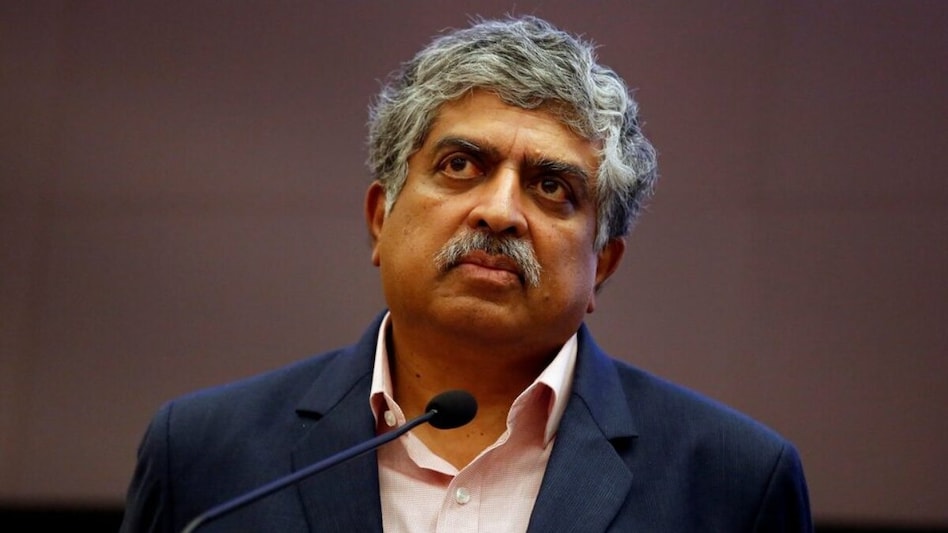
At the centre of that debate is Infosys chairman Nandan Nilekani, whose long-held view has been that India should prioritise AI use cases over competing in the expensive race to build large language models (LLMs).
Addressing shareholders in his annual report on 22 May, Nilekani argued that the rise of generative AI had actually strengthened the relevance of India’s IT services industry.
But the reported US directive has prompted critics to revisit Nilekani’s earlier remarks on India’s AI priorities. In 2024, speaking at Meta’s “Build with AI” summit in Bengaluru, he argued that India should not try to build “one more LLM” and instead become the “use-case capital of the world.”
“Our goal should not be to build one more LLM. Let the big boys in the (Silicon) Valley do it, spending billions of dollars. We will use it to create synthetic data, build small language models quickly, and train them using appropriate data,” Nilekani had said.
Following reports of Anthropic’s access restrictions, one social media user shared a news article carrying those remarks and wrote, “Aged like milk. Good thing our government is smarter than our ‘IT experts’.”
Another user highlighted the strategic vulnerability exposed by the move, saying, “India is the second-largest market globally for both ChatGPT and Anthropic. If they can turn off the access at the press of a button like this, we are absolutely at the mercy of a foreign government. Geopolitics is getting uglier. Globalisation in the current form is dead. This is a huge wakeup call for India.”
The disruption also raised concerns among developers and businesses that have already integrated advanced AI models into their workflows. One user wrote, “This is a crazy development. I have projects that were to run on Fable today — and they will come to a grinding halt. Across the world, this will make countries feel they cannot continue to rely on American technology. National missions to build frontier AI may get a boost. Yes, guardrails for frontier AI are essential — and Anthropic itself has argued for it. But creating national barriers isn’t the solution.”
The discussion has also found resonance beyond India. Kanishka Narayan, Labour MP for the Vale of Glamorgan, argued that the episode underscores why countries need sovereign AI capabilities.
In a post on X, Narayan wrote that the temporary suspension of access to Anthropic’s latest models demonstrates that “access to AI capabilities is crucial” as nations rethink national security and technological sovereignty. He pointed to the UK government’s efforts to back domestic AI infrastructure through its UK Sovereign AI initiative and a recently announced £1.1 billion package for the country’s AI chip industry.
The controversy arrives at a time when governments around the world are increasingly viewing advanced AI not merely as a commercial technology, but as a strategic asset.
A sudden decision by the US government to restrict access to Anthropic’s newest and most advanced artificial intelligence models has reignited a heated debate over India’s AI strategy and dependence on foreign technology platforms.
According to Anthropic, US authorities have ordered the company to suspend access to its latest flagship AI models — Claude Fable 5 and Mythos 5 — for all foreign nationals, including Indian users. The company said the directive stems from national security concerns raised by the US government.
Anthropic, however, has indicated that it disagrees with the scope of the restrictions. In a statement, the company said the evidence presented to it “does not justify such a broad restriction,” but added that it had no option except to comply while it works with authorities to restore access.
The abrupt shutdown has triggered strong reactions across the technology community, with many commentators linking the development to India’s ongoing debate over whether the country should build its own frontier AI models or focus on applications built on top of foreign systems.
At the centre of that debate is Infosys chairman Nandan Nilekani, whose long-held view has been that India should prioritise AI use cases over competing in the expensive race to build large language models (LLMs).
Addressing shareholders in his annual report on 22 May, Nilekani argued that the rise of generative AI had actually strengthened the relevance of India’s IT services industry.
But the reported US directive has prompted critics to revisit Nilekani’s earlier remarks on India’s AI priorities. In 2024, speaking at Meta’s “Build with AI” summit in Bengaluru, he argued that India should not try to build “one more LLM” and instead become the “use-case capital of the world.”
“Our goal should not be to build one more LLM. Let the big boys in the (Silicon) Valley do it, spending billions of dollars. We will use it to create synthetic data, build small language models quickly, and train them using appropriate data,” Nilekani had said.
Following reports of Anthropic’s access restrictions, one social media user shared a news article carrying those remarks and wrote, “Aged like milk. Good thing our government is smarter than our ‘IT experts’.”
Another user highlighted the strategic vulnerability exposed by the move, saying, “India is the second-largest market globally for both ChatGPT and Anthropic. If they can turn off the access at the press of a button like this, we are absolutely at the mercy of a foreign government. Geopolitics is getting uglier. Globalisation in the current form is dead. This is a huge wakeup call for India.”
The disruption also raised concerns among developers and businesses that have already integrated advanced AI models into their workflows. One user wrote, “This is a crazy development. I have projects that were to run on Fable today — and they will come to a grinding halt. Across the world, this will make countries feel they cannot continue to rely on American technology. National missions to build frontier AI may get a boost. Yes, guardrails for frontier AI are essential — and Anthropic itself has argued for it. But creating national barriers isn’t the solution.”
The discussion has also found resonance beyond India. Kanishka Narayan, Labour MP for the Vale of Glamorgan, argued that the episode underscores why countries need sovereign AI capabilities.
In a post on X, Narayan wrote that the temporary suspension of access to Anthropic’s latest models demonstrates that “access to AI capabilities is crucial” as nations rethink national security and technological sovereignty. He pointed to the UK government’s efforts to back domestic AI infrastructure through its UK Sovereign AI initiative and a recently announced £1.1 billion package for the country’s AI chip industry.
The controversy arrives at a time when governments around the world are increasingly viewing advanced AI not merely as a commercial technology, but as a strategic asset.