
Without electricity & refrigerators, India made ice under the open sky. Here's how
The arrival of mechanical refrigeration in the late 19th century gradually rendered these practices obsolete. Ice factories began appearing in Indian cities, making year-round production possible and eliminating dependence on winter weather.
- May 30, 2026,
- Updated May 30, 2026 3:47 PM IST
Long before electric freezers, compressor-based refrigeration or commercial ice factories, Indians had already mastered the art of making ice in one of the world's hottest climates. In a remarkable feat of indigenous ingenuity, communities in northern India were producing ice centuries before mechanical ice-making machines arrived in the country.
The method was so unusual that when British officials witnessed it in the 18th century, many struggled to understand how water could freeze on nights when temperatures remained above freezing.
A marvel: Making ice in tropical India
The secret lay in a clever understanding of physics rather than machinery.
During the winter months, especially in parts of present-day Uttar Pradesh and Bengal, workers would dig shallow pits and line them with dry straw or sugarcane stalks. Small, unglazed earthenware trays filled with boiled water were then placed on top and left exposed to the clear night sky.
MUST READ | Before ice cream, these traditional Indian coolers beat the summer. Did you have any?
The process relied on radiative cooling — the ability of an object to lose heat by radiating it into the cold night sky. The straw insulated the trays from the relatively warmer ground, while the porous clay vessels encouraged evaporation, removing additional heat from the water. On cold, dry and windless nights, a thin layer of ice would form by dawn.
Workers would carefully collect these fragile sheets of ice every morning and transfer them into insulated storage pits.
An industry before the Industrial Age
What began as a seasonal craft evolved into a small but organised industry. Historical accounts describe ice-making centres around Allahabad and the Hooghly region, where labourers harvested the overnight ice and stored it in specially constructed ice houses packed with straw and other insulating materials.
The quantities were modest by modern standards, but sufficient to supply local elites, royal courts and colonial officials who prized chilled drinks during India's scorching summers.
The practice demonstrated a sophisticated understanding of environmental conditions long before the scientific principles behind heat transfer and thermodynamics were formally established.
Mughal courts and the luxury of Ice
Ice was considered a luxury commodity in medieval and Mughal India. Historical records suggest that rulers developed systems to store and transport ice, while wealthy households used it to cool beverages and prepare desserts. In some regions, natural ice was also transported from Himalayan areas, though the expense limited its use.
DON'T MISS | Ice cream, frozen dessert or yogurt? Why the difference matters as Kwality Wall’s goes full dairy
The ability to serve chilled sherbets during summer became a symbol of prestige and technological sophistication.
Then came the ice ships
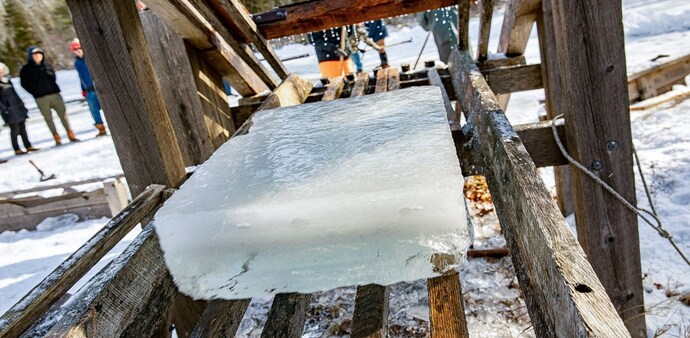
By the early 19th century, another extraordinary chapter unfolded. American entrepreneur Frederic Tudor — later known as the "Ice King" — began shipping massive blocks of natural ice harvested from frozen lakes in New England to British India. Packed in sawdust, the ice survived voyages lasting months and became a luxury sensation in Calcutta, Bombay and Madras.
For several decades, imported ice coexisted with traditional Indian ice-making methods.
The arrival of mechanical refrigeration in the late 19th century gradually rendered these practices obsolete. Ice factories began appearing in Indian cities, making year-round production possible and eliminating dependence on winter weather. By the early 20th century, electrically powered refrigeration had transformed ice from a luxury into an every day necessity.
Long before electric freezers, compressor-based refrigeration or commercial ice factories, Indians had already mastered the art of making ice in one of the world's hottest climates. In a remarkable feat of indigenous ingenuity, communities in northern India were producing ice centuries before mechanical ice-making machines arrived in the country.
The method was so unusual that when British officials witnessed it in the 18th century, many struggled to understand how water could freeze on nights when temperatures remained above freezing.
A marvel: Making ice in tropical India
The secret lay in a clever understanding of physics rather than machinery.
During the winter months, especially in parts of present-day Uttar Pradesh and Bengal, workers would dig shallow pits and line them with dry straw or sugarcane stalks. Small, unglazed earthenware trays filled with boiled water were then placed on top and left exposed to the clear night sky.
MUST READ | Before ice cream, these traditional Indian coolers beat the summer. Did you have any?
The process relied on radiative cooling — the ability of an object to lose heat by radiating it into the cold night sky. The straw insulated the trays from the relatively warmer ground, while the porous clay vessels encouraged evaporation, removing additional heat from the water. On cold, dry and windless nights, a thin layer of ice would form by dawn.
Workers would carefully collect these fragile sheets of ice every morning and transfer them into insulated storage pits.
An industry before the Industrial Age
What began as a seasonal craft evolved into a small but organised industry. Historical accounts describe ice-making centres around Allahabad and the Hooghly region, where labourers harvested the overnight ice and stored it in specially constructed ice houses packed with straw and other insulating materials.
The quantities were modest by modern standards, but sufficient to supply local elites, royal courts and colonial officials who prized chilled drinks during India's scorching summers.
The practice demonstrated a sophisticated understanding of environmental conditions long before the scientific principles behind heat transfer and thermodynamics were formally established.
Mughal courts and the luxury of Ice
Ice was considered a luxury commodity in medieval and Mughal India. Historical records suggest that rulers developed systems to store and transport ice, while wealthy households used it to cool beverages and prepare desserts. In some regions, natural ice was also transported from Himalayan areas, though the expense limited its use.
DON'T MISS | Ice cream, frozen dessert or yogurt? Why the difference matters as Kwality Wall’s goes full dairy
The ability to serve chilled sherbets during summer became a symbol of prestige and technological sophistication.
Then came the ice ships
By the early 19th century, another extraordinary chapter unfolded. American entrepreneur Frederic Tudor — later known as the "Ice King" — began shipping massive blocks of natural ice harvested from frozen lakes in New England to British India. Packed in sawdust, the ice survived voyages lasting months and became a luxury sensation in Calcutta, Bombay and Madras.
For several decades, imported ice coexisted with traditional Indian ice-making methods.
The arrival of mechanical refrigeration in the late 19th century gradually rendered these practices obsolete. Ice factories began appearing in Indian cities, making year-round production possible and eliminating dependence on winter weather. By the early 20th century, electrically powered refrigeration had transformed ice from a luxury into an every day necessity.