
'You paid for 2GB, used 1.5GB - where did the rest go?': Raghav Chadha questions daily mobile data expiry
Raghav also proposed a set of changes to the current framework, beginning with allowing full data carry-forward so that unused data is added to the next day’s limit instead of expiring.
- Mar 23, 2026,
- Updated Mar 23, 2026 8:56 PM IST
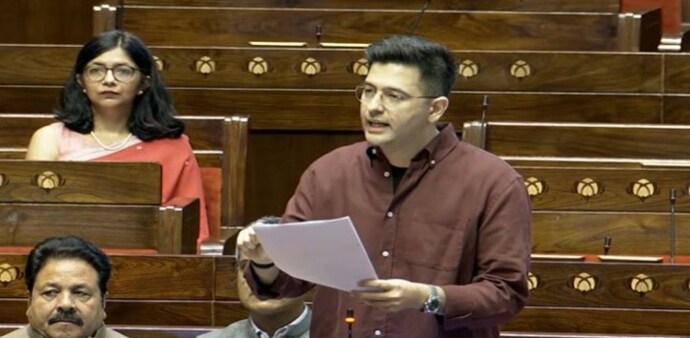
Aam Aadmi Party MP Raghav Chadha on Monday flagged concerns over telecom data usage policies in the Rajya Sabha, questioning why unused mobile data lapses at the end of each day despite being paid for by consumers.
He later reiterated his arguments in a detailed post on X.
In the post, Chadha pointed to the structure of common prepaid plans offered by telecom operators, where users are allocated fixed daily limits such as 1.5GB, 2GB or 3GB that reset every 24 hours, with any unused portion expiring without refund or carry-forward.
He described this as a systemic issue in how data is priced and consumed.
“You are billed for 2GB. You use 1.5GB. The remaining 0.5GB disappears as the day ends. No refund. No rollover. Just gone,” he wrote, arguing that this was a matter of policy rather than an operational constraint.
The MP also questioned the rationale behind the practice, asking why consumers should lose data they have already paid for.
He proposed a set of changes to the current framework, beginning with allowing full data carry-forward so that unused data is added to the next day’s limit instead of expiring.
Chadha also suggested introducing a pricing adjustment mechanism for users who consistently under-utilise their plans, so that they are not repeatedly paying for unused capacity.
On the issue of ownership, he argued that unused data should be treated as a consumer asset, with the option to transfer it to others, similar to digital payments.
Framing the issue within India’s broader digital push, Raghav said that access to connectivity should not depend on data that expires daily, adding that if consumers have paid for data, it should remain available for use.
Wider reform proposals on tax, pensions and banking
Separately, during a speech in Parliament on March 16 titled “I Do Not Oppose, I Rise to Propose,” Raghav outlined a broader set of reforms aimed at easing household financial pressures, including introducing optional joint filing of income tax returns for married couples to address disparities in tax burden between single- and dual-income households, restoring full income tax exemption on disability pensions for all wounded soldiers, and removing penalty charges on bank accounts for not maintaining minimum balance.
Aam Aadmi Party MP Raghav Chadha on Monday flagged concerns over telecom data usage policies in the Rajya Sabha, questioning why unused mobile data lapses at the end of each day despite being paid for by consumers.
He later reiterated his arguments in a detailed post on X.
In the post, Chadha pointed to the structure of common prepaid plans offered by telecom operators, where users are allocated fixed daily limits such as 1.5GB, 2GB or 3GB that reset every 24 hours, with any unused portion expiring without refund or carry-forward.
He described this as a systemic issue in how data is priced and consumed.
“You are billed for 2GB. You use 1.5GB. The remaining 0.5GB disappears as the day ends. No refund. No rollover. Just gone,” he wrote, arguing that this was a matter of policy rather than an operational constraint.
The MP also questioned the rationale behind the practice, asking why consumers should lose data they have already paid for.
He proposed a set of changes to the current framework, beginning with allowing full data carry-forward so that unused data is added to the next day’s limit instead of expiring.
Chadha also suggested introducing a pricing adjustment mechanism for users who consistently under-utilise their plans, so that they are not repeatedly paying for unused capacity.
On the issue of ownership, he argued that unused data should be treated as a consumer asset, with the option to transfer it to others, similar to digital payments.
Framing the issue within India’s broader digital push, Raghav said that access to connectivity should not depend on data that expires daily, adding that if consumers have paid for data, it should remain available for use.
Wider reform proposals on tax, pensions and banking
Separately, during a speech in Parliament on March 16 titled “I Do Not Oppose, I Rise to Propose,” Raghav outlined a broader set of reforms aimed at easing household financial pressures, including introducing optional joint filing of income tax returns for married couples to address disparities in tax burden between single- and dual-income households, restoring full income tax exemption on disability pensions for all wounded soldiers, and removing penalty charges on bank accounts for not maintaining minimum balance.