
BT Most Power Women in Business: Profit shows power, performance
To build the Most Powerful Women in Business 2025 list, the BT Research team relied on a universe of 5,000 listed firms. From this, we selected companies that reported a consolidated profit after tax of at least Rs 100 crore in FY25.
- Dec 12, 2025,
- Updated Dec 12, 2025 7:58 PM IST
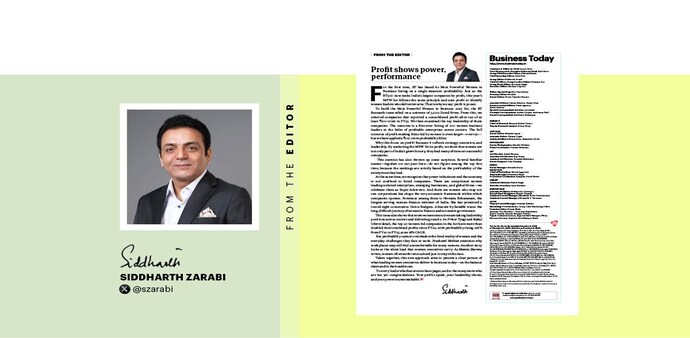
For the first time, BT has based its Most Powerful Women in Business listing on a single measure: profitability. Just as the BT500 now ranks India’s largest companies by profit, this year’s MPW list follows the same principle and uses profit to identify women leaders who deliver returns. That is why we say: profit is power.
To build the Most Powerful Women in Business 2025 list, the BT Research team relied on a universe of 5,000 listed firms. From this, we selected companies that reported a consolidated profit after tax of at least Rs 100 crore in FY25. We then examined the top leadership of these companies. The outcome is a first-ever listing of 100 women business leaders at the helm of profitable enterprises across sectors. The full universe of profit-making firms led by women is even larger—over 150—but we have applied a Rs 100 crore profitability filter.
Why this focus on profit? Because it reflects strategy, execution, and leadership. By anchoring the MPW list in profit, we show that women are not only part of India’s growth story, they lead many of its most successful companies.
This exercise has also thrown up some surprises. Several familiar names—regulars on our past lists—do not figure among the top this time, because the rankings are strictly based on the profitability of the enterprises they lead.
At the same time, we recognise that power in business and the economy is not confined to listed companies. There are exceptional women leading unlisted enterprises, emerging businesses, and global firms—we celebrate them as Super Achievers. And there are women who may not run corporations but shape the very economic framework within which companies operate. Foremost among them is Nirmala Sitharaman, the longest-serving woman finance minister of India. She has presented a record eight consecutive Union Budgets. A feature by Surabhi traces the long, difficult journey of women in finance and economic governance.
This issue also shows that more women executives are taking leadership positions across sectors and delivering results. As Prince Tyagi and Rahul Oberoi detail, the top 20 women-led companies in the list have more than doubled their combined profits since FY20, with profitability rising 128% from FY20 to FY25, at an 18% CAGR.
But profitability cannot overshadow the lived reality of women and the everyday challenges they face at work. Prashanti Moktan examines why workplaces may still feel uncomfortable for many women. Another story looks at the silent load that women executives carry. As Mamta Sharma writes, women often work twice as hard just to stay in the race.
Taken together, this new approach aims to present a clear picture of what leading women executives deliver in business today—on the balance sheet and in the boardroom.
To every leader who features in these pages, and to the many more who are not yet: congratulations. Your profits speak, your leadership shows, and your power is unmistakable.
For the first time, BT has based its Most Powerful Women in Business listing on a single measure: profitability. Just as the BT500 now ranks India’s largest companies by profit, this year’s MPW list follows the same principle and uses profit to identify women leaders who deliver returns. That is why we say: profit is power.
To build the Most Powerful Women in Business 2025 list, the BT Research team relied on a universe of 5,000 listed firms. From this, we selected companies that reported a consolidated profit after tax of at least Rs 100 crore in FY25. We then examined the top leadership of these companies. The outcome is a first-ever listing of 100 women business leaders at the helm of profitable enterprises across sectors. The full universe of profit-making firms led by women is even larger—over 150—but we have applied a Rs 100 crore profitability filter.
Why this focus on profit? Because it reflects strategy, execution, and leadership. By anchoring the MPW list in profit, we show that women are not only part of India’s growth story, they lead many of its most successful companies.
This exercise has also thrown up some surprises. Several familiar names—regulars on our past lists—do not figure among the top this time, because the rankings are strictly based on the profitability of the enterprises they lead.
At the same time, we recognise that power in business and the economy is not confined to listed companies. There are exceptional women leading unlisted enterprises, emerging businesses, and global firms—we celebrate them as Super Achievers. And there are women who may not run corporations but shape the very economic framework within which companies operate. Foremost among them is Nirmala Sitharaman, the longest-serving woman finance minister of India. She has presented a record eight consecutive Union Budgets. A feature by Surabhi traces the long, difficult journey of women in finance and economic governance.
This issue also shows that more women executives are taking leadership positions across sectors and delivering results. As Prince Tyagi and Rahul Oberoi detail, the top 20 women-led companies in the list have more than doubled their combined profits since FY20, with profitability rising 128% from FY20 to FY25, at an 18% CAGR.
But profitability cannot overshadow the lived reality of women and the everyday challenges they face at work. Prashanti Moktan examines why workplaces may still feel uncomfortable for many women. Another story looks at the silent load that women executives carry. As Mamta Sharma writes, women often work twice as hard just to stay in the race.
Taken together, this new approach aims to present a clear picture of what leading women executives deliver in business today—on the balance sheet and in the boardroom.
To every leader who features in these pages, and to the many more who are not yet: congratulations. Your profits speak, your leadership shows, and your power is unmistakable.